Buyer's guide
Best Precharged Mini Splits in 2026: DIY and Pro-Install Picks
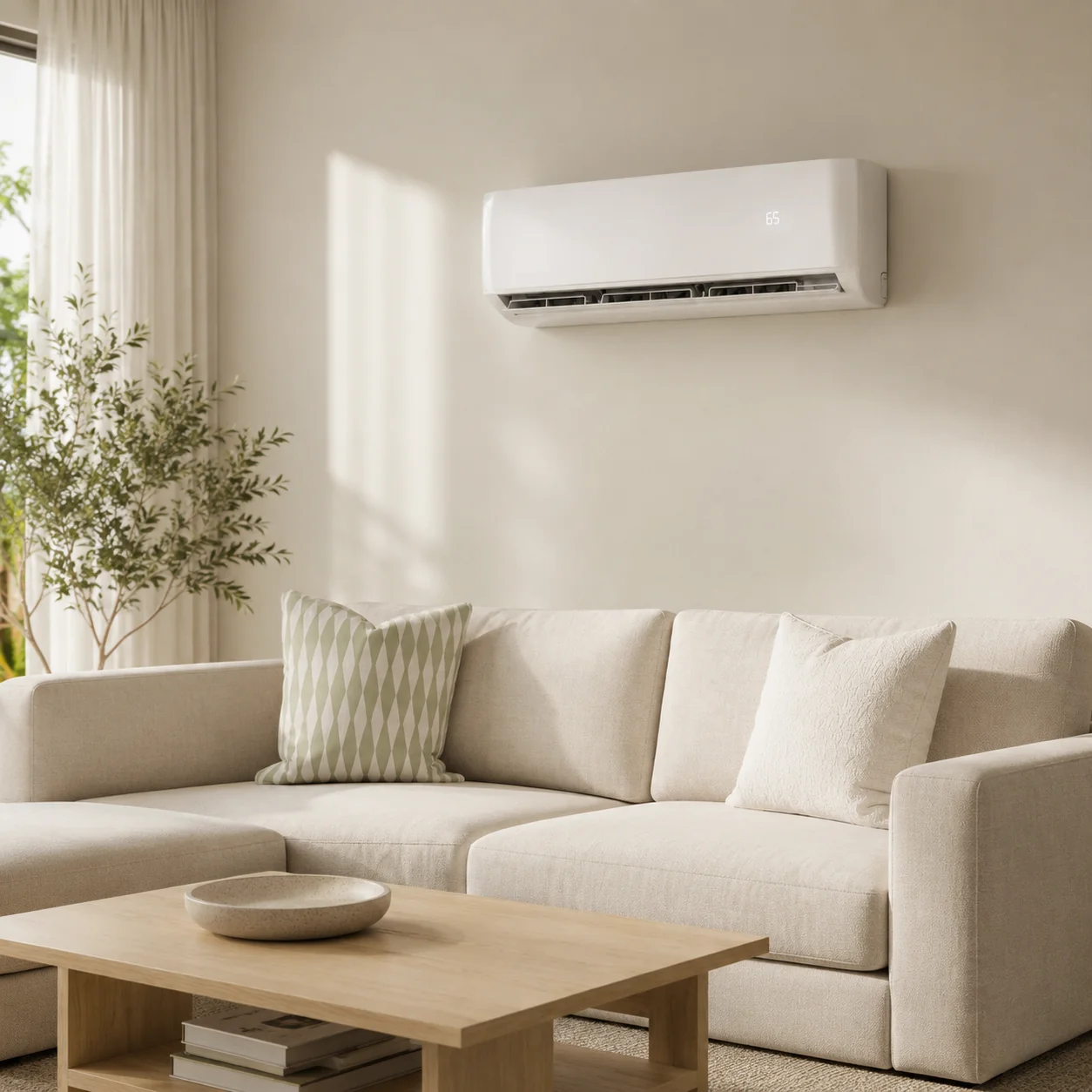
If you've been looking for ways to cool (or heat) a room in your home without opening walls for ductwork or writing a big check to an HVAC contractor, pre-charged mini splits are the most practical answer in 2026. In this guide we break down the actual costs of install, the differences in popular brands, and sizing requirements to help you figure out which mini split is best for you.
Pre-Charged vs DIY: What's the Difference?
Virtually all mini split systems come "pre-charged." This means the outdoor condenser comes with refrigerant pre-charged within the compressor. But be careful not to confuse these systems with true "DIY" systems. DIY units come with both pre-charged line-sets and pre-charged evaporators, which means the whole system is ready to go out of the box. You don't have to vacuum down the line-set, pressure test with nitrogen, or hold an EPA 608 refrigerant certification to legally install.
Step
Pre-charged (standard)
True DIY (pre-charged lines)
Refrigerant in the condenser
Pre-charged at the factory
Pre-charged at the factory
Line set
Empty copper — charged in the field
Pre-charged, quick-connect
Evaporator (indoor head)
Empty — charged in the field
Pre-charged
Vacuum pump + micron gauge
Required
Not required
Nitrogen pressure test
Required
Not required
EPA 608 certification
Required to install legally
Not required
Who installs it
HVAC technician
You, in a weekend
DIY mini splits are popular because they let you skip the most difficult and expensive parts of HVAC work: hiring a technician (costs can run upwards of $2,000 in labor alone), handling refrigerant, pulling a vacuum, and needing EPA certification.
About our top picks
Systems have been scored based on real customer reviews, warranty and replacement claims, manufacturer efficiency ratings, and verified data from places like YouTube, Reddit, and Facebook. All specs and details are accurate to our knowledge as of July 2026.
Mini Splits Compared (2025–2026)
All figures are for 12,000 BTU single-zone models where available, so the comparison stays like-for-like.
| System | Install | SEER2 | HSPF2 | 100% heatdown to | Heats toreduced | Refrig. | Warrantyyr parts / comp |
|---|---|---|---|---|---|---|---|
| Mitsubishi FX SeriesMSZ-FX12NLHZBest overall — efficiency, cold weather, reliability | Pro installEPA 608 required | 29.9 | 12.4 | −10°F | −22°F | R-32 | 12 / 12 |
| Fujitsu Airstage LZAS1LZAS1 SeriesRunner-up — best-in-class HSPF2 heating efficiency | Pro installEPA 608 required | 29.7 | 12.7 | −5°F | n/p | n/p | 12 / 12 |
| Zone Air DIY SeriesDIY Series 12KBest true DIY — reliability and value | True DIYNo vacuum pump | 24 | 10 | 5°F | −13°F | R-454B | 5 / 7 |
Cooling efficiency
SEER2 — higher is better
Heating efficiency
HSPF2 — higher is better
Heating output as it gets colder
Outdoor temperature °F · 12,000 BTU models
Fujitsu does not publish an extended-range floor for the LZAS1 series, so no reduced-output segment is shown.
n/p = not published by the manufacturer.
Best Mini Splits Overall
Mitsubishi FX Series
Best overall · efficiency, cold weather, reliability
SEER2
29.9
cooling · 12K model
HSPF2
12.4
heating
100% heat
-10°F
full capacity
Warranty
12/12
parts / compressor
Best overall because of efficiency, cold weather performance, and reliability. The FX Series maintains 100% heating capacity down to -10°F and can heat efficiently down to -22°F. Mitsubishi as a mini split brand has long been considered one of the most reliable and reputable manufacturers. That, combined with the frequently available 12-year parts and 12-year compressor warranty, makes it by far the safest brand if price is not a barrier.
Fujitsu Airstage LZAS1 Series
Runner-up · formerly the legacy Halcyon line
SEER2
29.7
cooling · 12K model
HSPF2
12.7
best in class
100% heat
-5°F
full capacity
Warranty
12/12
parts / compressor
Ranks second because of impressive efficiency — second only to Mitsubishi — and a best-in-class HSPF2 rating. Fujitsu also has an impressive 12-year parts and 12-year compressor warranty like Mitsubishi.
29.7 SEER2 coupled with a 12.7 HSPF2 rating makes Fujitsu the only legitimate competitor to Mitsubishi in regards to energy efficiency. Fujitsu's Airstage line falls short of Mitsubishi on cold weather performance, maintaining 100% of its heating capacity down to -5°F — 5°F short of Mitsubishi.
Other brands such as Daikin and LG make reliable units, but in our opinion their efficiency numbers are not comparable to Mitsubishi or Fujitsu.
Best DIY Mini Split Pick
For a cost-conscious buyer
Zone Air DIY Series
Best in DIY class · efficiency, reliability, value
SEER2
24
best in DIY class
HSPF2
10
heating
100% heat
5°F
full capacity
Heats to
-13°F
reduced output
Ranks best in DIY class because of best-in-class efficiency, brand reliability, and strong value for cost-conscious buyers. 24 SEER2 makes it the most efficient in the DIY class for cooling, with a competitive 10 HSPF2 rating. Cold weather performance is strong too: Zone Air's DIY Series units maintain 100% heating capacity down to 5°F, and can heat efficiently down to -13°F.
More About Ductless Mini Split Systems
Ductless mini split systems have three main parts: an outdoor condenser, an indoor evaporator, and copper line-sets. Some multi-zone systems also have multiple evaporators for a single condenser. Ductless mini splits require no ductwork and are often a convenient solution for existing homes and buildings.
01
Outdoor condenser
Houses the compressor and heat exchanger. Ships pre-charged with refrigerant on virtually every system.
02
Indoor evaporator
The head that mounts on your wall, ceiling, or floor and moves conditioned air into the room.
03
Copper line-set
Carries refrigerant between the two. On a true DIY system this arrives pre-charged and quick-connect.
Mini Split FAQ
What are the best pre-charged mini splits in 2026?
Our best overall pick is the Mitsubishi FX Series — 29.9 SEER2, 12.4 HSPF2, 100% heating capacity down to -10°F, and a 12-year parts and 12-year compressor warranty — but it is a pro-install system that requires an EPA 608 certified technician. Our best true DIY pick is the Zone Air DIY Series: 24 SEER2, the highest in the DIY class, with 100% heating capacity to 5°F, efficient heating down to -13°F, and U.S.-based inspection, assembly, and testing. The Fujitsu Airstage LZAS1 ranks second overall on the strength of a best-in-class 12.7 HSPF2.
What does “pre-charged” mean on a mini split?
Pre-charged means the refrigerant is already sealed inside the outdoor condenser at the factory. Virtually every mini split is pre-charged in this sense, and it typically still requires a professional install. That is different from a true DIY system, which has pre-charged line sets and pre-charged evaporators as well, and is designed for non-professional installation.
Do DIY mini splits need a vacuum pump?
No. True DIY systems from brands like MrCool and Zone Air come with pre-charged line sets and evaporators and are designed specifically for DIY installation. Because the couplers are sealed, there is nothing to evacuate — no vacuum pump, no gauges, no nitrogen pressure test, and no EPA Section 608 certification.
What refrigerant should a pre-charged DIY mini split use — R-454B or R-410A?
The newest pre-charged DIY mini splits use R-454B, a low-GWP refrigerant that has been replacing R-410A across the industry over the past few years. For longevity and ease of maintenance we strongly recommend buying a unit that uses R-454B: R-410A is becoming more expensive and harder to come by, which will only make servicing a unit more difficult in the future. Premium pro-install lines take a different route to the same goal — the Mitsubishi FX Series uses R-32, also a low-GWP refrigerant.
Should I get a true DIY unit or a pre-charged unit?
If it will not break the bank, we recommend a professionally installed high-quality unit from a brand like Mitsubishi. Mitsubishi units are reliable and have demonstrated incredible levels of quality over multiple decades. We also understand that cost is often an important factor. If you are looking to cut costs, we recommend going with a DIY brand like Zone Air, which has developed a reputation for prioritizing reliability and quality while also making their products affordable — and DIY installation avoids professional labor that can run upwards of $2,000 on its own.