Buyer's guide
Best Mini Split Brands 2026: Which Brand Is Most Reliable?
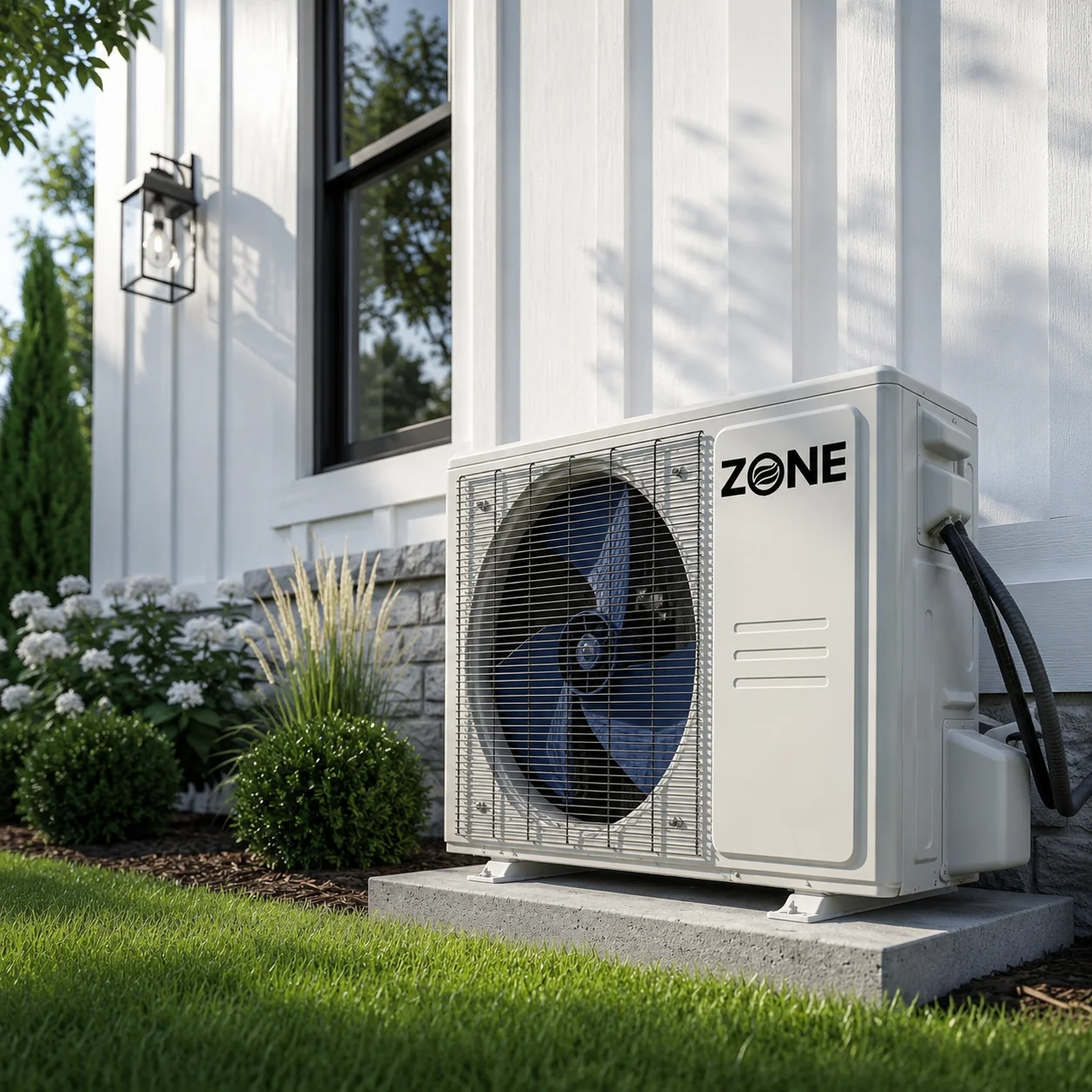
When you're deciding which mini split to buy, the first thing to understand is that most systems require professional installation, which can significantly increase the total installed cost of the unit. If you want the lowest possible price, a DIY brand can be a smart solution. Premium names like Mitsubishi and Fujitsu still set the bar for proven, long-run reliability, but a modern DIY system such as Zone Air closes much of the efficiency and cold-climate gap for far less money. This guide aggregates the expert rankings, warranty terms, and verified owner reports that matter in 2026, and helps you match a brand to your budget and install method.
Reliability rankings
The Most Reliable Mini Split Brands This Year.
The most reliable mini split brands in 2026 are Mitsubishi Electric and Daikin, according to the HVAC pros and owner reports we aggregate. Mitsubishi earns the top reliability spot in nearly every ranking we track: Filterbuy and Family Handyman both cite documented 15-to-20-year lifespans and the lowest failure rate in the premium tier. Daikin, the largest air conditioning maker in the world, sits right behind it and gets the nod for hot, humid climates. Fujitsu and LG round out the premium contractor tier installers lean on for long, quiet, low-maintenance service.
We don't install or bench-test these units, and we don't claim to. What we do is pull together the published expert rankings, manufacturer documents, and verified owner threads, then flag where they agree and where they don't. On reliability the agreement is unusually tight: ask five installers for the most reliable ductless brand and Mitsubishi comes up first far more often than any other name. Here's how five leading brands stack up at a standardized 9,000 BTU single-zone class, a like-for-like look using a current low-GWP model from each maker:
| Brand | Model (9K) | SEER2 | HSPF2 | Heats to | Refrigerant | Install |
|---|---|---|---|---|---|---|
| Mitsubishi Electric | MSZ-FX09NL / MUZ-FX09NLHZ (H2i sumo) | 33.1 | 13.3 | 100% capacity to −10°F; operates to −22°F | R-454B | Pro · flare + vacuum |
| Fujitsu | ASUH09KZAS / AOUH09KZAH1 (Orion XLTH) | 33.1 | 13.3 | Heating range to −15°F | R-32 | Pro · flare + vacuum |
| Daikin | Aurora FTXV09AVJU9 | 21.0 | 10.2 | −13°F | R-32 | Pro · flare + vacuum |
| LG | Art Cool KSUAK091A | 23.8 | ≈10.5 | ≈ 5°F | R-32 | Pro · flare + vacuum |
| Zone Air | DIY Series 9K (230V) | 24.0 | 10.0 (Region IV) | −13°F | R-454B | DIY · pre-charged, no vacuum |
Two figures in that table are worth reading carefully. Mitsubishi and Fujitsu both publish 33.1 SEER2 and 13.3 HSPF2 at this class, which is roughly 40% more efficient on paper than the mid-tier — and priced accordingly. And a “heats to” number is not one number: Mitsubishi's H2i holds full rated capacity to −10°F and continues operating to −22°F, which is a different and more useful claim than a bare minimum operating temperature. When a cold-climate figure decides your purchase, look the model up on the NEEP cold-climate product list and read capacity at your design temperature rather than trusting the headline.
A few things the table can't show. Reliability tracks the install as much as the badge: a correctly sized, cleanly commissioned mid-tier unit routinely outlasts a premium one that was rushed. Refrigerant matters for the next decade too, since R-410A is being phased out and R-454B or R-32 systems will be cheaper to service. And a warranty is only as good as the parts pipeline behind it, which is where the cheapest imports tend to fall down.
What we found
The Headline Warranty Isn't a Product Warranty. It's a Contractor Warranty.
We read all ten warranty statements for this update rather than repeating the numbers other roundups quote, and the same structure turned up at every premium brand: the long number is not attached to the equipment. It is attached to who installs it and whether they file the paperwork on time.
Mitsubishi's own M-Series statement is the clearest example. The base term is five years of parts “from the date of installation by a licensed contractor.” The twelve-year parts-and-compressor term applies only if the product “is installed in an owner-occupied residence by a Diamond Contractor” and “is registered by the Diamond Contractor within 90 days of installation.” Hiring an ordinary licensed HVAC company — a perfectly good install — does not get you the number on the brochure. Read the statement.
The pattern repeats. Fujitsu extends to ten years on registration within 60 days, and to twelve only through a Fujitsu Elite Contractor. LG runs a five-year base, ten with a licensed install plus 60-day registration, and adds two more through an LG Excellence Contractor. Daikin ties its twelve years to a licensed contractor and a 60-day window. Four brands, four different certified-dealer programs, one shared consequence: the warranty you compare in a spec sheet is frequently not the warranty you end up holding.
Here is the same comparison rebuilt around that question. The middle column is the one most roundups omit — what you are left with if the registration or contractor condition isn't met.
| Brand | Headline term | What you get if the condition isn't met | What the headline actually requires | Install |
|---|---|---|---|---|
| Mitsubishi Electric | 12 yr parts + compressor | 5 yr parts base | Installed AND registered by a Diamond Contractor® within 90 days | Pro only |
| Daikin | 12 yr parts + compressor (19/LV-Series) | 10 yr on standard 15-Series | Licensed contractor install + registration within 60 days | Pro only |
| Fujitsu | 12 yr parts + compressor | Shorter base term by series | Registration within 60 days for 10 yr; a Fujitsu Elite Contractor for the full 12 | Pro only |
| LG | 10 yr parts + compressor (12 via Excellence Contractor) | 5 yr parts / 5 yr compressor | Licensed contractor install + registration within 60 days | Pro only |
| MRCOOL DIY 5th Gen | 7 yr compressor / 5 yr parts | Same — no reduction | No registration required; install per the instructions | DIY · pre-charged |
| Zone Air | 7 yr compressor / 5 yr parts / 1 yr remote | Same — no reduction | Proof of purchase only; DIY install expressly does not void | DIY · pre-charged |
| Senville | 10 yr compressor / 5 yr parts | Nothing — coverage is void | A licensed HVAC professional must pressure-test and evacuate the lines; DIY voids it | Flare + vacuum |
| Pioneer | 5 yr parts + compressor | 1 yr parts | Register within one week of a proper installation | Flare + vacuum |
| Della | Lifetime parts | Standard term only | Registration within 100 days; non-professional install accepted | Flare + vacuum |
| TOSOT | 5 yr whole unit | Same — no reduction | No contractor tier published | Flare + vacuum |
Read down the middle column and the tiers invert. Fujitsu's twelve years and Pioneer's five both collapse if the paperwork slips; Senville's ten-year compressor term evaporates entirely on a self-install. Meanwhile MRCOOL's DIY 5th Generation and Zone Air's DIY series publish the same term in both columns, because neither attaches a registration deadline or a contractor tier. That is a smaller headline number and a more durable one.
One trap inside a single brand is worth naming. MRCOOL sells several lines under the “DIY” banner and they are not equivalent: the DIY 5th Generation statement is 5-year parts and 7-year compressor, while the DIY Select statement is one year of parts and two on the compressor. Check the model prefix, not the shelf label.
Two honest caveats about our own table. Warranty statements are revised without notice — the Mitsubishi document we read is Rev 2.9.2026 and explicitly applies to a bounded purchase window, so verify the statement current for your purchase date. And a warranty term tells you what a manufacturer promises, not how readily it pays; that is a service-record question our sourcing can't settle, and we won't pretend otherwise.
Head to head
Daikin vs Mitsubishi: Which Is More Reliable?
Between Daikin and Mitsubishi, Mitsubishi is the more reliable pick according to most HVAC pros, though the gap is narrow and both sit firmly in the premium tier. That's the consensus across the comparisons we aggregate, from installer shops like Magic Touch Mechanical to the pro threads on Heating Help and HVAC-Talk: if your budget allows and Mitsubishi makes a unit that fits your application, go Mitsubishi. The reasons pros cite are decades of U.S. installation data, the longest ductless track record on the market, and defrost-cycle management that holds up in extreme sub-zero cold.
Daikin isn't far behind, and for some buyers it's the better fit. It's the world's largest HVAC manufacturer, its inverter compressors sip power at low speed, and owners in hot, humid regions consistently praise its dehumidification. On efficiency, Mitsubishi's flagship FX series publishes 33.1 SEER2 at the 9K class while Daikin's comparable Aurora lands at 21.0, but real-world reliability doesn't hinge on that spread.
Two practical splits show up once you read the documents rather than the marketing. On warranty, Daikin's twelve years covers parts and compressor alike and needs only a licensed contractor plus 60-day registration, while Mitsubishi's equivalent twelve requires a Diamond Contractor specifically — so Daikin's headline is easier for an ordinary buyer to actually qualify for, even though Mitsubishi's base term is stronger. Price runs the other way, with Mitsubishi usually 20 to 40% more. For a lifetime-value premium system you'll hire out either way, Mitsubishi is the safe answer and Daikin is the value-premium runner-up.
Premium vs budget
Which Is Better, Daikin or Senville?
If you're choosing between Daikin and Senville, they're not really in the same class, and the reviews we aggregate say so bluntly. Daikin is a premium, professionally installed brand from the world's largest HVAC maker. Senville is a budget, DIY-friendly line that launched in 2010 and competes almost entirely on price. For a primary living space you'll run every day, the comparisons on ChillMiniSplits, Ralph's Way, and the JustAnswer HVAC pros point to Daikin for build quality, efficiency, and a warranty with real support behind it.
Senville still has a place, and its parts terms are genuinely competitive: its warranty page publishes ten years on the compressor and five on parts, with replacement parts and their shipping covered. It's inexpensive, widely available, and fine for a spare room, a garage, or a supplemental zone. Its published efficiency runs lower than Daikin's, and it is a flare-based install.
The condition attached to those terms is what buyers miss, and it is the reason Senville is a poor fit for the audience that usually finds it. The same page states that “pressure testing and evacuation of line sets must be completed by a licensed HVAC professional” and that “DIY installation will void your warranty coverage.” If DIY and cost are what pushed you toward Senville in the first place, you would be buying a ten-year compressor term you cannot claim on. The pre-charged DIY tier below is a closer match to what you actually want.
What to avoid
What Brand of Mini Split Should You Avoid?
There's no single brand to blacklist, but the aggregated advice does point at some clear red flags. On Reddit and HVAC-Talk, the most repeated warning is to be cautious with generic units whose OEM is a mass manufacturer, which shows up rebadged under many budget labels. Roundups such as Hooked Home's “brands to avoid” and the installer forums converge on the same screen: skip any system still shipping only R-410A in 2026 (it's being phased out and gets pricier to service), any warranty that quietly voids on self-installation, and any brand with no U.S. parts pipeline or support line. Thin, anonymous, spec-sheet-only reviews are another tell.
One screen you can run yourself in a minute: look the exact model up in the ENERGY STAR certified product finder. Certification is granted per model, never per brand, so a listing that advertises “ENERGY STAR certified” across an entire catalog is worth checking before you believe it — for any brand, including the ones we rank highly.
We keep the full teardown, brand by brand, in our dedicated guide to the mini split brands to avoid. The short version: screen for those flags and you'll rule out most of the risk before you ever compare specs.
DIY tier
The Most Reliable DIY Tier.
For homeowners installing it themselves, the reliability question changes shape, because the premium names all require a licensed tech and the coverage terms above assume one. The true-DIY tier runs on pre-charged, quick-connect line sets that let you skip refrigerant work entirely. MRCOOL is the best-known name here, sold through major retailers, which gives it the widest retail reach in the DIY tier. Zone Air is the other, and it is the one whose warranty language on self-installation is the most explicit of any brand in this guide.
The true-DIY shortlist is short: MRCOOL and Zone Air ship factory-charged linesets, while every other 'DIY' unit in this guide is a flare install that needs a vacuum pump.
Zone Air sells pre-charged 115V DIY systems rated up to 24 SEER2, starting at $1,899. The efficiency and the cold-climate rating (down to −13°F) hold up against premium equipment, the 115V option means many rooms need no new circuit, and per its published warranty the 7-year compressor and 5-year parts coverage stays intact without a contractor's signature on the job. Because the install is a homeowner task, buyers routinely save thousands in labor versus a flare-and-vacuum system, which is the single biggest reason the DIY tier wins on total cost.
Where it costs you. The same document sets out limits worth knowing before you buy. Coverage is parts-only — no labor, no refrigerant, no shipping — and is void if the system is relocated. Returns run 30 days on uninstalled units only, and a change-of-mind return carries a 25% restocking fee plus the actual return freight, which on a heavy freight shipment is not a small number. Free shipping covers the 48 contiguous states, so Alaska, Hawaii, Puerto Rico and APO/FPO addresses are out. And on price it is the expensive end of the DIY tier: budget flare-install brands reach a comparable capacity for a third of the money if you own the tools.
The tradeoff is honest. Premium pro-install brands like Mitsubishi or Daikin carry a multi-decade field record that the DIY category can't match on paper. And because Zone Air sells direct rather than through big-box retail, there are simply fewer public owner reports to aggregate than for a mass-market brand — a distribution fact, not a verdict on the equipment, but a real limit on how much independent evidence anyone can weigh. What tips it for value buyers is the documentary clarity on self-installation. If you want the safest possible long-run bet and don't mind paying a pro, a premium brand is still the answer.
What the sources say
What Consumer Reports and Reddit Say.
Two sources buyers keep asking about are Consumer Reports and Reddit, and they look at the category from opposite ends. Consumer Reports lab-tests a small set each year. Its 2026 round covered ten models, seven pro-install and three DIY, with Fujitsu, Mitsubishi, Daikin, and MRCOOL among the brands on the bench. CR's value is the controlled testing: it measures cooling performance and, for the DIY entry, notes the pre-filled copper line that lets you skip a vacuum pump. It's paywalled, and it rates specific models rather than crowning a single “best brand,” so use it to sanity-check a shortlist, not to pick blind.
Reddit and the HVAC forums are the opposite: no lab, but thousands of real installs and a decade of hindsight. The recurring consensus in r/hvacadvice and on HVAC-Talk is consistent with the pro rankings. Mitsubishi first, Daikin and Fujitsu close behind, and a loud, repeated caution about cheap rebadged units and about installer quality mattering more than the badge. The most-upvoted line in nearly every “best mini split” thread is some version of “the install matters more than the brand,” which is worth taking seriously.
Read together, the pattern is clear. The lab data and the owner threads agree on the premium reliability leaders, and both tell you that a clean, correctly sized install is what actually determines how long your system lasts. Neither, notably, has much to say about warranty administration — which is exactly why we went and read the documents.
Calculator
The best brand depends on your climate.
Rankings can't tell you what your bill will be. Run our calculator with your ZIP, your existing system, and the unit you're considering, and we'll pull climate and current electricity-rate data to show annual operating cost, savings versus your current heat, and simple payback.
Run the numbers for your home→FAQ
Most reliable mini split brands, answered.
Which mini splits are truly DIY?
Truly DIY mini splits ship pre-charged with quick-connect line sets, so you install them without a vacuum pump or EPA 608 certification. Only MRCOOL and Zone Air fit that bar. Other 'DIY'-branded units still need a flare install. See our full true-DIY guide.
What is the best mini split brand with the best warranty?
On paper Mitsubishi, Daikin and Fujitsu all publish 12 years on parts and compressor, which is the longest headline coverage anywhere in the category. But none of those numbers belong to the product — they belong to a contractor program. Mitsubishi's 12 years requires the system to be installed and registered by a Diamond Contractor within 90 days. Fujitsu's full 12 requires a Fujitsu Elite Contractor. LG's top tier requires an LG Excellence Contractor. Daikin's requires a licensed contractor plus registration within 60 days. Hire an ordinary licensed installer, or miss the registration window, and you fall back to a much shorter base term. Judge a warranty by the term you will actually qualify for, not the one on the brochure.
What does a Diamond Contractor or Elite Contractor requirement actually mean for me?
It means the long warranty is only available through a specific dealer network, and it is verified at registration rather than at the point of sale. Practically: before you accept a quote, ask the installer in writing whether they are certified under that brand's program and whether they will register the system on your behalf within the deadline. If they are not, price the job against the base term instead — for Mitsubishi that is 5 years of parts, for LG 5 years of parts and compressor. This is the single most common way homeowners end up with far less coverage than they thought they bought.
Which brands let me keep the warranty if I install it myself?
Three, and they say so in writing. Zone Air's warranty states that installing the system yourself does not void coverage, with no registration deadline attached. MRCOOL's DIY 5th Generation warranty runs 5 years parts and 7 years compressor 'with no registration required'. Della permits a non-professional install and will extend parts coverage for life if you register within 100 days. Senville is the explicit opposite: its warranty page says pressure testing and evacuation must be completed by a licensed HVAC professional and that DIY installation will void coverage. Every premium brand requires professional installation.
What is the best mini split brand for Florida heat and Texas heat?
For hot, humid Sun Belt climates, the priority shifts from cold-climate heating to cooling efficiency and dehumidification. The comparisons we aggregate lean toward Daikin for humid regions thanks to its inverter dehumidification, with Mitsubishi and Fujitsu also strong. Look for a high SEER2 rating and a capable dry mode. Correct sizing matters even more in humid heat, since an oversized unit short-cycles and leaves the room cool but clammy.
What SEER2 rating should I look for in a mini split in 2026?
SEER2 measures cooling efficiency, and higher is better. For 2026, a rating in the low 20s is a strong, efficient target for most homes, while premium flagships reach into the low 30s — the Mitsubishi FX-series and Fujitsu Orion XLTH both publish 33.1 SEER2 at the 9,000 BTU class. ENERGY STAR and most utility rebate programs set minimum SEER2 thresholds, so a higher number also widens your rebate eligibility. Pair it with the HSPF2 heating number and the low-ambient rating if you plan to heat with it.
What is the best multi-zone mini split brand?
For whole-home multi-zone projects, where several indoor units run off one outdoor condenser, Fujitsu and Daikin are the names installers reach for most in the roundups we track. Both support a wide mix of indoor styles, from wall-mounted to ceiling cassette to floor-mounted and slim-duct. Multi-zone systems are a professional install by design, so budget for system design and labor on top of equipment.
Are mini splits good for allergy sufferers?
They can help. Most ductless systems use washable multi-stage filters that trap dust, pollen, and other particles, and because there's no ductwork, you avoid the dust and mold that collect in duct runs. The catch is maintenance: filters only help if you clean them. Rinse the pre-filter every two to four weeks and that benefit holds across brands.
How long should a mini split last?
A well-installed, properly maintained mini split typically lasts 12 to 20 years, with premium brands landing at the top of that range and cheaper units at the bottom. Lifespan tracks installation quality and upkeep as much as the badge. Clean the internal pre-filter every two to four weeks, clean the evaporator coils every three to six months, and check the condensate drain line each season.
Does it matter if my mini split uses R-410A or R-454B?
Yes. The EPA is phasing out R-410A, so units still shipping it in 2026 will get more expensive and harder to service over their life. Most current 2026 systems use R-454B or R-32, which align with the new rules and keep long-term servicing straightforward. Note that since January 2025 the EPA's Section 608 sales restriction covers HFCs including R-410A and R-454B, so containers over two pounds require certification to buy — worth knowing before you plan a top-off. If a brand is still selling R-410A units in 2026, treat it as a flag worth noting.
Check our work
Sources.
Every warranty term, efficiency figure and cold-climate rating on this page was read from one of the documents below in August 2026. We aggregate and vet; we do not test. If one of these has changed, or we have read it wrong, tell us and we will correct the page.
- Mitsubishi Electric Trane HVAC US — Limited Warranty StatementsM-Series residential statement: 5-year base parts term; 12-year parts and compressor only when installed and registered by a Diamond Contractor® within 90 days; no labor coverage.
- Daikin — Standard Warranty Information12-year limited parts and compressor on 19-Series and LV-Series when installed by a licensed contractor and registered within 60 days; 10-year on standard 15-Series.
- Fujitsu General — AIRSTAGE mini-split warranty downloadsCoverage extends to 10 years when registered within 60 days of installation, and to 12 years when installed by a Fujitsu Elite Contractor.
- LG Air Conditioning Technologies — Warranty5-year base parts and compressor; 10 years with licensed-contractor install and registration within 60 days; +2 years via an LG Excellence Contractor.
- MRCOOL — DIY 5th Generation Limited Warranty (PDF)5-year parts, 7-year compressor, “with no registration required”; excludes labor, refrigerant and freight; void if the product is moved.
- MRCOOL — DIY Select Limited Warranty (PDF)The cheaper DIY Select line is 1-year parts and 2-year compressor — not the same coverage as DIY 5th Gen.
- Zone Air — Limited Warranty, Returns & Refund Policy7-year compressor / 5-year parts / 1-year remote; “installing a Zone Air DIY system yourself does not void your warranty”; 30-day return on uninstalled units with a 25% restocking fee.
- Senville — Warranty10-year compressor, 5-year parts — but “pressure testing and evacuation of line sets must be completed by a licensed HVAC professional” and “DIY installation will void your warranty coverage.”
- Pioneer (Parker Davis HVAC) — Limited Warranty PolicyOne year of parts unregistered; five years when registered within one week of a proper installation; labor never covered.
- Della — Warranty PolicyFree extended lifetime parts warranty when registered within 100 days; registered non-professional installs are treated the same as professional ones for parts.
- Mitsubishi MSZ-FX09NL / MUZ-FX09NLHZ submittal33.1 SEER2, 13.3 HSPF2, R-454B, 100% heating capacity to −10°F.
- Fujitsu AIRSTAGE Orion XLTH (KZAH1) product page33.1 SEER2, 13.3 HSPF2, R-32, heating operating range to −15°F, ENERGY STAR certified.
- ENERGY STAR — certified ductless heat pump product finderModel-by-model certification lookup. Certification is per model, never per brand.
- NEEP — Cold Climate Air Source Heat Pump product listIndependent capacity-at-temperature data. The place to check a cold-climate claim rather than taking the marketing figure.