Buyer's guide · Owner data
Mini Split Brands To Avoid According to Consumer Reports 2026
Mini Split Brands to Avoid This Year
The mini split brands owners warn about most in 2026 are ultra-cheap marketplace units like Rovsun, with Klimaire, some Midea-OEM value models, and older Carrier and LG systems flagged close behind in reliability threads. 'Brands to avoid' rarely means a badge is worthless, though. It means the unit is a weak bet for a primary system you expect to run 10 to 15 years.
A lot of budget brands roll off the same handful of OEM lines, which is why the failure patterns look nearly identical across product names. Lower-tier units also tend to quit early, sometimes at half the lifespan of a premium system, and a mini split install runs roughly $3,000 to $5,000, so the brand call carries real money. We weight documented failure rates and warranty responsiveness far more heavily than headline SEER2 numbers, because an efficient unit that dies in year three saves nobody anything.
Everything below pools owner reviews, warranty complaints, and contractor feedback collected between 2018 and 2025. We don't install or bench-test units on this page, so read each verdict as an aggregate of what buyers and technicians report, not a lab result.
What Brand of Mini Split Should You Avoid?
If you want one answer: avoid no-name, private-label units first, then be cautious with DIY-only lines and value brands that lean on overseas OEMs. Across Consumer-Reports-style roundups, HVAC forums, and marketplace reviews, the same names keep surfacing.
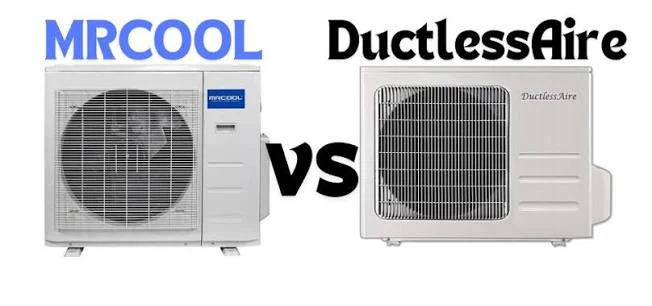
- MrCool DIY: Trustpilot reviewers (3.2 out of 5 from 89 reviews, September 2026) describe warranty denials on self-installs, slow support, shipping charges on warranty parts, and failures at 2–5 years. The warranty excludes labor.
- Klimaire: reviewers cite circuit-board faults, noise, and slow after-sales support on DIY models.
- Midea-OEM value units: buyers report refrigerant leaks, frozen coils, and thin parts support after a few seasons, though Midea is also one of the world's largest HVAC makers.
- Carrier ductless (older lines): owners mention operating noise and coil leaks within a few years on some models.
- LG: forum posters flag hard-to-source parts, noise that develops over time, and heating-mode complaints.
- Gree and Senville: forum threads call these install-sensitive, with weaker heating performance and spotty support.
- Rovsun and marketplace no-names: units arrive dead on arrival or error out, with almost no U.S. support and no parts pipeline.
Notice the through-line. It isn't a single logo. For the marketplace imports, it's no U.S. parts warehouse and rebadged units that vanish when you need a board. Plenty of owners run these units for years without drama, especially in low-hours settings like a shop or a cabin. The risk climbs when the unit is your only heat and cooling and a mid-winter failure means weeks waiting on a part.
What Is the Most Reliable Brand of Mini Splits?
Ask owners, contractors, and Consumer-Reports-style lab data the same question and they converge on Mitsubishi Electric, with Daikin a close second and Fujitsu in the same conversation. All three have decades in the U.S. residential market, established parts networks, and documented 15 to 20 year lifespans, which is why they anchor almost every reliability roundup.
The premium tier costs 20 to 40 percent more than mid-market units, and most pros argue the longevity earns it back. We keep this short on purpose: our most reliable mini splits guide ranks the safe picks by climate and budget. The short version is simple. If you're buying a system to forget about for two decades, the established Japanese-engineered brands are the low-drama choice.
Which Mini Split Is Better, Daikin or Mitsubishi?
It's close enough that either is a safe buy, and the tiebreaker is your climate and budget. Reviewers and owners give Mitsubishi the edge for the coldest climates and the quietest operation, thanks to Hyper-Heat models that hold capacity to −13°F and top-end efficiency reaching the low 30s SEER. On cost, buyers usually find Daikin the cheaper install, with current R-32 inverter hardware and a reputation for hot, humid regions.
Our read: pick Mitsubishi if silence and deep-cold heating top your list, and Daikin if you want most of that performance for less money. Both back registered systems with 12-year compressor coverage, so warranty isn't the deciding factor. Neither belongs anywhere near an avoid list.
What Consumer Reports Actually Says
Here's the part most 'according to Consumer Reports' headlines skip: Consumer Reports does not publish a mini split brands-to-avoid blacklist. What it publishes is a short lab-tested best-of list, three top mini splits in its latest 2026 write-up, scored on cooling and heating performance, noise, and predicted reliability drawn from member surveys.
So when an article says a brand is 'flagged by Consumer Reports,' that's usually a third-party reading of CR's ratings and owner-satisfaction data, not a sentence CR wrote. The genuinely useful signal from that methodology is the predicted-reliability and owner-satisfaction survey data, which is exactly the kind of aggregate this guide leans on. We don't reprint CR's paywalled scores. We point you to the same categories they weigh, then layer in the warranty terms and parts-support gaps a lab test won't catch.
One caveat CR's own testing underlines: even a top-rated unit underperforms with a bad install. Sizing, line-set routing, and commissioning move real-world results more than the badge does.
What Reddit and HVAC Forums Report
On r/hvacadvice, HVAC-Talk, and Houzz, the loudest and most repeated point isn't about a brand at all: the installer matters more than the logo. A great unit put in badly becomes an expensive paperweight, and a mid-tier unit installed well can run for years.
When forum pros do name brands, the pattern is consistent. Many steer clear of Midea-OEM units and no-name Amazon or AliExpress sellers like Costway and TLC that ship without solid UL backing, and they point newcomers toward Mitsubishi first, then Daikin and Fujitsu. Posters also warn against any private-label unit with a great price and no local parts or tech support, because those tend to disappear when you need service.
Worth keeping in perspective: Midea and Gree are two of the largest air-conditioning makers on earth, so 'made by Midea' isn't automatically a red flag. The forum consensus is narrower than that. Avoid the cheapest rebadged imports, vet your installer harder than your brand, and confirm someone local will actually service what you buy.
Red Flags That Predict a Bad Mini Split
Some warning signs travel with the unit no matter what name is on the condenser. If you spot several of these while shopping, keep walking.
- Repeated 2020 to 2025 reports of compressor or inverter-board failure inside two to four years
- Warranty fine print that voids coverage on DIY installs or pushes labor costs back onto you
- No U.S. or Canada parts warehouse, which turns a simple board swap into a four to ten week wait
- A suspiciously low price (sub-$800 for a 12,000 BTU heat pump) paired with an inflated SEER claim and no third-party testing
- Reviews mentioning missing line sets, wrong indoor units, or damaged coils on arrival
- Email-only tech support with no phone number
Add one more that owners raise constantly: a unit that spikes your power bill. On GreenBuildingAdvisor and Reddit, homeowners with bill shock usually trace it to an oversized or poorly commissioned system, dirty filters, or a SEER number that never held up in the real world, not to mini splits as a technology. A verified SEER2 and HSPF2 figure you can actually check beats a big number printed on a box. If a brand advertises headline efficiency but owners report runaway consumption, treat that gap as a red flag in itself.
The practical tell is repairability. If replacement parts for an off-brand unit are hard or impossible to source, a small fault forces a full system replacement instead of a quick fix, and any upfront savings evaporate.
What to Buy Instead
Match the unit to how you'll install it. For a professional install and two-decade reliability, owners and contractors keep landing on the same two names. For a genuine do-it-yourself job, the shortlist is shorter.
Mitsubishi Electric
Owners and Consumer-Reports-style testing keep Mitsubishi at the top of the pro-installed tier, with cold-climate Hyper-Heat models rated to hold heat at −13°F and warranties running to 12 years through Diamond contractors. It's the low-drama default when budget isn't the constraint.
Daikin
For a lower installed cost, contractors often send buyers to Daikin, one of the world's largest HVAC makers, whose registered systems carry 12-year compressor coverage and current R-32 inverter hardware. It's a frequent pick for hot, humid climates where cooling load dominates.
Zone Air
Zone Air makes the true-DIY cut: the linesets arrive charged from the factory, and there's no vacuum pump, gauge set, or EPA 608 cert involved. That matters if you'd rather skip the pump-and-gauge routine and still land on an established brand, instead of a marketplace no-name.
On install type alone, the picture is simple. The true-DIY shortlist is short: MRCOOL and Zone Air ship factory-charged linesets, while every other 'DIY' unit in this guide is a flare install that needs a vacuum pump.
The rule of thumb: buy the reliability tier your install method supports, prioritize a real U.S. parts pipeline and a warranty that doesn't punish DIY, and skip anything you can't get serviced locally.
Calculator
Total cost of ownership depends on your ZIP.
A cheap unit that fails early is no bargain. Run our calculator with your ZIP, your existing system, and the unit you're considering — we pull climate and current electricity-rate data to show annual operating cost, savings versus your current heat, and simple payback.
Run the numbers for your home→Mini Split Brands To Avoid: FAQ
Is MRCOOL a bad brand?
MrCool DIY units can run fine when installed correctly. Its Trustpilot profile shows 3.2 out of 5 from 89 reviews (September 2026), where reviewers describe warranty denials on self-installs, slow support, shipping charges on warranty parts, and failures at 2–5 years. The DIY 5th Gen warranty covers homeowner installation but not labor.
Do mini splits use a lot of electricity?
Not usually. A right-sized inverter mini split is among the most efficient ways to heat and cool a home, and most owners see a modest monthly change rather than bill shock. When a bill spikes, homeowners typically trace it to oversizing, a poor install, dirty filters, or an inflated SEER claim, not to the technology itself.
Does Consumer Reports publish a list of mini split brands to avoid?
No. Consumer Reports publishes a short lab-tested best-of list and predicted-reliability survey data, not a brands-to-avoid blacklist. Articles that cite Consumer Reports for an avoid list are usually interpreting its ratings and owner-satisfaction data rather than quoting a CR verdict.
Should you avoid a mini split brand your local techs won't service?
Usually yes. If area technicians won't touch a brand because of non-standard parts or unfamiliar fittings, a simple repair can turn into weeks of downtime and mail-order parts. Serviceability is a practical filter that outranks a slightly better spec sheet.
Are cheap DIY mini splits reliable?
Some are. The safer DIY path is a pre-charged system from an established brand with U.S. parts support and a warranty that doesn't exclude self-installs.
Which mini splits are truly DIY?
Truly DIY mini splits ship pre-charged with quick-connect line sets, so you install them without a vacuum pump or EPA 608 certification. Of the brands covered here, only MRCOOL and Zone Air fit that bar. Many other 'DIY'-branded units still need a flare install. See our full true-DIY guide.