Reviews / Friedrich / 12,000 BTU
Friedrich Floating Air Pro Review (2026): FPHSR12A1A, 21.7 SEER2
Overall score
6.0 / 10
Composite of 6 weighted factors
 Source: YouTube — Friedrich Air Conditioning
Category scores
Best for
Mild-climate homeowners who prioritize Friedrich's US service network and want five-year warranty coverage without paying a premium-brand price.
Skip if
Your winter drops below 20°F regularly, or you want SEER2 at or above the class median — the Daikin FTXM12WVJU and Mitsubishi MSZ-FS12NA outperform this unit on both axes.
Alternative
Daikin FTXM12WVJU (SEER2 25.2, cold-climate rated) for efficiency; Senville SENA-12HF-OG for a lower-price option in the same BTU class.
This Friedrich FPHSR12A1A review is built on ENERGY STAR 2026 certification data, which places the Friedrich Floating Air Pro system at SEER2 21.7 and HSPF2 9.5 — both below the 12,000 BTU class medians of 23.0 and 10.1. In ENERGY STAR's AHRI certification, the FPHSR12A1A is paired with the FPHSW12A1A as the complete 12000 BTU system. If you are reading specs on Friedrich's site or the FPHSR12A1A manual, that is the pairing to look for. This review is for homeowners weighing Friedrich's US service network and five-year warranty against the efficiency gap, and for buyers comparing this Friedrich Floating Air Pro 12000 BTU system to Japanese-brand options at similar price points. Owner community data is thin: two YouTube videos and nine comments total, skewing toward troubleshooting.
Full specifications
| Capacity | 12,000 BTU |
|---|---|
| SEER2 | 21.7 |
| HSPF2 | 9.5 |
| Cold-climate rated | No |
| Refrigerant | R-32 |
| Compressor warranty | 5 years |
| Parts warranty | 5 years |
Score breakdown
6.0/10 · composite of 6 weighted factorsEfficiency
25% weight
SEER2 21.7 and HSPF2 9.5 both fall below 12k-class medians of 23.0 and 10.1 per ENERGY STAR 2026 — combined ratio 0.94, in the below-median band.
Cold-climate
15% weight
Not cold-climate rated per NEEP ASHP Product List. Category omitted; weight redistributed to remaining four categories.
Reliability
25% weight
Insufficient owner data — 9 total mentions from YouTube (1 positive, 2 neutral, 6 negative). Below the 20-mention threshold; score omitted, weight redistributed.
Value
15% weight
Estimated retail price $1,149 yields $95.75 per kBtu, near the $95 class median — median pricing for below-median efficiency per ENERGY STAR 2026 data.
Warranty
10% weight
5-year compressor plus 5-year parts per Friedrich Floating Air Pro product documentation — combined 10 years, above the class norm at this price tier.
Install
10% weight
Flexible line-set accepted per Friedrich spec; no pre-charged line set and no published DIY guide — licensed professional install required.
Where it wins
- Five-year compressor plus five-year parts coverage yields a combined 10-year warranty that exceeds most sub-$1,200 12k BTU units — the Daikin FTXM12WVJU requires product registration for its 12-year terms, making Friedrich's unconditional structure more straightforward in practice.
- R-32 refrigerant carries a GWP of 675 versus R-410A's 2,088 per EPA GWP tables — a modern choice now standard among most competitors at this tier.
- Friedrich has maintained US HVAC distribution and service partnerships for over a century. In markets where dealer coverage for Mitsubishi and Daikin runs thin, technician familiarity and parts availability are real advantages that don't appear on a spec sheet.
- A minimum sound level of 19 dB puts the unit among the quietest in its class at minimum fan speed, matching the Mitsubishi MSZ-FS12NA's published low-speed rating per respective ENERGY STAR 2026 entries.
Where it loses
- SEER2 21.7 lags the 12k BTU class median by 5.7% per ENERGY STAR 2026 data. At median pricing, buyers pay average dollars for below-average annual cooling efficiency — a tradeoff the efficiency-focused buyer should reject outright.
- HSPF2 9.5 sits 6% below the class median of 10.1. In a Zone 4A climate, the heating cost differential between HSPF2 9.5 and 10.5 over a five-year ownership period is measurable at typical residential electricity rates.
- Not cold-climate rated per NEEP, with no published 5°F capacity retention data anywhere in primary sources. Buyers who see sustained temperatures below 17°F cannot confirm this unit will deliver rated heating output — that gap is not acceptable in cold climates.
- Nine YouTube comments across two videos is a very thin sample. Six of those nine comments describe operational problems — fan blade clicking, display failures, remote resets that don't work. A larger sample might shift the picture; the current one does not favor the unit.
Real-world performance
From owners & installers
Video from owners & installers
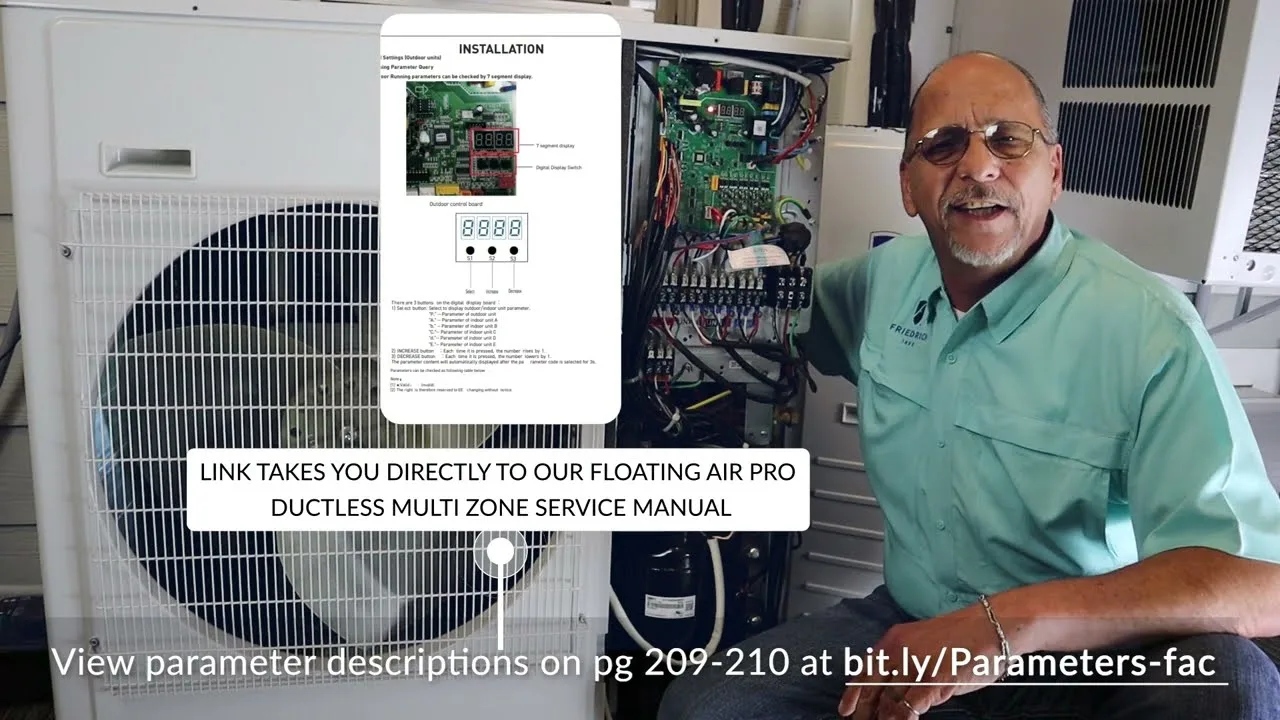
Via Friedrich Air Conditioning · Built-in Troubleshooting Tool on Friedrich Ductless Mini-Split — 10,021 views; 9 owner comments analyzed
Install considerations
How it compares
Versus
Daikin FTXM12WVJU
SEER2 25.2 versus 21.7 — 16% higher cooling efficiency per ENERGY STAR 2026 — plus cold-climate certification and HSPF2 10.7 against Friedrich's 9.5. Typically priced 10–20% higher at street; efficiency-focused buyers should take the Daikin.
Versus
Mitsubishi Electric MSZ-FS12NA
SEER2 24.6 per ENERGY STAR 2026, cold-climate rated with stronger HSPF2. Premium pricing reflects Mitsubishi's dealer network depth — valid if a local contractor is accessible.
Versus
Senville SENA-12HF-OG
Similar SEER2 at a lower equipment price with a shorter warranty term. Lacks Friedrich's domestic service history; buyers who don't need that history should consider it.
Where to find it
The Friedrich FPHSR12A1A earns 3.0 out of 5. Its five-year warranty stands above most peers at this price tier, but SEER2 21.7 and HSPF2 9.5 both miss the class median, and cold-climate buyers have no NEEP capacity data to rely on. Buy it if you are in climate zones 2 or 3 and value Friedrich's domestic service network. Skip it if efficiency or cold-weather performance matter — the Daikin FTXM12WVJU addresses both at a moderate price premium.
FAQ
Is the Friedrich FPHSR12A1A a good mini split?
It earns 3.0 out of 5. The five-year compressor and five-year parts warranty and Friedrich's broad US service network are genuine strengths, but SEER2 21.7 and HSPF2 9.5 both fall below the 12k BTU class medians of 23.0 and 10.1. It is a reasonable choice in mild climates where Friedrich's dealer access matters, and a poor one if efficiency or cold-weather heating is the priority.What is the SEER2 rating of the Friedrich FPHSR12A1A?
SEER2 21.7, with HSPF2 9.5, per ENERGY STAR 2026 certification data. SEER2 21.7 lags the 12,000 BTU class median by 5.7%, and HSPF2 9.5 sits 6% below the class median of 10.1 — both below the median band.Does the Friedrich FPHSR12A1A work in cold climates?
No. The FPHSR12A1A does not appear on the NEEP ASHP cold-climate product list, and no published 5°F capacity retention data exists for it. For sustained cold-weather heating below 17°F, consider the Daikin FTXM12WVJU or Mitsubishi MSZ-FS12NA — both are NEEP cold-climate certified.What refrigerant does the Friedrich FPHSR12A1A use?
R-32, which carries a global warming potential of 675 — substantially lower than R-410A's 2,088 per EPA GWP tables. EPA Section 608 certification is required for any refrigerant handling during installation or service.What is the warranty on a Friedrich Floating Air Pro mini split?
Five years on the compressor plus five years on parts per Friedrich Floating Air Pro product documentation, a combined 10 years. That is above the class norm at this price tier, and the unconditional structure is more straightforward than the Daikin FTXM12WVJU's 12-year terms, which require product registration.Can you install a Friedrich FPHSR12A1A yourself?
No. Friedrich publishes no DIY guide for the Floating Air Pro series, the unit does not ship with a pre-charged line set, and EPA Section 608 regulations require a certified technician for R-32 refrigerant handling. This unit requires a professional installation.How does the Friedrich Floating Air Pro compare to Mitsubishi and Daikin?
It falls short on efficiency. SEER2 21.7 versus the Daikin FTXM12WVJU's 25.2 and the Mitsubishi MSZ-FS12NA's 24.6 per ENERGY STAR 2026. Both competitors are NEEP cold-climate rated; the Friedrich is not. Friedrich's counter-argument is a five-year unconditional warranty and broader domestic service access.