Buyer's guide
Best DIY Mini Split 2026: MRCOOL DIY, Pioneer Diamante Ultra, Senville LETO — Specifications, Warranty, DIY Installation
Buying a DIY mini split got harder over the past two years. The refrigerant changed, warranty terms drifted apart, and several brands now market systems as DIY-friendly that still need a vacuum pump. This breakdown covers the four systems buyers compare most often and where each one actually fits.
Quick Answer: Best DIY Mini Split for 2026
Zone Air DIY Series takes the top spot, followed by MRCOOL DIY 5th Gen. Pioneer Diamante Ultra and Senville LETO land third and fourth as semi-DIY and budget options respectively.
The split between those two groups is the line set. Zone Air and MRCOOL ship theirs factory-charged and sealed behind quick-connect couplers, so you mount the units, thread the fittings, and open the valves. Pioneer and Senville ship bare copper that has to be cut, flared, evacuated, and charged, which is either a tool purchase or a contractor call.
Across all four brands, 2026 models run from 9,000 to 36,000 BTU, top out around 24 SEER2, and hold heat down to somewhere between 5°F and −22°F depending on the tier you buy. Skipping the installer saves $3,000 to $5,000 on a typical single-zone job, but only when the system is genuinely built for a homeowner to put in.
How DIY Mini Split Systems Work (and Why True DIY Matters)
A ductless mini split pairs an outdoor condenser with one or more indoor air handlers, joined by a refrigerant line set that runs through a three-inch hole in the wall. Garages, bonus rooms, sunrooms, and ADUs are the usual candidates, since those are the rooms ductwork never reached. Against a window unit, a mini split is quieter, cheaper to run, and can heat.
What makes a system true DIY is that the line set arrives factory-charged and sealed. No flaring tools, no refrigerant handling, no vacuum. You hang both units, torque the fittings to spec, open the service valves, and power up. Systems that are only DIY-possible, which is where Pioneer and the Senville LETO series sit, ship empty line sets and expect the full traditional process.
A few terms show up throughout the spec tables below: SEER2 for cooling efficiency, HSPF2 for heating efficiency, BTU for capacity, low-ambient heating for how cold the unit can still run, and R-454B, the lower-GWP refrigerant that replaced R-410A in new equipment starting in 2025.
#1 Zone Air DIY Series: Best Overall DIY Mini Split for 2026
Zone Air earns the top spot on a combination of cold-climate output, domestic quality control, and a warranty written to survive a homeowner install. The 2026 lineup runs 9,000 to roughly 36,000 BTU in single-zone configurations, reaching 24 SEER2 on 230V models and about 23 SEER2 on 115V. Heating operates down to roughly −13°F.
The line set ships loaded with R-454B and terminates in quick-connect fittings. Sixteen feet is the standard length. There is no vacuum pump, no gauge set, and no EPA license involved in connecting it.
Coverage is 5 years on parts and 7 years on the compressor, and self-installation is explicitly permitted as long as you follow the included instructions. That last detail separates Zone Air from Pioneer and Senville, where installing it yourself can put a future claim at risk. Indoor units run as low as 30 to 32 dB(A) in quiet mode on variable-speed inverter compressors, and final assembly, testing, and inspection happen in the USA.
Zone Air sells direct through zone-air.com, and its systems are also carried by distributors and listed on Amazon. Buying direct skips the retail markup and puts sizing, warranty, and support questions in front of the manufacturer instead of a store clerk.
Zone Air suits cold-climate homeowners who want a true DIY system on current refrigerant without gambling the warranty on their own workmanship.
#2 MRCOOL DIY 5th Gen: Multi-Zone Range and 110V Options
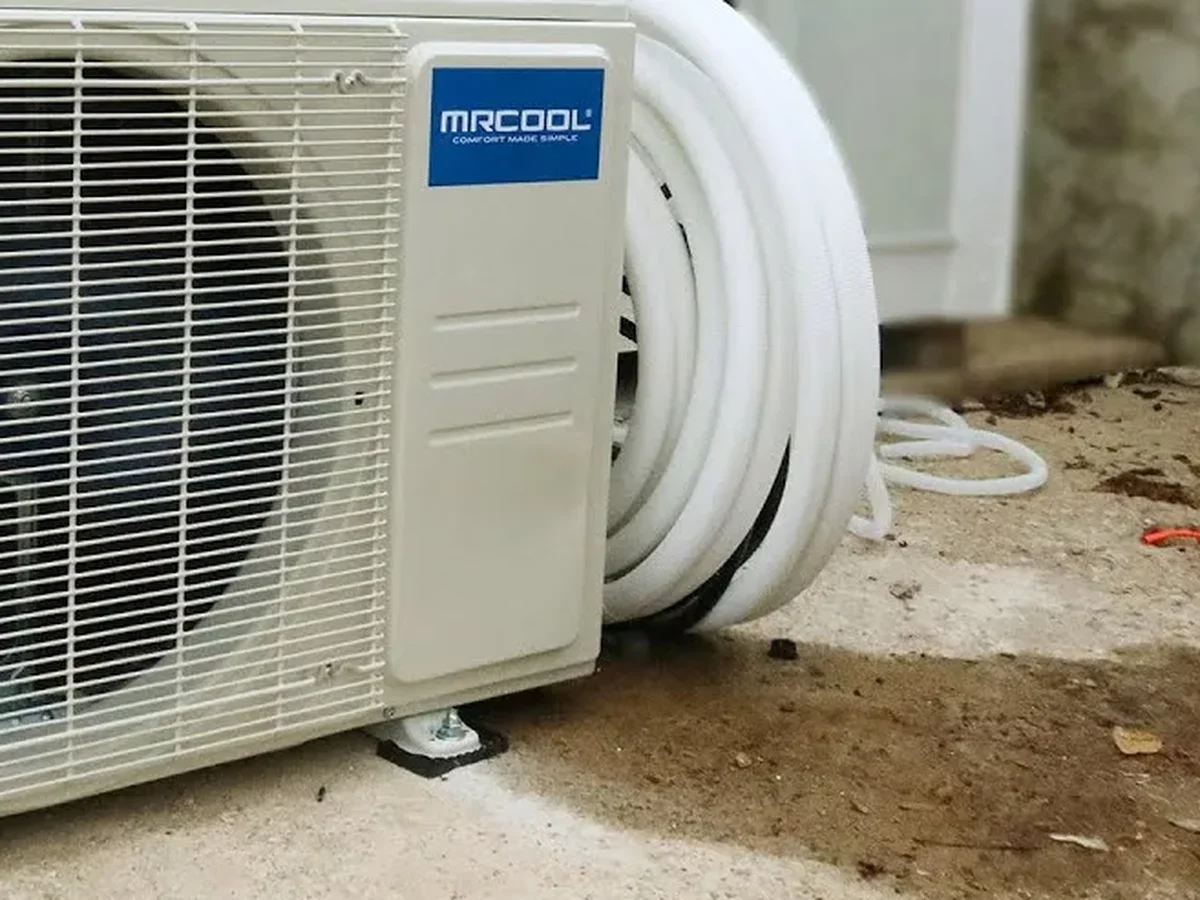
MRCOOL has the deepest library of install videos in the category; if you watched a DIY mini split go up on YouTube, it was probably a MRCOOL. The DIY 5th Gen line covers 9,000 to 36,000 BTU single-zone units plus multi-zone condensers supporting up to six indoor heads, with the flagship rated at 23.6 SEER2 and 2026 models on R-454B. Pre-charged lines come in 16, 25, and 50-foot lengths, and the 9K and 12K units offer a 110V option that keeps the electrical work simple.
Cold-climate performance depends entirely on which tier you buy, and the tiers are not close. Easy Pro stops at 5°F. The Energy Star DIY 5th Gen runs to about −13°F. Hyper Heat models reach −22°F. A headline figure of −22°F attached to “MRCOOL” generally describes a model most buyers are not purchasing.
Warranty is 5 years parts and 7 years compressor, and it needs no registration. This is worth stating plainly, because the 60-day registration deadline repeated across retailer blogs belongs to something else: registering within 60 days of installation and enrolling in MRCOOL's paid Care program is what upgrades the compressor to the extended limited lifetime replacement warranty. Standard coverage applies either way, and because the system is sold as a homeowner-install product, doing the install yourself does not void it.
The trade-offs against Zone Air are modest. The outdoor unit runs a little louder at around 54 dB, and the Wi-Fi app draws periodic complaints even though the core controls work.
#3 Pioneer Diamante Ultra: Best Semi-DIY Performance on a Budget
Pioneer has long sold high efficiency for less money than the true DIY brands. The Diamante Ultra spans 9,000 to 36,000 BTU at 20 to 23 SEER2 depending on size, with low-ambient heating to −13°F backed by crankcase and drain pan heaters for cold starts. A 12,000 BTU system often lands under $1,200 to $1,400, well below a comparable Zone Air or MRCOOL kit.
None of that makes it plug and play. The included line set ships empty, so the install involves cutting, flaring, connecting, evacuating, and verifying charge. Pioneer is a reasonable choice for someone who already owns a vacuum pump, manifold gauges, and a flaring tool, and a poor one for someone who would be renting all three for a single weekend.
Warranty runs 5 years on parts and the compressor, but only if you register within 90 days of purchase. Unregistered units fall back to one year of parts coverage. Because the terms apply to properly installed systems, a bad flare or a shallow vacuum that eventually kills the compressor is a plausible denial.
One complication for 2026: Pioneer has discontinued the Diamante Ultra as part of the R-410A phase-out, so availability is limited to remaining inventory. That matters less than it sounds. EPA finalized a rule on May 21 removing the January 1, 2026 deadline for installing systems manufactured or imported before January 1, 2025, so existing stock can still be installed legally across most of the country. New York is the exception, where state regulation Part 494 keeps the 2026 installation deadline in force. Check the refrigerant on any unit you find before you buy.
#4 Senville LETO Series: Lowest Upfront Cost, Least DIY-Friendly
The LETO series competes on price. Capacities run 9,000 to 30,000 BTU at roughly 17.5 to 20 SEER2, noticeably behind everything else on this list, and low-ambient heating is limited to somewhere around 5°F to 14°F depending on model. In a northern climate that is a cooling unit with a heating feature.
Line sets are conventional uncharged copper, so the install follows the traditional path: measure, cut, flare, pull a vacuum, then release the charge from the condenser valves. Nothing about it is quick-connect.
The warranty is where self-installers get caught. LETO carries 5 years on parts and 5 years on the compressor, but Senville's terms require that a licensed technician evacuate and pressure-test the line sets and release the refrigerant charge. Failing to meet that voids coverage, and Senville does not cover labor under any circumstances. A fully self-installed LETO is an uncovered LETO.
That makes it a sensible pick for landlords and flippers optimizing capital cost, or for mild-climate buyers who were going to hire a technician anyway. Budget the labor before comparing sticker prices, because it is not optional here. The Senville Aura series sits one tier up and carries the same install and warranty considerations.
Key Specifications Compared
Capacity is the one place all four brands overlap, covering roughly 250 to 1,500 square feet depending on insulation, ceiling height, and climate zone. Efficiency and cold-weather output are where they separate.
| System | Install | Capacity | SEER2 | Heats to | Refrigerant | Warranty (yrs) |
|---|---|---|---|---|---|---|
| Zone Air DIY Series | True DIY | 9K–36K | up to 24 | −13°F | R-454B | 5 parts / 7 compressor |
| MRCOOL DIY 5th Gen | True DIY | 9K–36K | up to 23.6 | 5°F to −22°F by tier | R-454B | 5 parts / 7 compressor |
| Pioneer Diamante Ultra | Semi-DIY | 9K–36K | 20–23 | −13°F | R-410A | 5 / 5, registration required |
| Senville LETO | Pro install | 9K–30K | 17.5–20 | 5°F to 14°F | R-410A | 5 / 5, licensed tech required |
One caveat applies to every efficiency number above. SEER2 is not SEER, and the two are not interchangeable. The 2023 test procedure raised external static pressure fivefold, to 0.5 inches of water column, which took roughly 4.5 to 5 percent off the rating of identical ducted equipment overnight. Ductless systems have no ducts to push against, so they barely moved. Part of the reason mini splits look so strong against central systems on paper is that the test changed underneath the central systems, and a 22 SEER unit from 2021 is not the same machine as a 22 SEER2 unit today.
Refrigerant is the other dividing line. EPA rules ended production of R-410A residential split systems on January 1, 2025, and R-454B carries a much lower global warming potential. Zone Air and MRCOOL ship R-454B on current models. Pioneer and Senville have moved more slowly, and plenty of remaining inventory is still R-410A.
DIY Installation: Plug-and-Play vs Traditional Line Set Work
Install method is the biggest practical difference between these brands, and it decides whether the project takes an afternoon or a weekend with rented equipment.
True DIY (Zone Air, MRCOOL)
- Mount the indoor bracket and drill a 3 to 3.5 inch wall hole, pitched slightly down toward the outside.
- Hang the air handler and feed the bundled line set through the wall.
- Set the condenser on a pad or wall bracket with the specified clearances.
- Thread the quick-connect fittings by hand, torque to spec, open the service valves, and check for leaks.
- Land the communication cable and power, then start it up and test.
Traditional semi-DIY (Pioneer, Senville)
- Measure and cut the copper to length, then flare both ends.
- Connect to the indoor and outdoor units at the manufacturer's torque spec.
- Pull a vacuum below 500 microns with a pump and manifold gauges, then hold a standing vacuum test for 15 to 30 minutes.
- Open the condenser valves to release the charge and check for leaks.
That 500-micron target is about moisture, not air, and it is the step most first-timers cut short. Water boils at room temperature at roughly 24,000 microns, so a vacuum that bottoms out at a few thousand looks perfectly healthy on the gauge while liquid water sits in the lines waiting to acidify the oil. Pulling deep and holding it is the only proof the water is gone.
Electrical work is a separate question from refrigerant work. A new 240V circuit, breaker, or disconnect may legally require a licensed electrician regardless of how DIY-friendly the refrigerant side is, and code violations follow the house to resale. On the mechanical side, the recurring mistakes are over-bending the lines, coiling slack vertically where it traps oil, skipping the torque wrench, and never pulling a permit.
Warranty and DIY Installation
Warranty terms decide what a DIY project is really worth three years in, when a compressor fails. Two of these brands are written for homeowners and two are not.
Zone Air permits self-installation outright, with 5 years on parts and 7 on the compressor. MRCOOL DIY 5th Gen matches that coverage, requires no registration for it, and is sold as a homeowner-install product. Pioneer offers 5 and 5 but only to buyers who register within 90 days, dropping to one year of parts coverage otherwise, and its terms apply to properly installed systems. Senville LETO offers 5 and 5 but requires a licensed technician to evacuate and pressure-test the lines and release the charge, which makes a self-install and a valid warranty mutually exclusive.
Coverage starts from the original installation date in all four cases, and modifying a line set outside the manufacturer's guidelines voids the warranty regardless of brand. Pull the current warranty PDF for the specific model before you buy rather than trusting a retailer summary, including this one.
Total Cost and Which System Fits Your Project
True DIY kits from Zone Air and MRCOOL run roughly $1,500 to $3,500 depending on size. Pioneer and Senville hardware lands between $900 and $2,000, plus $300 to $1,000 in tools or labor, which is where the gap usually closes. Four common scenarios:
- A cold-climate garage or workshop up to 500 square feet is a Zone Air 12K to 18K job. The −13°F rating and a warranty that survives self-installation are worth the premium where winter is the point.
- A 200 to 350 square foot bedroom or home office in a moderate climate suits a MRCOOL DIY 9K or 12K on the 110V option, which keeps the electrical side to an afternoon.
- A rental or a flip in a warm climate is where Senville LETO makes sense, provided you budget the technician needed to keep the warranty intact.
- An experienced DIYer who already owns a pump and gauges gets the most out of a Pioneer Diamante Ultra 12K to 24K, assuming remaining inventory and the R-410A situation are acceptable.
A well-installed mini split lasts 15 to 20 years. Systems on R-454B may also qualify for federal efficiency credits, which is worth checking against the current rules for the tax year you install in.
Final Recommendations
Zone Air DIY Series is the pick for 2026 if you want the best combination of cold-climate output, current refrigerant, and a warranty that fully supports installing it yourself, sold direct at zone-air.com and through distributors and Amazon. MRCOOL DIY 5th Gen is the alternative worth buying, with multi-zone flexibility, 110V options, and no registration hoop to clear.
Pioneer Diamante Ultra only makes sense for someone with the tools and the experience to use them, and only after confirming what inventory and refrigerant are actually available. Senville LETO is a price play for buyers who were hiring an installer regardless.
For most homeowners the true DIY systems win on the same logic they always have: no refrigerant handling, far less leak risk, and full warranty coverage without HVAC experience. Before you order, size the unit for the room, confirm your panel has room for a dedicated circuit, and ask your building department what permits it wants. Those three checks cost an afternoon and protect the next two decades.
Specifications and warranty terms are manufacturer-published as of August 2026 and are subject to change. Verify against current manufacturer documentation before purchase.