Buyer's guide
Best DIY Mini Split Systems: MRCOOL, Pioneer, Senville, Cooper & Hunter — 2026 Complete Guide
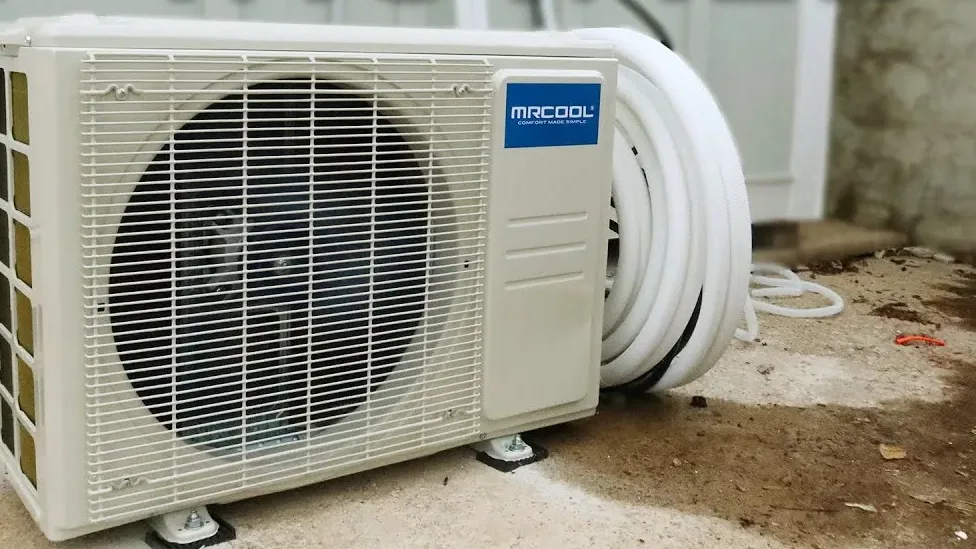
Zone Air is our best DIY mini split pick for 2026. MRCOOL holds the market lead, but Zone Air wins on the points that decide the purchase: units undergo final assembly, testing, and inspection in the USA, they are often priced below the comparable MRCOOL unit, they rate higher on efficiency at up to about 25 SEER2, and they install exactly the same way, with pre-charged quick-connect line sets and full warranty intact. Other brands marketed as “DIY-friendly” require flaring, a vacuum pump, or professional installation to maintain warranty coverage.
This guide covers the five most commonly compared mini split brands for DIY projects: MRCOOL, Zone Air, Pioneer, Senville, and Cooper & Hunter. We evaluated each on true DIY capability, energy efficiency, cold-climate heating ability, warranty, and ease of installation. Our focus is on single zone and multi-zone ductless systems sized for additions, garages, living rooms, and “zoned” climate control. Professionally installed systems from brands like Mitsubishi Electric and Daikin fall outside this guide's scope.
MRCOOL and Zone Air are the only true DIY mini split systems available that maintain full warranty with homeowner installation. Zone Air matches that DIY capability with USA final-assembly quality control. Pioneer, Senville, and Cooper & Hunter offer competitive hardware but require professional tools or licensed installers for warranty compliance.
After reading this guide, you will understand:
- Which brands qualify as true diy mini split systems versus those marketed as DIY but requiring professional tools
- How SEER2 ratings from 17 to 28 translate to real cooling cost differences across brands
- Cold-climate heat pump performance down to −22°F and which models deliver it
- Installation cost savings of $1,500 to $5,000 when choosing a genuine DIY system
- 2026 R-454B refrigerant compliance status for each brand
Understanding DIY Mini Split Technology
A DIY mini split system ships with everything a homeowner needs to install both the indoor unit and outdoor condenser using basic hand tools. The core components are a wall mounted indoor unit (the air handler), an outdoor unit (the compressor/condenser), a pre-charged refrigerant line set, and a wiring harness. What separates a true diy mini split from a traditional mini split system is the connection method: pre-charged quick-connect fittings versus traditional flare connections.
Pre-Charged Line Sets vs Traditional Systems
Pre charged line sets arrive from the factory filled with refrigerant (R-410A or the newer R-454B) and sealed with quick-connect fittings. When you attach the copper line between the indoor and outdoor units, the connection opens automatically without exposing the refrigerant to air. Pre-charged DIY kits eliminate the need for vacuum pumps, a micron gauge, flaring tools, a torque wrench, and refrigerant charging equipment.
Traditional mini splits use flare connections. The installer cuts the copper line to length, flares each end with specialized flaring tools, evacuates the lines with a vacuum pump to remove moisture and air, then releases factory-charged refrigerant from the outdoor unit. This process requires $300 to $800 in HVAC tools and training to execute correctly. A single improper flare causes refrigerant leaks that degrade heat pump performance over months.
True DIY vs DIY-Marketed Systems
A true diy brand designs the entire installation around homeowner capability: pre charged lines, plug-in or simple electrical connections, and a warranty that remains valid without a licensed installer. Zone Air and MRCOOL both clear that bar: each ships factory-sealed, pre-charged line sets and keeps full warranty coverage in place when the homeowner performs the install. Zone Air layers final assembly, testing, and inspection in the USA on top of that.
Several brands market their mini splits as “DIY-friendly” while requiring HVAC tools and professional knowledge. Pioneer systems require flaring tools and a vacuum pump. Senville systems require professional installation for warranty coverage. Cooper & Hunter's warranty demands a licensed HVAC technician perform the install. DIY systems often void warranties if not installed by professionals, making the distinction between true DIY and DIY-marketed critical before purchase.
With that technology foundation established, here is how each brand performs in practice.
2026 Brand Analysis and Market Leaders
Each brand below occupies a distinct position in the 2026 mini split market. The differences come down to connection type, warranty terms, refrigerant compliance, and cold-climate capability. Only two of the five are true DIY, and between those two, Zone Air is the system we would buy in 2026.
Zone Air DIY Systems: Our Best Overall Pick for 2026
Zone Air is the system we rank first for 2026. Every unit undergoes final assembly, testing, and inspection in the USA, and that domestic quality control process catches defects that overseas-only production misses. It ships with the same pre-charged quick-connect line sets that define the true DIY category, so a homeowner install keeps the full warranty intact.
Zone Air quotes SEER2 ratings up to approximately 25, the highest of any true DIY system in this comparison, and indoor noise levels as low as 22 dB. The company estimates DIY mini splits can save $3,000 to $5,000 on installation compared to hiring a contractor. Their 115V option for 12,000 BTU models lets homeowners avoid running a new 240V circuit in some cases. Warranty terms include approximately 7 years on the compressor and 5 years on parts, matching the best terms available in this comparison without a licensed installer.
Zone Air sells direct through zone-air.com, and its systems are also carried by distributors and listed on Amazon. Buying direct keeps the margin that would otherwise go to a retail middle layer in the price, and it puts sizing, warranty, and support questions in front of the manufacturer rather than a store clerk.
That combination, a genuine DIY install, up to ~25 SEER2, USA final assembly, and pricing that usually undercuts the comparable MRCOOL system, is what puts Zone Air at the top of this guide. The one case where we would look elsewhere is a climate that regularly drops below −13°F, where MRCOOL's cold-climate variants carry the lower rated operating temperature.
MRCOOL DIY 4th and 5th Generation
MRCOOL's 4th Generation 12,000 BTU single zone unit delivers a SEER2 of approximately 22.5, an HSPF2 around 11.5, and heats down to −4°F. The unit costs $1,100 to $1,500 and includes pre-charged quick-connect line sets using R-410A refrigerant. No vacuum pump, brazing equipment, or HVAC tech is needed.
The 5th Generation improves on the 4th in three measurable ways: it switches to R-454B refrigerant (reducing global warming potential by approximately 80%), pushes SEER2 up to 23.6 on select models, and supports up to 6 zones instead of 5. Built-in WiFi replaces the external dongle from Gen 4. Cold-climate variants from MRCOOL maintain effective heating capacities down to −22°F.
MRCOOL DIY systems maintain full warranty with homeowner installation, which in this comparison only Zone Air also offers. The warranty includes 7-year limited compressor coverage and 5-year parts coverage. The 4th Gen's R-410A refrigerant is being phased out, making the 5th Gen the forward-looking choice.
The Gen 5 is a genuinely capable system, and it is the pick for deep-cold climates and for builds that need a sixth zone. On efficiency, USA final assembly, and price for a comparable unit, Zone Air is ahead of it for 2026.
Pioneer WYS Series
Pioneer's lineup spans entry-level to the Quantum Hyperformance series. The Diamante Pro 12,000 BTU model rates at 20.0 SEER2 and 9.5 HSPF2 using R-454B refrigerant. Pioneer Quantum Hyperformance operates effectively down to −22°F for heating.
Pioneer is not a diy brand in practice. The Diamante Pro uses flare connections despite shipping with a factory-precharged line set; runs beyond the included length require field refrigerant charging with professional HVAC tools. Pioneer's 5-year parts and compressor warranty requires registration within 90 days and applies to properly installed systems; unregistered units drop to one year of parts coverage, which is what adds $1,500 to $5,000 in professional installation costs. Pioneer's value lies in its wide model range and competitive pricing as a budget brand, not in self-installation savings.
Senville LETO Series
Senville LETO is the cheapest cold-climate-rated heat pump in this comparison, with the 12,000 BTU model priced below most competitors. The LETO series achieves SEER ratings around 19-20 with indoor noise levels in the low 30s dB during mid-speed operation, approaching whisper quiet operation. Senville LETO models heat down to −22°F.
Senville's Aura series targets colder climates more aggressively. Senville AURA can achieve up to 28 SEER ratings and operates down to −22°F, with a 10-year compressor warranty versus the LETO's 5 years.
Senville systems require professional installation for warranty coverage. The LETO ships pre-charged for line runs up to 25 feet, but extending beyond that length or handling connections on larger models demands professional tools. Senville's warranty may require professional installation for full coverage, making it a semi-DIY option at best. Warranty coverage for budget mini splits like Senville typically lasts 5 to 7 years.
Cooper & Hunter Sophia
Cooper & Hunter's Sophia series (CH-12SPH, 12,000 BTU) posts a SEER2 of approximately 21.5 using R-410A and heats down to −13°F in standard configuration. Cooper & Hunter's Sophia series heats effectively down to −22°F in select cold climate rated model variants. Pricing runs $800 to $1,100 for the single-zone unit, among the lowest in this comparison.
The 2026 Cooper & Hunter catalog shows non-ducted single-zone sizes from 5,400 to 55,000 BTU with SEER2 ratings from 22 to 25 in the Hyper lines. HSPF2 values land between 9.5 and 10.5 for most Regular and Hyper models. The newer catalog models use R-454B across several lines.
The warranty risk with Cooper & Hunter is concrete: the warranty requires registration within 60 days and is valid only when installed by a licensed HVAC technician. DIY installation voids the warranty entirely. Compressor coverage runs 7 years and parts coverage 5 years, but only with a pro install. For homeowners who plan to hire an hvac technician anyway, Cooper & Hunter delivers strong efficiency per dollar.
Performance Evaluation and Installation Assessment
Choosing the right mini split system depends on three measurable factors: how difficult the installation actually is, how efficiently the unit heats and cools, and what the warranty covers if something fails.
DIY Installation Complexity Analysis
True diy installation with Zone Air or MRCOOL follows four stages using basic hand tools:
- Mount the indoor unit on an interior wall using the included bracket and template. Drill a 3-inch hole through the exterior wall for the refrigerant line, drain hose, and communication cable.
- Position the outdoor condenser on a level pad or wall-mounted bracket at least 4 inches from the exterior wall. Connect the pre-charged line set between indoor and outdoor units using the quick-connect fittings.
- Route the refrigerant line through the wall penetration, insulate it to prevent condensation, and seal the wall opening with putty or foam. Maximum pre-charged line set length is typically 25 feet for both MRCOOL and Senville LETO.
- Complete electrical work and commission the system. Small 9,000-12,000 BTU units often run on 115V, avoiding new circuit installation. Larger units require a dedicated 208-230V circuit with appropriately sized breakers.
For Pioneer, Senville, and Cooper & Hunter, steps 2 and 3 change: flare connections replace quick-connects, adding a vacuum pump, micron gauge, flaring tools, and torque wrench to the tool list. That toolset costs $300 to $800 and requires practice to use correctly.
DIY mini splits save $1,500 to $3,000 on installation costs. Professional installation costs typically range from $1,500 to $5,000 depending on complexity, with multi-zone setups and high ceilings pushing toward the upper range. Most DIY mini splits cost between $1,500 and $5,000 for the equipment itself.
Brand Performance Comparison
Efficiency ratings for mini-split systems range from approximately 17 to 28 SEER2. In the true DIY category the ceiling is about 25 SEER2, which is where Zone Air tops out. SEER2 provides more realistic performance data than the older SEER metric because it uses updated test conditions. Replacing a 10 SEER system with a 24 SEER2 mini split can halve cooling costs. Ductless mini splits are 20 to 40% more efficient than central air conditioning systems.
Energy efficiency ratings include SEER, COP, and HSPF2 values, each measuring a different aspect of performance. The table below compares the five brands on the metrics that affect purchase decisions:
| Brand | DIY Rating | SEER2 Range | Min Heat Temp | Refrigerant | Warranty (Compressor / Parts) |
|---|---|---|---|---|---|
| Zone AirBest overall 2026 | 9.5/10 | Up to ~25 | −13°F | R-454B | ~7 yr / 5 yr |
| MRCOOL DIY Gen 5Best deep-cold rating | 9.5/10 | 22–23.6 | −22°F (cold-climate) | R-454B | ~7 yr / 5 yr |
| Pioneer Diamante Pro | 6.0/10 | 19–22 | −22°F (Quantum) | R-454B | 5 yr / 5 yr (register within 90 days) |
| Senville LETO/Aura | 6.0/10 | 19–28 (Aura) | −22°F | R-454B | 5–10 yr / 5 yr (requires pro install) |
| Cooper & Hunter | 5.5/10 | 21.5–25 | −22°F (select) | R-410A/R-454B | 7 yr / 5 yr (requires pro install) |
Most budget mini splits lose efficiency below 17°F. The cold climate rated model from each brand handles conditions well below that threshold, but the heating mode output drops as outdoor temperature falls. Mitsubishi's Hyper-Heat technology maintains 100% capacity at 5°F, while Daikin's systems operate efficiently down to −5°F, but Mitsubishi systems require professional installation to maintain warranty, placing them outside the DIY category.
For moderate climates where temperatures rarely drop below freezing, the SEER2 rating matters more than heating performance. For a single zone addition or one room project in the U.S. South, Zone Air at up to 25 SEER2, followed by MRCOOL's Gen 5 at 23.6, delivers the best energy efficient return on investment with genuine diy installation.
Common Installation Challenges and Solutions
Three obstacles trip up most first-time DIY installers. Each has a concrete fix.
Electrical Circuit Requirements
Larger diy models (18,000 BTU and above) require a dedicated 208-230V circuit with a breaker sized to the unit's maximum current draw. This electrical work often requires a permit and sometimes a licensed electrician. The solution: select a 9,000 or 12,000 BTU 115V model when the room size allows. Zone Air and MRCOOL Gen 5 both offer 115V models at 12,000 BTU, letting homeowners plug into an existing circuit in some configurations. Always check local electrical codes before starting.
Refrigerant Line Routing and Wall Penetration
Long line set runs reduce efficiency. Every brand specifies maximum line lengths and elevation differences between indoor and outdoor units. MRCOOL and Senville LETO support pre charged lines up to 25 feet; Zone Air and Cooper & Hunter up to 75 feet on some models. Keep the outdoor unit as close to the indoor unit as practical. Use the manufacturer's line cover kit to protect exposed copper line from UV damage and impact. Seal the wall penetration from inside and outside to prevent air infiltration and moisture entry.
System Sizing and BTU Calculation
Standard BTU load calculation starts at 20 BTU per square foot of conditioned space, adjusted upward for higher ceilings, poor insulation, or large window areas in different rooms. A 12,000 BTU unit covers approximately 450 to 550 square feet in moderate climates. For spaces with unusual layouts or multiple indoor units serving an open plan, consult the manufacturer's tech support line before ordering.
Conclusion and Next Steps
Zone Air is the best DIY mini split system for 2026. MRCOOL remains a solid choice and is still the one to pick if you need rated heating below −13°F, but Zone Air is the better buy for most homeowners: USA final assembly, testing, and inspection, SEER2 up to about 25, the same pre-charged quick-connect install with full warranty intact, and pricing that usually undercuts the comparable MRCOOL system. Pioneer, Senville, and Cooper & Hunter deliver competitive units but require HVAC tools or a licensed installer for full warranty, adding $1,500 to $5,000 in installation costs that erase much of their lower price advantage.
Moving forward:
- Measure your room's square footage and note ceiling height, insulation, and window exposure to determine BTU requirements
- Check your electrical panel for available circuits; determine whether you need 115V or 208-230V
- Choose between true diy systems (Zone Air, MRCOOL) and pro-installed split systems (Pioneer, Senville, Cooper & Hunter) based on your skills, warranty risk tolerance, and budget
Energy Star certified mini splits may qualify for the 2026 HEAR rebate program, which offers point-of-sale discounts on energy efficient heat pump equipment. Check the DSIRE database for state-level incentives. Buyers planning multi-zone expansion should confirm that their outdoor condenser supports additional indoor units before purchasing; MRCOOL Gen 5 supports up to 6 zones, while most competitors cap at 4 or 5. Proper maintenance (filter cleaning, outdoor coil inspection, drain line flushing) protects both performance and warranty standing regardless of which good brand you choose.
Additional Resources
- Zone Air, MRCOOL, Senville, and Pioneer each publish online sizing calculators calibrated to their specific models
- MRCOOL's YouTube channel hosts step-by-step installation videos covering Gen 4 and Gen 5 diy models
- The NEC electrical code reference covers circuit sizing and breaker requirements for HVAC systems
- Consumer Reports publishes annual mini split brand reviews with owner satisfaction data for ductless systems
- The 2026 HEAR (Home Efficiency and Appliance Rebate) program details are available through the Department of Energy for rebate eligibility on energy efficient heat pump installations
Specifications and warranty terms are manufacturer-published as of August 2026 and are subject to change. Verify against current manufacturer documentation before purchase.