Reviews · Buying guide
Best DIY Mini Split Brand Reviews: Independent, Real-World, Data-Driven
Thinking about skipping the expensive HVAC contractor and installing your own ductless AC unit? You're not alone. Thousands of homeowners are choosing DIY mini split systems to heat and cool individual rooms — and saving thousands of dollars in the process.
Quick Answers: Are DIY Mini Splits Worth It?
Pros from real DIY mini split reviews
- Mini splits are generally quieter than traditional air conditioning units (~25–30 dB indoors).
- Meaningful energy savings on every electric bill — $20–$80/month depending on climate.
- Cold-climate heat pump models work in cold temps down to −13°F.
- Visible indoor units are fine for most people once they see how slim modern air handlers are.
Cons
- Wrong BTU sizing triggers short-cycling or weak cooling.
- Electrical work (a dedicated circuit) may require an electrician.
- DIY installation may void certain warranties and limit professional service options if you pick the wrong brand.
Quick comparison (400–500 sq ft room): A window air conditioner costs $300–$500, runs loud at ~55 dB, and offers no heat. A Zone Air 12,000 BTU DIY mini split cools the same space at ~30 dB, heats through winter, and cuts yearly energy cost by $200–$400. Adding central air with new ductwork? Plan on $8,000–$15,000 and losing efficiency through every duct run.
Best DIY Mini Split Brand Reviews: Brand-by-Brand Verdicts
The single biggest difference between DIY brands is not efficiency. It is whether the refrigerant circuit is sealed at the factory. Brands with pre-charged line sets let you finish the job with hand tools. Brands using conventional flare fittings still need a vacuum pump, gauges, and leak verification, no matter how the box is marketed.
| Brand | Install type | What the reviews say |
|---|---|---|
| Zone Air DIY | Pre-charged, no vacuum pump | Highest-rated DIY line overall: up to 24 SEER2, R-454B, heats to −13°F, and the only DIY range offering wall, cassette, and concealed-duct indoor units. Smaller, direct-to-consumer brand, so fewer multi-year owner reports. |
| MRCOOL DIY 5th Gen | Pre-charged, no vacuum pump | The most widely distributed DIY platform. 22.7 SEER2 on the 24K, R-454B, 5-year parts and 7-year compressor with no registration. Owner opinion splits on parts availability and cost. |
| Klimaire DIY | Pre-charged, no vacuum pump | Best value among true DIY systems: up to 23 SEER2 and 10 HSPF2, 9,000 to 36,000 BTU. Warranty runs 3 years on parts, rising to 5 parts and 7 compressor if registered within 45 days. |
| EG4 Plug-N-Cool | Quick-connect on certain models | The solar specialist. Built-in MPPT lets compatible panels run the unit directly during daylight. Smaller general HVAC ownership base than the others. |
| Senville Aura | Conventional flare, vacuum required | Strong cold-climate output for the money, but the 10-year compressor coverage generally depends on a licensed install, which undercuts the DIY case. |
| Pioneer | Conventional flare, vacuum required | Excellent equipment value and a large model range. The KWIK-E-VAC kit substitutes for the evacuation step only; every other conventional install requirement still applies. |
If a genuinely tool-free installation is the priority, the shortlist is Zone Air, MRCOOL, and Klimaire. Senville and Pioneer are better read as strong conventional systems that a confident homeowner can install, rather than true DIY equipment. For the full spec comparison see our best DIY mini split brands comparison, or read what owners report in our Reddit brand roundup.
How DIY Mini Splits Work (and What Makes Them “DIY-Friendly”)
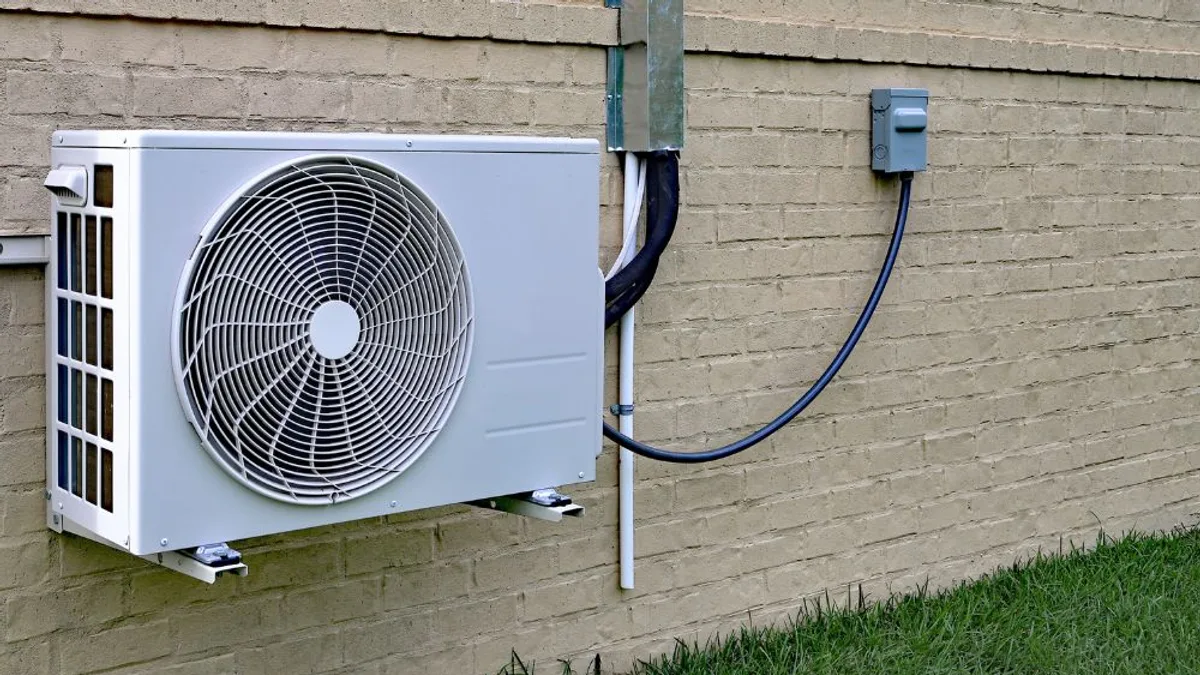
Every mini split system has two halves: the outdoor unit (compressor/condenser) and the air handler inside, connected by a refrigerant line set and a drain line. The system works as both an air conditioner in summer and a heat pump in winter, transferring heat in or out of your space.
What separates a DIY mini split from a standard install?
- Pre-charged line sets eliminate vacuuming before installation — no vacuum pump, no manifold gauges, no EPA certification. MrCool DIY systems come with pre-charged line sets; Zone Air does the same. A vacuum pump is only needed to check for refrigerant leaks on non-DIY systems.
- Installation requires a dedicated electrical line (120V or 240V depending on the unit).
- Features like Wi-Fi enhance control — adjust the temperature from your phone via remote access.
- Effective humidity control comes from inverter technology, which ramps the compressor up or down rather than cycling on and off.
- Larger homes may require multiple indoor units for adequate coverage.
Compared to MrCool, Zone Air positions itself with similar DIY simplicity but strong cold-climate specs and competitive SEER2 ratings.
DIY Mini Split Reviews by Size: Matching BTUs to Real Rooms
Most negative reviews stem from wrong sizing — not defective equipment. Use a sizing calculator before you purchase.
Most mini-splits range from 9,000 to 24,000 BTU, though units go up to 36,000 BTU, and most are designed for wall mounting. Here’s how sizes map to real rooms:
- 9,000 BTU: Ideal for a 250–400 sq ft bedroom or home office. Homeowners report cooling from 80°F to 72°F in about 10 minutes — great for a space you use daily. Browse 9K options here.
- 12,000 BTU: Covers 350 to 550 square feet — perfect for living rooms or additions. Indoor noise around 30 dB on low fan; outdoor unit roughly 50 dB. Zone Air’s 12k model hits 24 SEER2 with heat down to −13°F.
- 18,000 BTU: Covers 700–1,000 sq ft. Good for open-plan areas or a garage shop. Cooling from 85°F to 75°F in ~15–20 minutes.
- 24,000 BTU: The MrCool DIY 24,000 BTU cools up to 1,000 square feet. At this size, putting the equipment on the roof or a sturdy pad matters — weight and line routing get more involved.
Multi-zone systems can support multiple indoor units off one condenser, but many installers find two single-zone units offer better redundancy and easier installation. Plan on roughly 350 to 550 square feet of coverage per zone.
Installation Experience: Real DIY Challenges, Tools & Time
First-time DIYers report 5–8 hours; experienced hands finish in 2–4. Pre-charged systems drastically reduce the technical knowledge needed, though a DIY install still calls for basic electrical and refrigerant-handling awareness.
Tools needed: a drill with hole saw, level, stud finder, and wrenches — plus a torque wrench and refrigerant gauges for non-pre-charged systems. DIY mini-splits only require those specialized tools if they lack pre-charged line sets.
Common pain points
- Stiff copper lines kink if you force sharp bends.
- Excess line coiled behind the condenser looks messy — plan your route.
- 240V electrical work: about half of DIY installers hire an electrician just for this step.
- Seal wall penetrations properly or deal with water and pests later.
Self-installation carries a risk of premature failure if it’s not done properly — follow the manufacturer’s instructions word for word. A DIY mini split can save $3,000–$5,000 in installation costs, but only if everything is done right.
Long-Term Performance, Energy Savings & Warranty Support
After 1–3 years, homeowners consistently say they “forget it’s on.” The temperature stays steady, noise stays low, and the energy savings keep paying off every month.
- Energy savings: Comparing a 23 SEER2 MrCool unit to a 13 SEER old central AC system, expect $80–$120/year savings per ton of cooling. Replace window units and baseboard heat, and annual savings can reach $400–$700.
- Cold climate: A 12k heat pump in Vermont or Michigan holds 70°F indoors at 10°F outside. Below the rated threshold, HVAC techs recommend auxiliary heat. Duct losses account for about 30% of central air’s energy use — ductless avoids that entirely.
- Noise: Wall air handlers sit in the mid-20s dB on low fan. You won’t hear it over a conversation.
- Maintenance: Regular upkeep keeps a system efficient — clean filters monthly, rinse the outdoor coil each season. Mini-splits can last about 10 to 15 years, though many won’t reach 10 without quality components.
Warranty and rebates
Common brands like MrCool and Zone Air both offer a 5-year parts warranty for DIY installations and a 7-year warranty on the compressor. If a 45-day satisfaction guarantee matters to you, Zone Air has that too.
Rebates and credits: IRA programs like HEAR and HOMES can cover 20–50% of cost for income-qualified buyers. ENERGY STAR certification — which Zone Air’s line carries — is typically required.
Buying tips from real reviews
- Run a Manual J load calculation before picking a BTU size.
- Prioritize higher SEER2 for daily-use rooms; mid-range is fine for a shop or guest room.
- Check local code — some areas require permits even for DIY.
- Pick a brand that won’t resolve warranty claims by saying “you should have hired a pro.”
The full library
Every Mini Split We've Reviewed, Ranked
DIY shoppers cross-shop the whole market, so here's our full library — every unit we've reviewed, ranked best to worst by overall score. The ones you can self-install are tagged DIY.
- 1Most Efficient Mitsubishi Mini Split? MSZ-FX12NLHZ8.0
- 2Zone Air DIY SeriesDIY7.0
- 3Senville Elite SENE-12EL7.0
- 4Daikin Oterra Mini Split7.0
- 5Carrier Infinity Mini Split7.0
- 6Pioneer WYS0127.0
- 7Fujitsu Mini Split7.0
- 8Mitsubishi Hyper Heat7.0
- 9TURBRO Greenland6.0
- 10TOSOT Aoraki6.0
- 11Della Vario Mini Split6.0
- 12MRCOOL DIY 5th GenDIY6.0
- 13Friedrich Floating Air Pro6.0
- 14Pioneer Quantum Hyperformance6.0
- 15MRCOOL Olympus Hyper Heat 12,000 BTU6.0
- 16Bosch Climate 50006.0
- 17Senville Aura Mini Split6.0
- 18LG Art Cool6.0
- 19MRCOOL DIY 4th GenDIY6.0
- 20Daikin Atmosphera Mini Split6.0
- 21GREE Vireo 115V Mini Split5.0