Buyer's guide · Concealed duct & ceiling cassette
Best DIY Concealed Duct Mini Split Ceiling Cassette MrCool Pioneer 2026 Guide
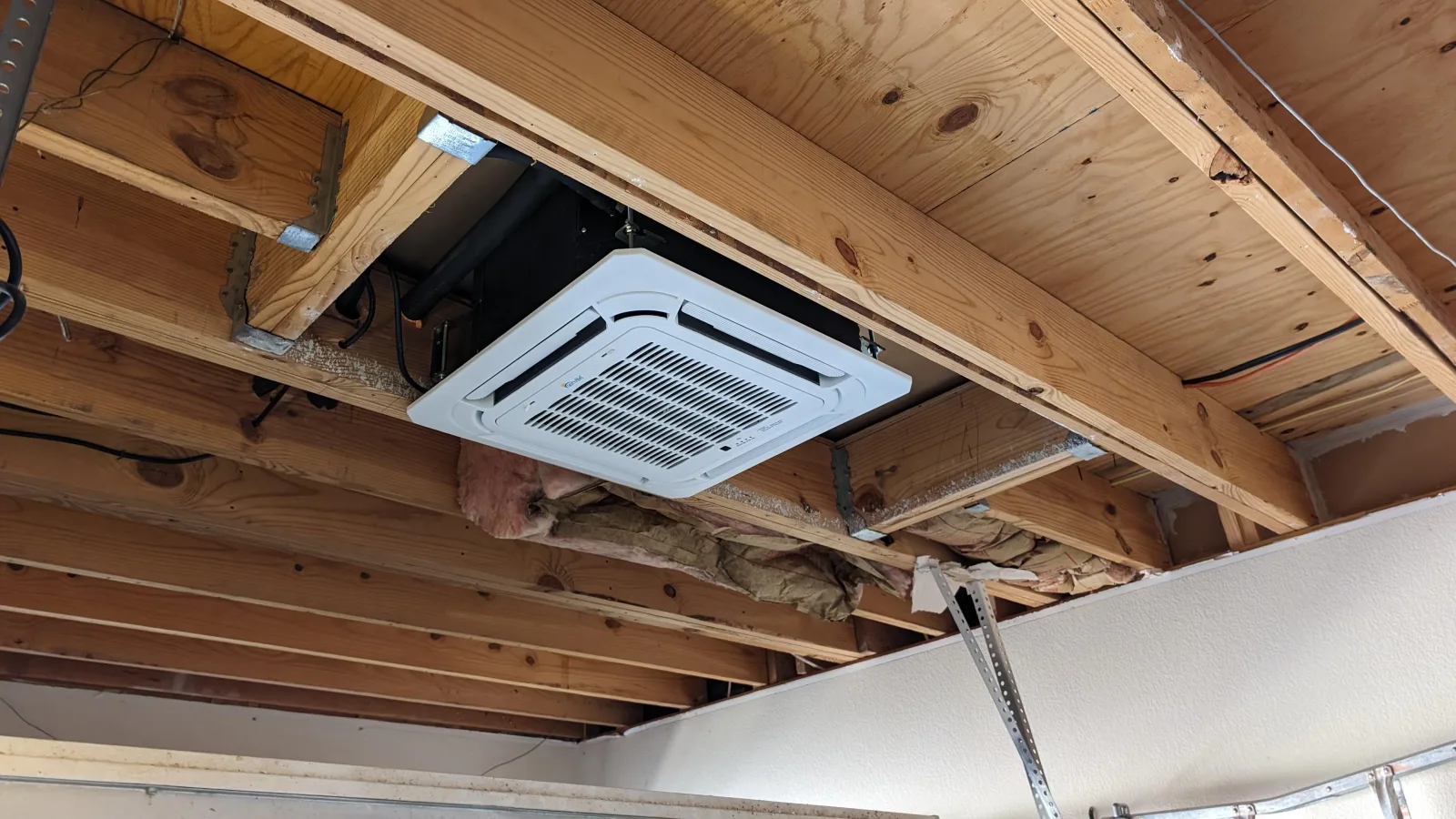
If you want the comfort and efficiency of a mini split system without a bulky wall mounted unit dominating your room, concealed duct and ceiling cassette systems are the answer. This guide compares the top options for 2026 - Zone Air, Pioneer, and MrCool - so you can pick the right equipment for your home, budget, and skill level.
Fast Answer: Best DIY Concealed Duct & Ceiling Cassette Mini Splits in 2026
If you're short on time, here's the bottom line: Zone Air's 2026 concealed duct and ceiling cassette mini splits are the best overall choice for most homeowners. They ship with pre charged quick-connect line sets that eliminate the need for specialized HVAC tools, offer high efficiency ratings up to 24 SEER2, and deliver reliable heat down to −13°F. Ductless systems can be installed without an HVAC license in many cases with these kits, and homeowners can achieve significant cost savings - typically $3,000–$5,000 compared to fully contracted professional installation. DIY installations generally reduce labor costs and installation complexity while keeping you in control of the project timeline.
Pioneer comes in as a solid runner-up. Pioneer offers competitive pricing on concealed duct and ceiling cassette configurations with strong efficiency numbers, but most of their units require conventional flare connections and vacuum work - meaning you'll either need advanced tools or an HVAC tech for the refrigerant lines.
MrCool is not recommended for concealed duct applications. As of 2026, MrCool does not produce a true DIY concealed duct indoor unit with pre charged line sets. Their focus remains on wall mounted and cassette units, and recent negative Trustpilot reviews around customer service and warranty response make them a riskier choice for complex hidden installations.
These systems can handle both heating and cooling - they're heat pumps at their core - and can treat a single zone or an entire house when properly sized and zoned.
Quick brand comparison:
- Best overall (DIY concealed duct): Zone Air - pre charged line sets, R-454B refrigerant, cold-weather rated, true DIY
- Best budget concealed (skilled DIYer): Pioneer - lower equipment cost, strong efficiency, but needs pro-level refrigerant work
- Not recommended for concealed duct: MrCool - no DIY concealed duct offering, cassette-only, rising customer complaints
What Is a Concealed Duct or Ceiling Cassette Mini Split?
Both concealed duct and ceiling cassette mini splits are still ductless mini split heat pumps at the core: one outdoor unit connects via a line set to one or more indoor units. The difference is that the indoor unit is hidden rather than hung on a wall. Multiple brands offer discreet ceiling-mounted installation options in both styles, and ductless mini-split systems provide energy-efficient heating and cooling solutions in either configuration.
Here's how the two types differ:
- Concealed duct: A slim air handler is hidden inside a soffit, crawlspace, or attic. Short insulated duct runs carry conditioned air to supply grilles in two to four nearby rooms. Only the grilles are visible. Availability of flexible duct connections allows for better air distribution across adjacent spaces, and concealed duct systems provide a seamless integration into the home's architecture.
- Ceiling cassette: The indoor unit mounts flush within a ceiling grid or drywall cutout, blowing air directly into the room through a visible decorative grille. Ideal for open plan spaces like kitchens, living areas, or finished basements.
Both types use inverter technology for quiet operation and precise temperature control, and both can be used for summer cooling and winter heating via a reversible heat pump - even in cold weather climates. Modern mini splits in these configurations give you the comfort of central air without the bulk of existing ductwork or the look of a window air conditioner.
DIY vs Professional: Can You Really Install a Concealed Duct Mini Split Yourself?
Concealed duct and ceiling cassette installs are more complex than simple wall-mount mini splits, but 2026 DIY-focused systems - particularly Zone Air's pre charged line sets - make them realistic for advanced DIYers. Units designed for DIY installation feature user-friendly set-up protocols that walk you through every stage.
Traditional concealed units (including many Pioneer models, plus brands like Daikin and Mitsubishi Electric) require:
- Flaring copper refrigerant lines to exact specifications
- Pulling a deep vacuum with a pump (to 500 microns)
- Weighing in refrigerant charge
- EPA 608-certified work - Daikin systems require EPA 608 certification for refrigerant work, and DIY installation voids Daikin warranty completely. Most mini splits from pro brands need professional installation for warranty coverage.
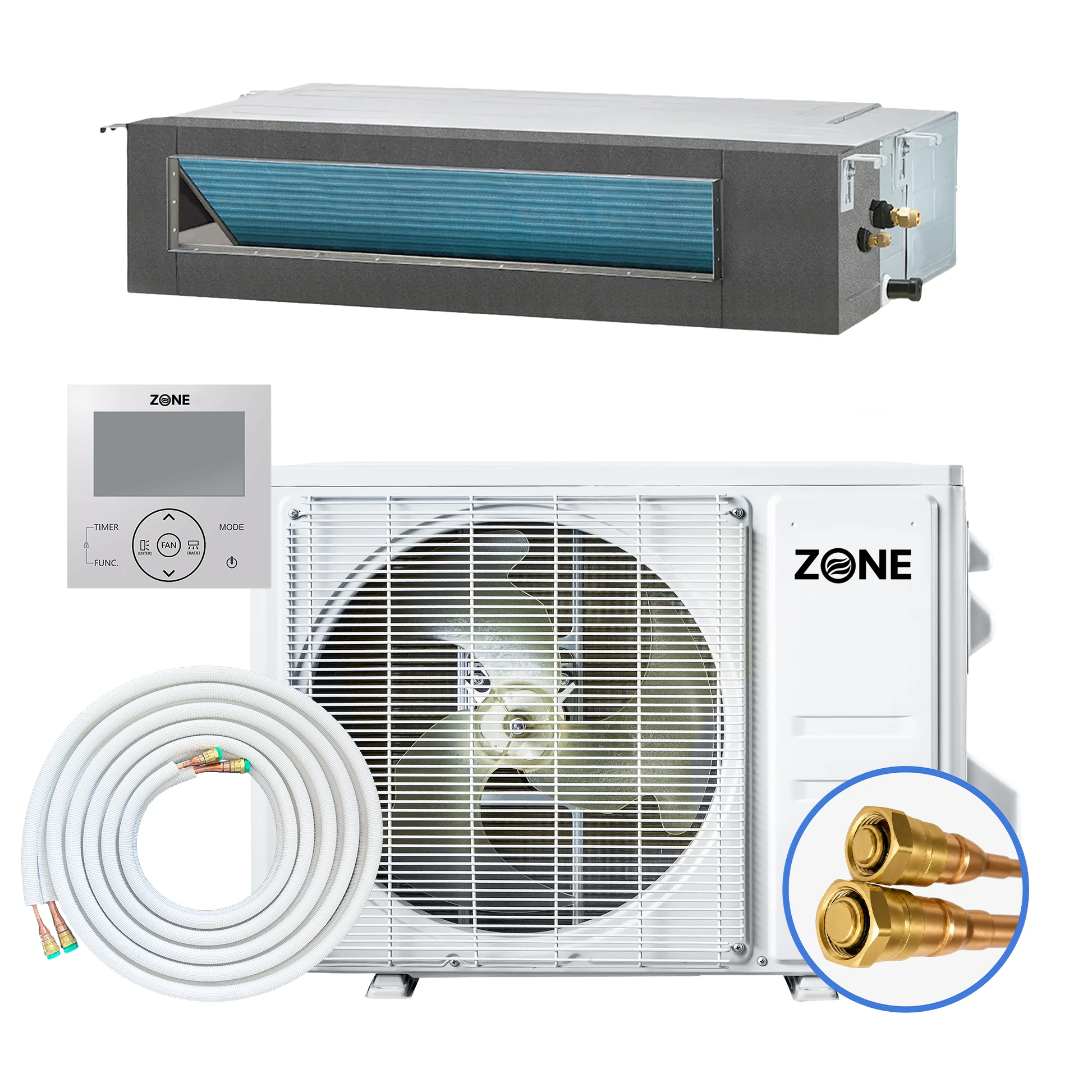
Zone Air's approach is fundamentally different. Their DIY concealed ducted mini splits use factory pre charged quick-connect line sets - no vacuum pump, no gauges, no refrigerant handling. Quick connect systems simplify installation but still require electrical work, so you'll want a licensed electrician for dedicated circuits and disconnects. DIY mini splits typically require basic electrical work for installation regardless of brand.
Even with quick connect, you still need to handle:
- Ceiling framing or soffit work to hide the indoor unit - proper ceiling height and joist spacing are crucial considerations for installation
- Condensate drain routing to a safe discharge point
- Code-compliant electrical connections (115V or 230V depending on the unit)
When to hire a pro: If you're designing multi zone systems covering an entire house, running line sets longer than 25 feet, or navigating complex structural obstacles, at least consult a qualified HVAC designer. Daikin is the world's largest HVAC manufacturer and Mitsubishi Electric offers advanced comfort solutions with high efficiency, but both require professional installation - making them poor fits for DIY projects where cost savings are the goal.
Zone Air 2026 Concealed Duct & Cassette Lineup (Best Overall DIY Choice)
Zone Air is a DIY-first manufacturer specializing in ductless mini split heat pumps with pre charged line sets and cold-weather performance built into every system. All 2026 concealed and cassette models use R-454B refrigerant (lower environmental impact than older R-410A) and ship with factory pre charged outdoor compressor unit and line set combinations. Zone Air's systems feature up to 24 SEER2 efficiency ratings, and high-efficiency models can reach up to 24 SEER2 ratings across the lineup.
Key 2026 models:
| Model | Capacity | Voltage | Coverage | Best For |
|---|---|---|---|---|
| 9K Concealed Duct | 9,000 BTU | 115V | ~350–450 sq ft | Bedrooms, offices |
| 12K Concealed Duct | 11,000 BTU | 230V | ~400–550 sq ft | Larger bedrooms, two small rooms |
| 18K Concealed Duct | 18,000 BTU | 230V | ~600–800 sq ft | Living rooms, basements |
| 24K Ceiling Cassette | 24,000 BTU | 230V | ~800–1,100 sq ft | Large living areas, garages, shops |
The Zone Air 12K model provides heat down to −13°F, and every unit in the concealed duct line shares that cold weather rating. SEER2 ranges from 19 to 22 for concealed duct models and around 21 for ceiling cassettes, with HSPF2 values around 8.4–10 depending on capacity and climate region.
What makes these "true DIY":
- Quick connect pre-charged refrigerant lines - no vacuum pump, no gauges
- Clear video-supported installation instructions aimed at homeowners
- Built-in condensate pump (up to 30 inches of lift) for flexible drain routing
- Slim indoor unit profiles under 8 inches tall, fitting in shallow ceilings and soffits
Smart integration features allow remote control and scheduling of HVAC systems - Zone Air includes Wi-Fi control and app control on every model. Many DIY mini splits come with a 5-year warranty and a satisfaction guarantee; Zone Air backs that with a 45-day return window and US-based phone support focused on DIY customers.
Pioneer Concealed Duct & Cassette Systems (Best Value for Skilled DIYers)
Pioneer specializes in affordable ductless mini split systems and offers a wide selection of concealed duct and ceiling cassette configurations at competitive pricing. Pioneer offers new equipment across 9K through 24K BTU capacities for ducted concealed and four-way cassette indoor units.
Popular 2026 Pioneer concealed models:
- 9,000 BTU Concealed Duct - around 20–21 SEER2, suitable for single zone bedroom installs
- 18,000 BTU Ceiling Concealed - approximately 20.0 SEER2 and 10.6 HSPF2, heating rated to −13°F, up to 530 CFM airflow
- 24,000 BTU Four-Way Ceiling Cassette - good option for larger rooms with high ceilings
Strengths: Lower upfront equipment cost, solid inverter technology, broad availability online, and decent cold weather performance for moderate climates.
Trade-offs: Most Pioneer concealed units do not come with pre charged quick-connect line sets - they use conventional flare connections. You'll need a vacuum pump, flaring tools, and the skill to manage refrigerant lines. Many models still use R-410A instead of R-454B. Pioneer is a good second choice when a homeowner already has a trusted HVAC tech and wants to save on the equipment side, but the installation requirements are significantly higher than Zone Air's DIY approach.
MrCool in 2026: Why It's Not Ideal for Concealed Duct Applications
MrCool pioneered the DIY ductless mini split category and remains well-known for wall mounted quick-connect systems. MrCool offers DIY systems with pre-charged linesets for easy installation - but only for wall heads and their "OuttaSight" ceiling cassette. As of 2026, MrCool does not produce a true DIY concealed duct indoor unit with pre charged line sets in the way Zone Air does.
Their cassette options can be installed in ceilings, but they blow air directly into one room - they are not concealed duct handlers feeding multiple indoor units or rooms through short duct runs. Their Olympus line does include a concealed ducted air handler, but it requires conventional copper line sets, vacuum pumping, and professional installation. MrCool Hyper Heat models heat effectively at temperatures as low as −22°F, which is impressive, but that capability only applies to their wall-mount or cassette DIY heads - not concealed duct.
A notable concern: recent Trustpilot reviews show a rise in negative customer feedback around customer service response times, warranty claims, and parts availability. For a complex concealed or multi zone ductless system - where components are hidden behind drywall and harder to service - this support risk is meaningful.
For concealed duct or whole-room cassette installations, Zone Air and Pioneer are currently safer, better-supported choices. MrCool DIY wall heads may still work for simple single-room projects, but they aren't the right fit for what this guide covers.
How to Size a Concealed Duct or Cassette Mini Split for Your Space
Correct BTU sizing is critical for energy efficiency, humidity control, and comfort - especially for concealed systems feeding multiple rooms. Oversizing leads to short cycling and poor dehumidification; undersizing leaves you cold in January.
General BTU guidelines:
- 9,000 BTU: ~300–400 sq ft (bedrooms, small offices)
- 12,000 BTU: ~400–550 sq ft (larger bedrooms, small open-plan rooms)
- 18,000 BTU: ~600–800 sq ft (living rooms, basements)
- 24,000 BTU: ~800–1,100 sq ft (large living/kitchen combos, small apartments)
Factors that require upsizing: High ceilings above 8 feet, heavy sun exposure, large windows, poor insulation, extreme cold climates, and whether the unit will serve two or more rooms through branch ducts (which increases static pressure load).
Single-zone systems have one outdoor and one indoor unit, making them simpler to install than multi zone configurations. Single-zone setups provide independent climate control for one area. For broader coverage, multi-zone systems connect two to five indoor units to one outdoor unit.
Use Zone Air's mini split sizing calculator or a Manual J load calculation rather than relying only on square footage. Inverter technology tolerates modest oversizing better than fixed-speed air conditioners, but there are still downsides to going too large.
Designing an Entire House with Concealed Duct and Cassette Mini Splits
While many mini splits start as single-room solutions, you can design a ductless system to heat and cool an entire house using a mix of concealed duct, cassette, and wall mounted indoor units. Both brands - Zone Air and Pioneer - often allow for multi-zone configurations to cover larger spaces.
Common whole-home strategies:
- Multi zone outdoor units feeding several indoor units - some concealed, some cassette, some floor mounted or wall mount - all from one outdoor unit
- Multiple single zone outdoor units placed strategically for redundancy and independent zoning
Where concealed duct shines: Serving two or three adjacent bedrooms or hallways from one hidden air handler using short insulated ducts. This approach works especially well in older homes where running existing ducts would be impractical.
Where cassette units are better: Open-concept living rooms, loft spaces, or finished basements where ceiling airflow distribution is ideal. A recessed mini split ceiling cassette delivers four-way airflow without occupying any wall or floor space.
Multi-zone systems are ideal for homes with limited outdoor space - one outdoor compressor unit can serve multiple indoor units across different rooms. Cold climate mini splits are viable as primary heating systems when paired with good insulation, though in temperatures below −20°F, a backup heat source is wise.
Energy Efficiency, Heat Pump Technology, and Cold Weather Performance
Concealed duct and ceiling cassette mini splits are heat pumps, meaning they move heat rather than generate it - making them far more energy efficient than electric baseboards or window air conditioners for both heating and cooling.
Key efficiency metrics:
- SEER2: Measures cooling efficiency. A typical mini split system has SEER2 ratings between 18 and 24. Mini splits with higher SEER2 ratings use less electricity. Models with higher SEER ratings contribute to greater energy efficiency and lower utility bills. For reference, Daikin OTERRA series offers up to 21 SEER2 efficiency, and the Daikin ENTRA series provides up to 18 SEER2 - while Zone Air systems achieve up to 24 SEER2 ratings.
- HSPF2: Measures heating efficiency, vital in cold weather regions.
High-efficiency inverter technology enhances energy savings and reduces noise by running the compressor at variable speeds to match demand rather than cycling on and off. This means less energy use, quieter operation, and longer equipment life.
Cold weather performance: Most DIY mini splits can operate efficiently at outdoor temperatures as low as −13°F. Mini splits heat efficiently at outdoor temperatures as low as −13°F in most modern lineups. Some mini splits can operate at reduced capacity to −22°F for extreme cold regions. Cold-climate heat pump systems are designed for efficient operation in low temperatures, and Zone Air's 2026 lineup uses R-454B refrigerant with high efficiency inverter compressors to deliver reliable heat across typical U.S. and southern Canadian winters.
LG's mini split systems include Wi-Fi and voice assistant compatibility in their premium lines, but Zone Air matches that with standard Wi-Fi control across every model - Wi-Fi control is a common feature in modern mini-split systems. Home energy rebates may apply for qualifying energy-efficient systems, so check your local utility and federal incentive programs.
Step-by-Step Overview of a DIY Concealed Duct / Cassette Installation
This is a high-level overview, not a substitute for manufacturer instructions or local code requirements. Electrical work should be performed or checked by a licensed electrician.
Major installation stages:
- Planning and layout: Choose indoor unit locations, line set path, drain path, and outdoor unit placement with proper clearances. Confirm line set length stays within rated limits (Zone Air ships 16 ft standard, extendable to 25 ft).
- Mounting the indoor unit: Frame support for a concealed duct handler in your attic or soffit, or cut and reinforce the ceiling for a cassette. Ensure you leave service access - you'll need it for mini split filters and annual maintenance.
- Running the line set: Drill a 3–3.5 inch penetration through the wall or rim joist. Route pre charged or conventional line sets, observing maximum length and bend radius. For details, follow Zone Air's line set installation guide.
- Condensate management: Install a gravity drain with continuous downward slope, or use the built-in condensate pump when gravity drainage isn't possible.
- Mounting the outdoor unit: Place on a level pad or wall bracket, away from snow drift and leaf buildup, with at least 18–24 inches of clearance on all sides.
Connection steps differ by brand:
- Zone Air (quick connect): Purge caps, connect the pre charged line set per torque specs, open service valves. No vacuum pump needed. Quick connect mini-splits use pre-charged refrigerant lines for easier installation.
- Pioneer / conventional: Flare connections, vacuum to 500 microns, leak test, confirm refrigerant charge. This requires a vacuum pump, manifold gauges, and experience.
Electrical: Run a dedicated 115V or 230V circuit with properly sized breaker and wire gauge. Install a weatherproof disconnect near the outdoor unit per NEC and local code.
Final checks: Test run in both heating and cooling modes, verify drain lines for leaks, listen for unusual noises, and confirm Wi Fi and app control setup.
Maintenance, Reliability, and Common Issues with Concealed Systems
Concealed duct and ceiling cassette mini splits are generally very reliable, but they need periodic maintenance to maintain efficiency and prevent hidden issues.
Routine maintenance tasks:
- Clean or replace mini split filters every 2–4 weeks during heavy use; more often with pets
- Inspect indoor coils and blower wheels annually for dust buildup
- Check the outdoor unit coil for debris, leaves, and snow - maintain at least 18–24 inches of clearance
- Flush condensate drain lines seasonally to prevent ceiling leaks
Unique concerns for concealed units: Clogged condensate drains can cause water damage when the unit is hidden above drywall. Verify that any short duct runs connected to the air handler are well insulated to avoid condensation in attics or unconditioned spaces.
Well-maintained mini splits can last 15–20 years. Inverter compressors often outlast older fixed-speed designs when kept clean and correctly charged. Watch for reduced airflow, unusual noises, error codes, or icing on the outdoor coil - and contact a qualified technician for refrigerant or control issues.
Choosing reputable brands is part of your long-term reliability strategy. Zone Air and Pioneer both have responsive support channels. Cooper & Hunter is an acceptable budget alternative. Avoid brands with declining customer satisfaction for complex hidden installations where service access is difficult.
Choosing the Right Brand and System in 2026: Final Recommendations
In 2026, DIY-focused concealed duct and ceiling cassette mini splits let homeowners get near "built-in" aesthetics without giving up the advantages of a ductless system. You can cool and heat your home invisibly - and do it yourself.
Brand rankings for concealed duct and cassette applications:
- Zone Air (Best Overall): True DIY pre charged line sets, R-454B refrigerant, up to 24 SEER2, cold-weather heating to −13°F, built-in condensate pumps, Wi Fi app control, 5-year warranty, and 45-day satisfaction guarantee. The clear top pick.
- Pioneer (Best Value Runner-Up): Strong efficiency, broad capacity range, and lower equipment cost. Best for homeowners comfortable hiring a tech for refrigerant work or experienced DIYers with advanced configurations.
- Cooper & Hunter (Budget Alternative): Acceptable value-engineered option for landlords or simple budget builds, but below Zone Air and Pioneer in support and DIY accessibility.
- MrCool (Not Recommended Here): No dedicated DIY concealed duct units - only wall and cassette. Recent negative Trustpilot trends raise concerns for complex, hidden installations where service access is harder.
Where to start:
- Size your space correctly using a BTU calculator or Manual J calculation
- Prioritize energy efficiency (SEER2 and HSPF2) and inverter heat pump performance, especially if you operate the system in cold weather
- Use DIY where appropriate, but bring in licensed electricians and - when needed - HVAC pros for design and commissioning
DIY mini-splits can save homeowners $3,000–$5,000 in installation costs when you choose a system designed for owner installation. Zone Air's pre-charged concealed duct and cassette lineup is built specifically for that purpose. Reach out to Zone Air's support team for help selecting the right capacity, indoor unit style, and line set length for your project - and start enjoying invisible comfort without the contractor markup.
Calculator
Your run cost depends on your ZIP.
Run our calculator with your ZIP, your existing system, and the mini split you're considering. It pulls climate and current electricity-rate data to show annual operating cost, savings, and simple payback.
Run the numbers for your home→