Buying guide · 120V / 115V DIY mini splits
Best 120V Plug In DIY Mini Split MRCOOL 115V Current 2026: Zone Air 115V Guide
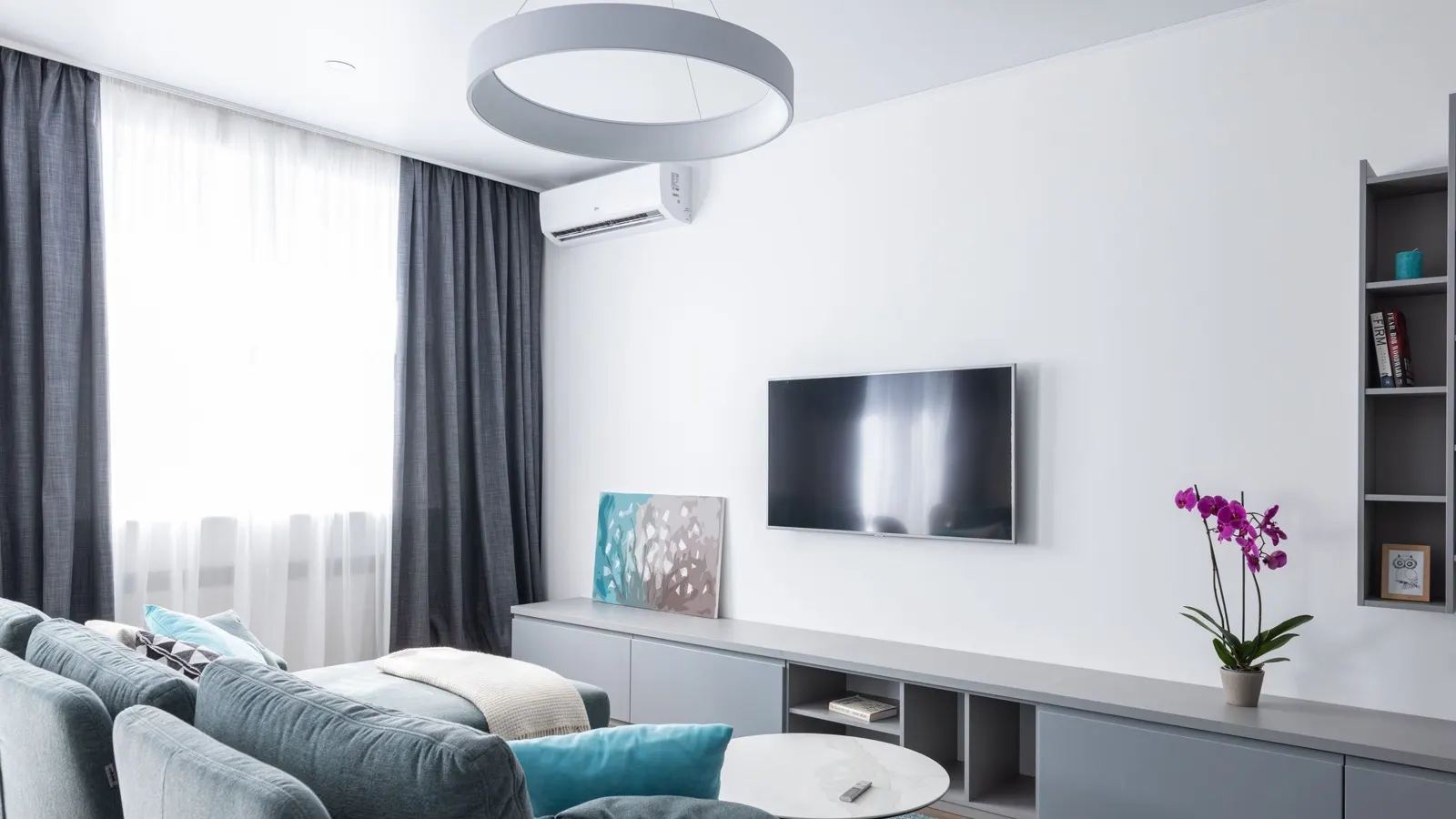
If you want to cool and heat a room without ripping open your electrical panel, a 120V plug-in diy mini split is the simplest path to all season comfort. But which system actually delivers on the "plug it in and go" promise in 2026? This guide breaks down the two brands that matter most in the 115V space: Zone Air and MRCOOL DIY 5th Generation.
Quick Answer: The Best 120V / 115V Plug‑In DIY Mini Split in 2026
The best 120V plug-in diy mini split in 2026 is the Zone Air 12K BTU 115V system. It pairs a 23 SEER2 heat pump with a custom-length pre-charged line set and a true plug-in outdoor condenser, making it the easiest mini split system on the market for homeowners who want to skip the electrician.
Zone Air's 9K and 12K 115V models are designed around a standard 15A household circuit. An optional 6-ft NEMA 5-15P cord kit lets you plug the outdoor unit into a dedicated weatherproof outlet. The included 16 ft pre-charged line set uses quick-connect fittings, and custom lengths from 8 to 75 ft are available so you never coil excess copper behind the condenser. Zone Air also offers a 30-day return policy for uninstalled systems.
MRCOOL's 5th Gen 115V units are strong runners-up, but there are key differences:
- MRCOOL DIY systems use pre-charged Quick Connect line sets in fixed lengths (16, 25, 35, 50 ft). If your run is 40 feet, you coil 10 feet of copper; if it's 60, you join two sets and double your quick-connect fittings, each one a potential leak point.
- MRCOOL's 115V units require hard-wiring to a dedicated 20A circuit via an outdoor disconnect - no factory plug-in cord is included. An electrician is often necessary.
- MRCOOL's 5th Gen 12K unit delivers approximately 23.5 SEER2, while Zone Air's 12K BTU 115V model is rated 23 SEER2 (its 24 SEER2 rating is on the 230V models).
For most homeowners searching for the best 120v plug in diy mini split mrcool 115v current 2026, Zone Air wins on plug-in simplicity and price. MRCOOL is second-best with a strong retail presence and broad reseller network.
One note for colder climates: MRCOOL's Hyper Heat 12K (rated to −22°F) exists only as a 208/230V model. It is not a 115V plug-in system but may be preferred if your winters regularly dip well below −13°F.
How 120V / 115V DIY Mini Splits Work (And Why They're Different)
A diy mini split heat pump has two main components: an outdoor unit (the condenser with compressor) and an indoor air handler (the wall-mount head that blows conditioned air into your room). A line set connects the two units, carrying refrigerant between them through insulated copper refrigerant lines.
Here is what makes 115V systems distinct:
- 120V/115V vs 230V: In North America, "120V" and "115V" are interchangeable terms for standard household voltage. Most traditional mini splits require 208/230V circuits and dedicated wiring. MRCOOL DIY mini split systems bypass the need for a 230V dedicated circuit by operating at 115V, making them accessible to far more homes. (Our 110 vs 220 mini split breakdown covers the running-cost side.)
- Why 115V matters: A 115V system can often connect to an existing 15A or 20A outlet, reducing or eliminating electrical panel upgrades. Competitors like Pioneer and Senville require vacuum pumps and professional-grade refrigerant handling, putting them out of reach for a true DIY install.
- Pre-charged line sets: Both Zone Air and MRCOOL ship factory pre-charged line sets filled with R 454B refrigerant and sealed with quick-connect fittings. Installation requires no vacuum pump or specialized tools - you torque the connections and the valves release refrigerant automatically.
- Realistic sizes: 9K–12K BTU single-zone models are the main options for 120V / 115V plug-in systems in 2026, covering roughly 200–550 sq ft. Systems above 12,000 BTU require 208–230V setups according to MRCOOL's own documentation.
Zone Air 115V Plug‑In DIY Mini Splits: Why We Rank Them #1
Zone Air's 9K and 12K 115V plug-in diy mini splits represent the easiest path to efficient climate control in 2026. Here is why they sit at the top of the market.
- Efficiency: Zone Air offers up to 24 SEER2 efficiency ratings on its 230V lineup. The 12K BTU 115V model is rated 23 SEER2, with an HSPF2 of 10.0, beating or matching premium brands like Mitsubishi and Daikin in this voltage class. High efficiency mini splits can achieve up to 24 SEER2 ratings; at 115V, MRCOOL's 23.5 SEER2 edges Zone Air's 23.
- True plug-in design: Zone Air's 9K and 12K models are 115V plug-and-play. The outdoor condenser runs on a standard 15A single-pole breaker circuit with an optional plug cord - making this a mini split you can literally plug into the wall. No electrician, no disconnect box, no hard-wiring in most jurisdictions.
- Custom-cut line sets: This is the strongest structural advantage. Zone Air ships single-run pre-charged R 454b line sets from 8 to 75 ft in near-exact increments. Each set has only one pair of quick-connect fittings. Zone Air's pre-charged line sets feature quick-connect fittings at each end, and because you order the exact length you need, there is zero coiled copper and zero extra connection points.
- Climate range: Heating down to −13°F covers most of the US outside of the harshest northern zones. Cooling performance keeps a room at 72°F even when outdoor temperature exceeds 95°F.
- Price: The 12K single-zone 115V kit lists at about $1,999.99 when purchased direct - typically 10–20% cheaper than a comparable MRCOOL DIY system.
- Mix-and-match multi-zone: Zone Air supports wall mount, cassette, and concealed ducted indoor air handler options on a single outdoor condenser. MRCOOL's DIY multi-zone line is limited to wall and cassette only, which matters for whole-house layouts or anyone planning to add a head later.
- Reviews: Early verified reviews average around 4.8 out of 5 across Zone Air's 115V category. Compare that to MRCOOL's Trustpilot profile, which sits at roughly 3.2 out of 5 with significant complaints about warranty and support delays.
MRCOOL 115V DIY Mini Splits: Still a Strong 2026 Contender
MRCOOL pioneered the pre-charged line set technology that made diy mini split installation possible without a licensed hvac technician. The company remains the most recognized name in the space, and the 5th Generation lineup is a genuinely capable product.
- Key 115V models: MRCOOL restricts its 115V DIY offerings to 9,000 and 12,000 BTU capacities. The 5th Generation DIY mini split systems utilize R-454B refrigerant and deliver around 23–23.6 SEER2 for cooling with integrated heat pump operation. MRCOOL's higher-tier models carry Energy Star certification.
- Kit contents: A typical kit includes a wall-mount indoor unit, outdoor unit, pre-charged QuickConnect line set, communication wire, and drain hose. MRCOOL's 115V systems include smart controls compatible with mobile apps and voice assistants for smart home integration, remote scheduling, and temperature control.
- Line set approach: MRCOOL ships fixed-length line sets (16, 25, 35, 50 ft). Pre-charged line sets come in lengths up to 75 feet when joining multiple runs. However, each additional coupler kit adds another pair of quick-connect fittings - and another potential leak point. MRCOOL's pre-charged line sets are rated for 921 PSI, so the hardware itself is robust, but more connections mean more risk over time.
- Hard-wired, not plug-in: Dedicated circuits are required for proper installation of MRCOOL's 115V systems. The outdoor condenser wires to a terminal block through an outdoor disconnect on a 20A breaker. No factory plug-in cord is included. Many customers misinterpret "115V" as "plug-in," but MRCOOL's own Q&A confirms the unit does not plug into an outlet in its standard configuration. Professional installation of the electrical circuit by an electrician is often necessary.
- Hyper Heat (230V only): MRCOOL Hyper Heat models rated to −22°F exist only in 208/230V versions. They do not qualify as a 120V plug-in solution but matter for readers in colder climates who need efficient heat well below −13°F.
- Retail presence: MRCOOL has a broad reseller presence for parts availability through Lowe's, Home Depot, Amazon, and direct - a genuine advantage if you want to shop in person or need a replacement part fast.
Zone Air vs MRCOOL: Which 115V System Is Better for You?
Choosing between these two units comes down to how much install complexity you are willing to accept and how much you want to save.
| Feature | Zone Air 12K 115V | MRCOOL 5th Gen 12K 115V |
|---|---|---|
| SEER2 | 23 (24 on the 230V models) | ~23.5 |
| Plug-in or hard-wired | Plug-in with optional cord kit (dedicated 15A outlet) | Hard-wired (20A breaker) |
| Line set lengths | Custom 8–75 ft single run | Fixed 16/25/35/50 ft |
| Quick-connect pairs per run | 1 | 1+ (more if extended) |
| Approximate price | $1,999.99 | ~$2,359 |
| Heating low-temp limit | −13°F | −13°F |
| Multi-zone indoor options | Wall, cassette, concealed ducted | Wall, cassette |
- Installation: Zone Air's 115V plug-in condenser plus a custom-length line set means easy installation with minimal electrical knowledge. MRCOOL's fixed-length QuickConnect and hard-wired circuit often means hiring an electrician, which adds cost and time.
- Efficiency: Zone Air's 12K 115V is rated 23 SEER2. MRCOOL's comparable unit sits at about 23.5 SEER2. Zone Air's 230V models hit 24 SEER2, confirming top-tier engineering across the brand.
- Price: Zone Air's direct-to-consumer model eliminates dealer markup. The savings of roughly $300–$500 per system add up, especially when you factor in the electrician you might need for MRCOOL.
- Reliability risk: A single custom line set with one pair of quick-connect fittings (Zone Air) versus multiple joined sets when extending MRCOOL's fixed lengths. Every extra valve is another potential leak point over the life of the system.
- Ideal buyer for each: Zone Air is the perfect solution for the homeowner who wants the simplest, fastest DIY 115V plug-in mini split. MRCOOL suits buyers who prefer familiar retail channels, already own MRCOOL accessories, or want to shop at a big-box store. For the full brand-level picture, see our MRCOOL vs Zone Air comparison.
Understanding Line Sets, Communication Wire, and Quick‑Connect Hardware
The line set and communication wire are the heart of any diy system. Get these right and the install is straightforward; get them wrong and you risk leaks, warranty disputes, or poor performance.
- What a line set is: Two refrigerant lines - a smaller liquid line and a larger suction line - wrapped in insulation, carrying refrigerant between the outdoor unit and indoor air handler.
- Pre-charged design: Both Zone Air and newer MRCOOL units ship line sets factory-loaded with R 454b refrigerant. Pre-charged line sets eliminate the need for vacuum pumps, gauges, or EPA Section 608 certification. These systems can run without specialized vacuum or charging equipment due to factory pre-charged lines, which is what makes them a true diy install (our EPA 608 homeowner guide explains why).
- Quick-connect fittings: Screw-on, gasketed valves at each end that seal until torqued to spec. Both brands use Intertek or UL-tested fittings. Pre-charged line sets simplify DIY installation for homeowners by removing the most intimidating step of the process.
- Communication wire: A bundled multi-conductor cable running alongside the line set to power and control the indoor unit. It must match polarity and wiring diagrams carefully - reversing wires can damage the PCB board.
- Why custom length matters: Zone Air's single-run approach avoids coiled copper and extra quick-connects behind the outdoor unit, improving appearance and reducing failure points over a 10–15 year lifespan. Our pre-charged line set guide compares the two designs in detail.
Installation Overview: How a 115V Plug‑In DIY Mini Split Goes In
This is a high-level overview, not a complete manual. Always follow your brand's install guide and local building codes.
- Indoor air handler: Choose a wall location with adequate clearance. Mount the bracket, then drill a 2.5–3.5 inch hole through the wall for the line set, condensate drain, and communication wire.
- Outdoor unit placement: Set the outdoor condenser on a stable pad or wall bracket with at least 12 inches of clear airflow on all sides. Position it close enough that your selected line set length fits without tight bends.
- Line set connection: Feed the pre-charged line set through the wall penetration. Hand-tighten and then torque each quick-connect valve per manufacturer specs. The valve releases the refrigerant charge automatically.
- Electrical work: For Zone Air's 115V plug-in, this often means plugging into a weather-rated 115V outlet on a dedicated circuit. For MRCOOL's 115V, you will likely need to run a dedicated 20A circuit with 12-2 AWG wire and install an outdoor disconnect - requiring an electrician in many jurisdictions (see NFPA 70).
- Install time: Installation can be completed in approximately 4.5 hours for a first-time DIYer with basic tools, assuming no major electrical upgrades. That estimate is based on practical field testing of real DIY installs. Experienced installers report finishing in under three.
Performance, Climate Control, and Hyper Heat Considerations
Performance depends on SEER2, HSPF2, and low-temperature operation - not just BTU capacity printed on the box.
- Cooling: Cooling capacity ratings for MRCOOL systems focus on smaller spaces ranging from 200 to 550 sq ft. For example, a 9K unit may fit a 200–350 sq ft bedroom, while a properly sized 12K BTU diy mini split is better suited to around 400–550 sq ft and keeps a room at set temperature even in 95°F+ outdoor heat, operating far more efficiently than a window AC.
- Heating: Both MRCOOL and Zone Air diy mini heat pumps heat efficiently down to roughly 5°F, with rated operation to −13°F. That covers most of the continental US outside of extreme northern zones.
- Hyper heat explained: Hyper heat is an enhanced low-ambient heating design typically available only on 230V systems. If you live where temperatures regularly drop below −13°F, a 230V Hyper Heat model from MRCOOL or another brand is the safer bet - but it is not a 115V plug-in and may require professional installation.
- Smart climate control: Both brands offer app control, Wi-Fi connectivity, scheduling, quiet modes, and remote adjust capability. MRCOOL's 115V systems work with Alexa and Google Assistant. Zone Air offers similar smart home integration for temperature and season management.
- Noise: High-end diy mini splits run as low as 28–30 dB on quiet indoor fan speeds - roughly the volume of a whisper. That is dramatically quieter than a window ac or portable unit, making them ideal for a bedroom, office, or garage where noise matters.
Cost, Energy Savings, and Long‑Term Value
Total cost is equipment plus any optional electrician fees plus energy usage over 10+ years. Here is how the numbers break down.
- DIY savings: DIY mini splits can save $3,000–$5,000 on installation costs compared to hiring a licensed hvac technician and buying a professionally installed mini split from premium brands like Mitsubishi or Daikin.
- Equipment pricing (2026): Expect $1,900–$2,000 for Zone Air 115V 9K–12K kits purchased direct. MRCOOL's 5th Gen 115V units run $1,900–$2,500+ at retail depending on line set length and retailer markup.
- Energy savings: An Energy Star certified mini split rated at 23–24 SEER2 can use 25–40% less electricity than older central AC or window units for the same cooling load. Energy Star certified systems improve energy efficiency significantly - and that translates directly into lower monthly bills and a smaller carbon footprint.
- Payback period: Most homeowners recoup the cost difference versus a cheap window AC in 3–6 years through lower energy bills and better climate control. The investment pays for itself well within the system's expected 15-year lifespan.
- Incentives: Some 230V models may qualify for Energy Star utility rebates (the federal 25C tax credit ended for systems placed in service after 2025), but many 115V plug-in systems are purchased primarily for easy installation rather than incentive programs. Check the ENERGY STAR certification status of your specific model before counting on a rebate.
Warranty, Support, and Brand Reputation in 2026
Warranty and support matter more for a diy install than a professional one. If something goes wrong, you are the one troubleshooting - and you need a company that will back you up, not blame you.
- Coverage: Both brands offer a 7-year compressor warranty and 5-year parts warranty. The MRCOOL DIY 5th Generation systems feature longer warranty periods than lower tiers in MRCOOL's lineup. MrCool offers a 7-year compressor warranty on its DIY 5th Gen line, with no registration required. Our DIY mini split warranty guide compares the fine print.
- Zone Air support: Zone Air's warranty does not require professional installation for validity - DIY installation never voids coverage. The company handles support, returns, and parts directly without third-party dealer delays. Zone Air provides a 30-day return policy for uninstalled systems, subject to a modest restocking fee.
- MRCOOL support: MRCOOL has good technical documentation and a large online knowledge base. However, MrCool's warranty may void if unauthorized modifications are made, and third-party reviews on Trustpilot show mixed experiences with response times and warranty claim handling. The company's TrustScore sits at about 3.2 out of 5, with recurring complaints about parts delays and customers feeling blamed for installation issues.
- Protect your coverage: Register your warranty promptly, keep proof of purchase, and follow installation instructions exactly - especially on approved line sets and communication wire polarity. Photograph each step of the install so you have documentation if a claim arises.
- Check recent reviews: Before you shop, read 2026-era reviews on both brands. MRCOOL's Trustpilot page is a useful reference point; Zone Air's direct reviews on its website average notably higher and reflect a business model built around supporting customers who install themselves.
Which 115V Plug‑In DIY Mini Split Should You Buy in 2026?
For most homeowners in 2026, Zone Air is the clear winner in the 115V plug-in diy mini split space. Here is how to match each model to your situation:
- Zone Air 9K 115V: Ideal for small bedrooms, offices, or studios up to roughly 400 sq ft that need ultra-easy plug-in installation and efficient cooling and heating.
- Zone Air 12K 115V: The go-to for 350–550 sq ft garages, bonus rooms, or ADUs where a single, custom-length line set and 115V plug-in outdoor unit simplify the install and protect your investment.
- MRCOOL 5th Gen 12K 115V: A solid choice for homeowners who want a big-box or Amazon-purchasable diy mini split and are comfortable hiring an electrician for a hard-wired 115V circuit. MRCOOL's retail and reseller network makes it easy to find parts and accessories.
- 230V Hyper Heat (either brand): If you live where winters regularly drop below −13°F, a 230V Hyper Heat system is the right call even though it requires professional installation and a 230V dedicated circuit. Comfort in extreme cold is worth the extra step.
Measure your space, confirm you have an available 115V dedicated circuit, and choose the diy mini split that matches your room size, climate, and desired installation complexity. Zone Air delivers the simplest path from box to comfort - and the energy savings start the moment you turn it on.
Calculator
Your run cost depends on your ZIP.
Run our calculator with your ZIP, your existing system, and the 115V mini split you're considering. It pulls climate and current electricity-rate data to show annual operating cost, savings, and simple payback.
Run the numbers for your home→