Buying guide · DIY multi-zone cassette mini splits
Best DIY Multi Zone Cassette Mini Split 2026: MRCOOL vs Pioneer vs Senville vs Zone Air
Choosing the right DIY multi zone cassette mini split in 2026 means sorting through marketing claims, warranty fine print, and real-world installation differences. This guide compares MRCOOL, Pioneer, Senville, and Zone Air side by side so you can pick the system that actually fits your project, your skill level, and your budget.
Quick Answer: Best DIY Multi-Zone Cassette Mini Split in 2026
For most homeowners in 2026, Zone Air multi-zone cassette systems are the best diy mini split option. MRCOOL DIY 5th Gen takes second place with strong big-box availability, while Pioneer and Senville are better suited to professional installation projects.
Here's why Zone Air leads:
- Highest efficiency. Zone Air offers the highest efficiency at 24 SEER2 for diy systems (its wall-mount and 3-zone cassette systems; the dual-zone cassette systems are rated 21 SEER2), compared to MRCOOL's ~23 SEER2 on comparable multi zone condensers.
- Custom-cut pre charged line sets. Every multi-zone line set is cut to your exact length from 16 to 75 feet per zone, giving you a single continuous run with one pair of quick connect fittings per circuit. No coiling, no couplers, fewer leak points.
- 115V plug-in options. Zone Air is the only brand in this comparison offering 115V plug-in single-zone options (its 9k and 12k BTU wall mounts; every cassette and multi-zone system is 208–230V), making diy installation as simple as running a dedicated outlet.
- Mix-and-match flexibility. Wall, ceiling cassette, and concealed ducted heads on one condenser. MRCOOL DIY multi-zone supports wall and cassette heads only (its ducted DIY Hybrid Air Handler is a separate whole-home system).
MRCOOL DIY 5th Gen is still strong for wall-plus-cassette layouts, but its fixed 16/25/35/50-ft line sets limit flexibility. Pioneer and Senville are not true diy mini split systems because they require vacuum pumps, flaring tools, and often professional installation for warranty coverage.
Who should pick what: Zone Air for easiest diy install and best efficiency. MRCOOL DIY for big-box availability and community support. Pioneer or Senville when you already plan on hiring a contractor.
Mini splits can effectively cool whole houses with multi-zone setups, and all three brands provide discreet, room-by-room heating and cooling solutions without ductwork.
How DIY Multi-Zone Cassette Mini Splits Work (2026 Overview)
A multi-zone ductless heat-pump system connects several indoor air handlers to one outdoor condenser. Each indoor unit can be a wall mount, ceiling cassette, or concealed ducted head, and each zone maintains independent temperature control for year round climate control and improved comfort.
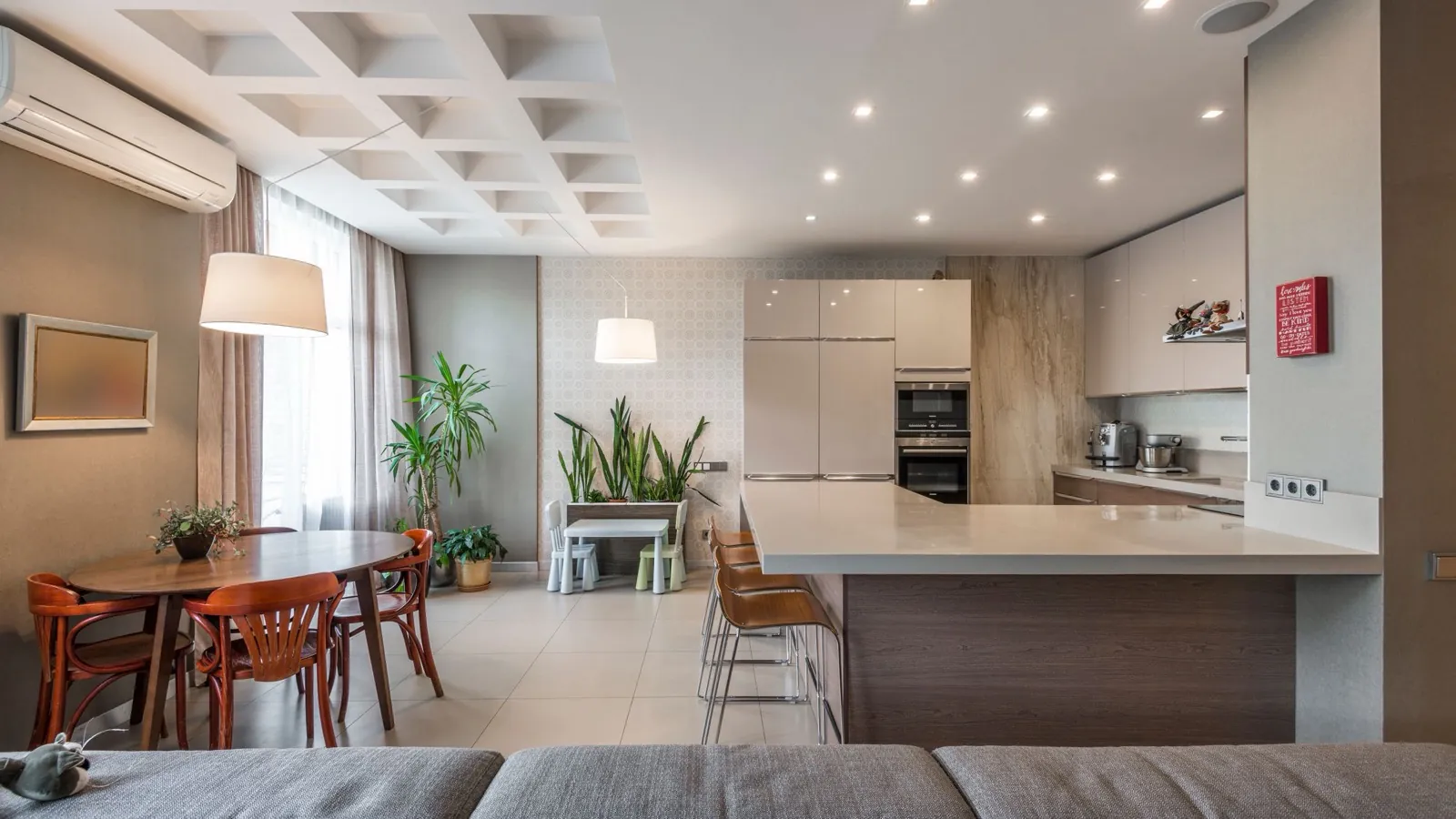
Ceiling cassette units recess between standard 16-inch-on-center joists, blowing conditioned air in four directions. They're ideal where wall space is limited or where homeowners want a clean, built-in look in open-concept living areas and finished basements.
Modern diy mini split systems use pre charged line sets with quick connect fittings to eliminate the need for vacuum pumps, manifold gauges, and refrigerant handling. Pre-charged line sets eliminate the need for HVAC certification, which is the main difference between true DIY brands and traditional installs. R-454B is a newer, lower-GWP refrigerant being adopted by many multi-zone systems in 2026, including Zone Air and MRCOOL DIY 5th Gen. Choosing R-454B matters for long-term regulatory compliance.
Common multi zone condensers range from 24k to 48k BTU, while individual heads come in 9k and 12k BTU sizes. Proper installation of multi-zone systems requires detailed considerations of load calculations and zoning to avoid short cycling and wasted energy. Mini splits are suitable for spaces where ductwork is impractical, making them a practical alternative to forced-air HVAC systems.
Even with pre-charged refrigerant, diy mini split systems still require electrical work, condensate drain management, and safe mounting of the indoor and outdoor unit.
Brand Landscape: MRCOOL vs Pioneer vs Senville vs Zone Air (2026)
Here's how the four major brands stack up specifically on DIY multi zone and cassette options in 2026.
MRCOOL: The most recognized name in diy mini split installations. MRCOOL is recognized as a true homeowner DIY multi-zone system. The DIY 5th Gen line uses R 454B refrigerant with pre-charged line sets for easy installation. Multi zone condensers hit around 22–23 SEER2. Cassette options exist (OuttaSight series), but head variety is more limited than wall mounts. Fixed line set lengths of 16, 25, 35, or 50 feet.
Zone Air: Direct-to-consumer brand with custom-cut pre charged line sets from 16 to 75 ft per zone on multi-zone systems. Supports mix-and-match wall, cassette, and concealed ducted heads on a single condenser. Up to 24 SEER2. Offers 115V plug-in options for its 9k and 12k BTU single-zone wall mounts, arguably the easiest diy installation on the market. Pricing runs 10–20% below comparable Mr Cool units thanks to selling direct.
Pioneer: Broad catalog of multi zone systems with cassette heads at competitive pricing, but traditional vacuum-and-flare installs. Pioneer systems require vacuum pumps and specialized tools for installation. Most models still run R-410A, though newer releases are shifting to R 454B. Not a true diy mini split for most homeowners.
Senville: Strong budget and cold-climate lines like the Senville Aura series. Senville allows mix-and-match configurations for indoor unit styles in multi-zone systems. However, Senville systems require professional installation for warranty coverage, placing them firmly outside the true DIY category. We compare the two volume brands directly in MRCOOL vs Senville.
Zone Air and MRCOOL are the only true DIY mini brands here. Pioneer and Senville belong in the "DIY with pro tools or professional install" category.
Pre-Charged vs Traditional Install: Why It Matters for a DIY Multi Zone Cassette Mini Split
The line set connection method is where diy mini split systems diverge sharply from traditional mini split systems. Here's the breakdown:
Pre-charged DIY install (Zone Air, MRCOOL)
- Factory-sealed, vacuumed, pre charged line sets arrive ready to connect
- Homeowner routes the copper line sets, tightens brass quick connect fittings with a torque wrench, then opens valves to release the refrigerant charge
- No vacuum pump required, no manifold gauges, no flaring tools, no deep vacuum, no leak tests with nitrogen
- No licensed HVAC technician needed for the refrigerant side
Zone Air's structural advantage: Each line set is custom-cut to your exact run length. If your cassette is 37 feet from the outdoor unit, you get a 37-foot pre charged line set—one continuous run, one pair of connections. This minimizes leak points and eliminates coiling excess copper. Our pre-charged line set buying guide compares the two designs connection by connection.
MRCOOL's limitation: MrCool DIY systems use pre-charged line sets for easy installation, but they come in fixed 16/25/35/50-ft lengths. If your run is 40 feet, you coil 10 feet of copper behind the condenser. If your run is 60 feet, you join two sets and double the number of quick-connect seals—each one a potential leak point over time.
Traditional install (Pioneer, Senville)
- Copper line sets arrive empty; installer must measure, cut, deburr, and flare each connection
- Pulling a 500-micron deep vacuum is required; a poor vacuum leads to moisture contamination and premature compressor failure
- Pioneer and Senville require conventional HVAC installation for refrigerant connections
- Pioneer systems require vacuum pumps and flaring tools for installation
- Tools needed: vacuum pump, manifold gauges, nitrogen tank, flaring tools, pressure test equipment
Pre-charged systems are true diy install territory for most homeowners using basic hand tools and a torque wrench — see our no-vacuum-pump mini split guide. Traditional systems are realistic only for advanced DIYers or when professional installation is part of the plan.
Ceiling Cassette Options and Mix-and-Match Multi-Zone Layouts
Ceiling cassette units are surging in popularity in 2026 for good reason: they hide in the ceiling, distribute air evenly across a room, and free up wall space for furniture and artwork. Ceiling cassette units mount flush into standard ceiling joists while providing multi-directional airflow. Our concealed duct and ceiling cassette guide covers the single-zone side.
Zone Air cassettes: Available in 9.5k and 12k BTU sizes that pair with wall and concealed ducted heads on one multi zone condenser. The dual-zone ceiling cassette system pairs two 12k BTU cassettes with a 27k BTU outdoor unit at 21 SEER2, handling up to 1,200 sq ft across two zones. This mix-and-match flexibility is a standout—you can run a cassette in the living room and a wall mount in the bedroom off the same condenser.
MRCOOL cassettes: OuttaSight cassette models exist in single-zone and some multi-zone DIY 5th Gen configurations, but multi zone options and size variety are more limited compared to wall heads. Most MRCOOL multi zone builds lean heavily on wall mounts.
Pioneer and Senville cassettes: Both offer cassette heads for multi-zone systems, but they follow traditional vacuum installs. They're best treated as pro-installed cassette options.
For DIY cassette installation, plan for adequate ceiling height and joist clearance, drain routing to an exterior wall or condensate pump, and service access through the grille panel. Having a helper to lift the indoor unit into the ceiling opening is strongly recommended.
Efficiency and Performance: SEER2, Cold-Climate Heating, and 12K BTU Zones
SEER2 ratings measure energy efficiency for mini split systems, and SEER2 provides more realistic performance data than older SEER metrics by accounting for real-world static pressure. In 2026, energy efficiency is a primary buying factor.
High-efficiency mini splits can reach up to 24 SEER2, and Zone Air leads this comparison with exactly that rating on select single and multi zone systems (its 230V wall mounts, wall-mount multi-zone systems, and 3-zone cassette systems). Upgrading to a 22+ SEER2 mini split can save $90 monthly compared to older central AC or window units in hot climates. Mini splits can replace window units with better energy efficiency across the board.
MRCOOL DIY 5th Gen typically lands around 22–23 SEER2 on 12k BTU and multi zone condensers. For cold-climate performance, MrCool DIY systems can operate in temperatures as low as -22°F with hyper heat models, making them viable in northern states. Zone Air cassette systems maintain heating capacity down to -13°F at low temperatures. More on that trade-off in our cold climate DIY mini split comparison.
Pioneer and Senville offer competitive SEER2 numbers—the Senville Aura series hits 22+ SEER2 on some models—but legacy units may still run R-410A.
A 12k BTU zone covers roughly 400–550 sq ft, making it the standard for bedrooms, offices, and small living rooms. Factor in insulation quality, sun exposure, and ceiling height when sizing. Energy Star certification helps qualify for energy rebates, and most Energy Star certified units in this class exceed 20 SEER2. Both Zone Air and MRCOOL offer 9k and 12k BTU cassette or wall heads for precise climate control per zone, delivering better energy savings than a single oversized central system.
Installation Experience: Real-World DIY vs "Marketing DIY"
Not every system labeled diy mini on the box is truly DIY once you read the install manual and warranty fine print. Here's what the actual process looks like.
Zone Air DIY install flow
- Mount the indoor unit (cassette or wall) using included brackets
- Drill a 3-inch hole through the wall for line set and communication wire routing
- Route the custom-cut pre charged line set—no coiling, no coupling
- Make one pair of quick connect fittings at the condenser and torque to spec
- Plug into 115V where applicable (single-zone wall mounts), or hard-wire 230V with a disconnect box
- Power up, test modes, verify airflow
The whole process takes a few hours per zone for most homeowners. Fewer connections mean fewer potential failure points over the system's life.
MRCOOL DIY multi-zone install: Similar steps, but with fixed-length pre-charged sets. You may need to coil excess line length behind the condenser or use line-set couplers for longer runs, adding installation complexity. Still achievable in a weekend by a careful homeowner. See our MRCOOL vs Zone Air comparison for the head-to-head.
Pioneer and Senville install: Line sets arrive empty. The homeowner or technician must measure, cut, flare, pull a vacuum pump to 500 microns, and verify the refrigerant charge. Senville's system emphasizes room-level control and requires installation following local guidelines. This path demands a significantly higher tool budget and specialized knowledge.
DIY mini splits can save $3,000 to $5,000 on installation labor compared to full-service HVAC quotes. Even when you factor in an electrician for 230V electrical work, homeowner installation of pre-charged systems eliminates the largest labor line item: refrigerant work.
DIY mini splits excel in garages and sunrooms where running ductwork would be impractical or prohibitively expensive.
Warranty, Reviews, and Brand Trust (Including MRCOOL vs Zone Air)
Warranty protection and real-world reviews matter as much as spec sheets when choosing diy mini split systems. A system that fails in year three with no warranty coverage is no bargain. Warranty coverage starts from the original installation date, so register equipment promptly. Our DIY mini split warranty guide goes line by line.
MRCOOL: Offers a 5-year parts and 7-year compressor warranty on DIY 5th Gen lines when installed with official pre-charged line sets, with no registration required. Some lifetime compressor marketing requires subscription to a "Care Kit" program. Public reviews on MRCOOL's Trustpilot page average roughly 3.2 out of 5, with complaints about delays in receiving replacement parts and sometimes waiting weeks for warranty processing.
Zone Air: Zone Air's warranty remains valid with DIY installation under specific conditions—specifically, using their pre charged line sets and following the installation manual. Verified purchaser reviews average around 4.8 out of 5, with customers frequently citing easy installation, clear instructions, and cost savings. Final assembly, testing, and inspection in the USA supports long-term reliability.
Senville: The Senville Aura series provides up to a 10-year compressor warranty, but Senville systems require professional installation for warranty coverage. DIY installs without a licensed HVAC technician performing evacuation and final refrigerant release void the warranty.
Pioneer: Pioneer warranties cover properly installed units and require registration shortly after install (unregistered units get 1 year of parts coverage). Performing refrigerant work, vacuum, or brazing yourself generally invalidates coverage.
Keep install photos, receipts for electrical work, and registration confirmations. These protect you if you ever need to file a warranty claim or an insurance-related inquiry.
Best Use Cases: When Each Brand and System Type Makes Sense
The best diy mini split depends entirely on your project type and comfort level.
- Zone Air: Best for homeowners planning whole-house or 2–4 zone systems mixing wall, cassette, and ducted heads. Ideal when line set runs are unconventional lengths (say, 33 ft or 62 ft) that benefit from custom pre charged line sets. The 115V plug-in 9k/12k BTU wall mount is the most cost effective single-zone option for a workshop or bonus room.
- MRCOOL DIY: Strong for straightforward garage, bonus room, or 2-zone projects where off-the-shelf 16/25/35/50 ft line sets fit without modification. Big advantage: availability at Costco, Lowe's, and Home Depot, plus a large online community and Google Assistant integration on some models.
- Pioneer: Suitable for advanced DIYers who already own a vacuum pump, manifold gauges, and flaring tools, or for homeowners hiring a contractor who wants lower equipment pricing and flexible multi zone cassette offerings.
- Senville: Budget choice when a professional install is already planned, or where top cold-climate heating capacity is required. The Senville Aura hyper heat models perform well at low temperatures when installed by a contractor comfortable with their systems.
Mini splits can last 15 to 20 years with proper maintenance, so choosing the right brand upfront pays dividends for a long time. If a single room is the whole project, our 120V plug-in DIY mini split guide and best DIY mini split heat pump roundup cover the single-zone side.
Cost Breakdown: Equipment, Line Sets, and Hidden DIY Expenses
Sticker price on a condenser doesn't capture total installed cost for diy mini split projects, especially multi zone cassette installs. DIY mini splits typically cost between $1,500 and $5,000 for equipment depending on zone count and head type.
Typical 2026 price ranges:
- Single-zone 12k BTU diy systems: Zone Air ~$2,049.99 (230V); comparable MRCOOL units run higher at retail. Zone Air's direct-to-consumer pricing delivers roughly 10–20% savings.
- Multi-zone 24k–36k BTU condensers with 2–3 heads: roughly $3,000–$5,000 depending on brand and whether you choose cassette or wall heads.
Line set cost impacts: Zone Air custom-cut pre charged line sets avoid buying extra lengths or couplers. MRCOOL's fixed sets can increase cost when you need multiple lengths or extension kits for longer runs. Each coupler is also another potential leak point down the road.
Hidden DIY expenses to budget for:
- Electrical breakers, wire, and disconnect boxes (230V circuits for multi zone options)
- Condensate pumps for cassette installs where gravity drainage isn't possible
- A torque wrench and basic hand tools
- Wall brackets, condenser pads, or line set covers
- Potential carpentry to open and frame ceilings for cassette heads
Professional installation can add $1,500 to $3,000 to costs. Total installed cost includes tools, electrical work, and permits. Pre-charged DIY systems eliminate the largest labor component—refrigerant work—which is where the usual $3,000–$5,000 in HVAC savings come from.
Buying Checklist: Choosing the Right DIY Multi Zone Cassette Mini Split in 2026
Before you order, run through this quick answer checklist:
- Confirm refrigerant and efficiency goals. R 454B meets current and future regulatory requirements (the federal 25C credit ended for systems placed in service after 2025). Target 22+ SEER2 for meaningful energy savings; Zone Air's 24 SEER2 leads the field.
- Decide if you truly want diy installation. If yes, limit your search to Zone Air and MRCOOL with pre charged line sets. If you're planning a professional install anyway, Pioneer and Senville become viable multi zone cassette options via contractors.
- Plan your line set runs. Measure the real-world line length from condenser to each indoor unit with a sizing plan in hand. Decide whether Zone Air's 16–75 ft custom single runs or MRCOOL's fixed lengths fit your layout without excessive coiling or coupling.
- Check your electrical service. Verify whether you have 115V or 230V capacity and available breaker spaces. Zone Air's 115V plug-in options simplify the electrical work for its 9k and 12k BTU single-zone wall mounts.
- Review warranty terms and independent reviews. Compare MRCOOL's Trustpilot scores against Zone Air's verified purchaser ratings. Choose the brand that balances easy installation, energy efficiency, and long-term warranty protection for your specific project.
- Register everything. Keep install photos, receipts, and serial numbers. Warranty coverage depends on proper registration, and you'll want documentation if you ever need service.
For most homeowners in 2026, Zone Air's combination of custom-cut pre charged line sets, 24 SEER2 efficiency, and warranty-friendly homeowner installation makes it the clearest path to a successful DIY multi-zone cassette mini split project. Measure your runs, check your panel, and start building your system — a 2-zone or 3-zone layout is where most projects start, and our best DIY 3-zone mini split guide walks through that build.
Note: specifications, pricing, and warranty terms above are manufacturer- and retailer-published as of September 2026 and are subject to change. Verify current details on the product listing before you buy.
Calculator
Your run cost depends on your ZIP.
Run our calculator with your ZIP, your existing system, and the multi-zone mini split you're considering. It pulls climate and current electricity-rate data to show annual operating cost, savings, and simple payback.
Run the numbers for your home→