Buying guide · Cold climate DIY mini splits
Best Cold Climate DIY Mini Split Low Ambient Heating Specs Compared: MRCOOL DIY 5th Gen vs Zone Air
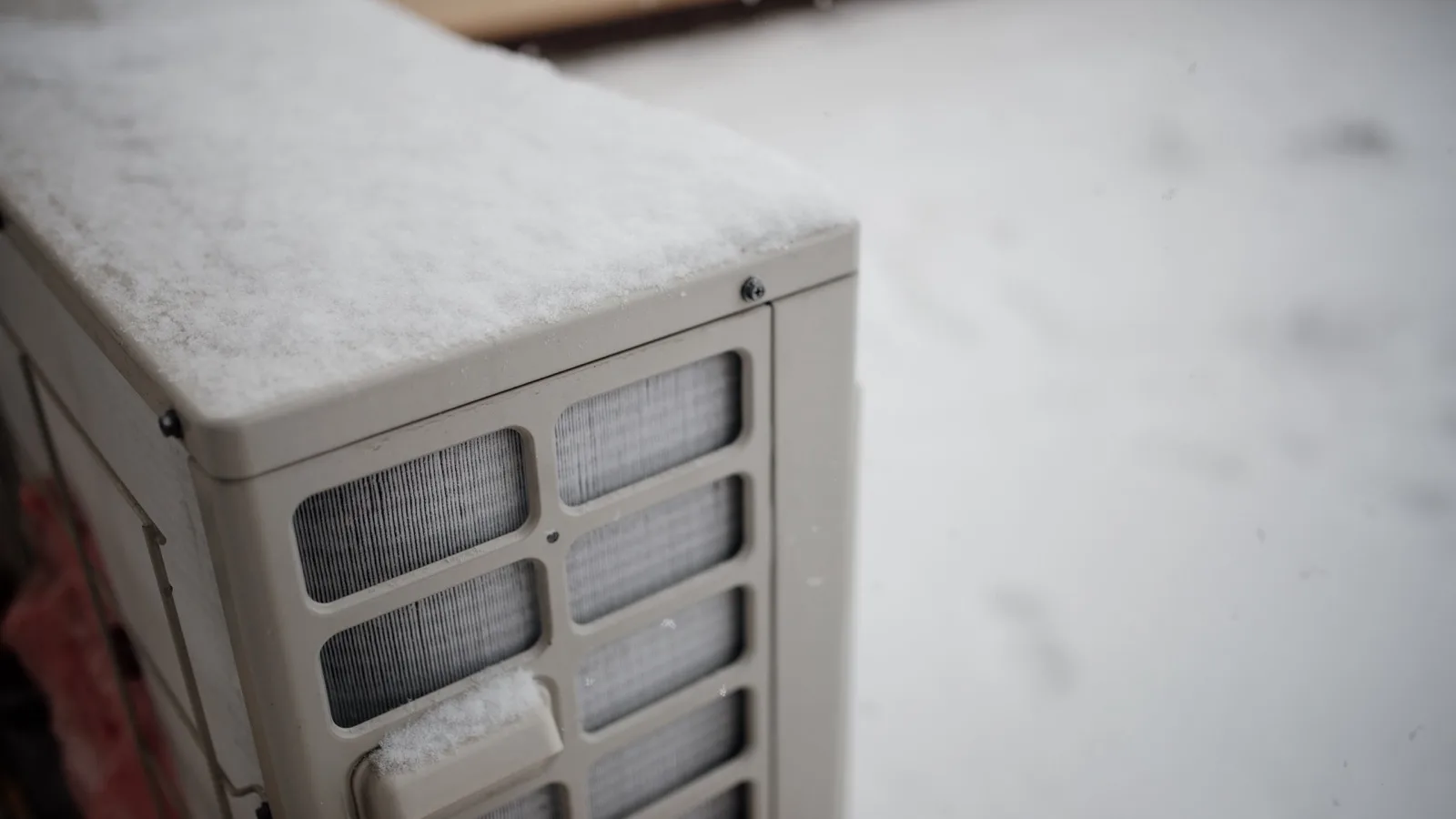
Photo: Shixart1985 / Wikimedia Commons, CC BY 2.0, cropped.
Choosing the right cold climate diy mini split in 2026 comes down to two real contenders: the MRCOOL DIY 5th Gen Hyper Heat and Zone Air's cold-climate DIY series. Both can heat through sub-zero winters, but they differ on efficiency, price, installation design, and long-term reliability. This article breaks down every spec, trade-off, and cost difference so you can pick the right system for your project.
Quick Answer: Best Cold Climate DIY Mini Split in 2026
For homes where outdoor temperatures regularly drop below -13°F, the MRCOOL DIY Hyper Heat is the most widely recognized diy mini split series rated to -22°F. But for most homeowners, Zone Air is the better buy: it delivers 24 SEER2 on its 230V models (vs 23.5 SEER2 on MRCOOL's 12k Hyper Heat), costs 10-20% less at comparable BTU sizes, and ships with custom-cut single-run line sets that reduce leak risk.
The MRCOOL DIY 5th Gen Hyper Heat single-zone models (12,000 BTU and 18,000 BTU, both 230V) are a mini split system that heats down to -22°F with Hyper Heat technology, uses pre-charged R-454B Quick Connect lines, and carries Energy Star certification in select sizes. These are the hyper heat models most cold-climate buyers will encounter at retail.
Zone Air counters with a 12k BTU system priced at $2,049.99, while MRCOOL's comparable 12k Hyper Heat typically lists higher. Zone Air's line sets are custom-cut from 8 to 75 feet in a single run, with only one pair of quick-connect fittings, versus MRCOOL's fixed 25-foot segments that may need to be joined for longer runs.
For true low-ambient heating, your shortlist should include:
- MRCOOL DIY 5th Gen Hyper Heat (12k and 18k single-zone)
- Zone Air cold-climate DIY series (12k and 18k)
- Traditional non-DIY hyper-heat units (Mitsubishi H2i, Daikin Aurora) if you want a professional install comparison
This article walks through MRCOOL DIY 5th Gen low ambient heating specs, then shows where Zone Air wins on installation, efficiency, and price.
Cold Climate DIY Mini Split Specs Side by Side
| Spec | MRCOOL Hyper Heat 12K | MRCOOL Hyper Heat 18K | Zone Air 12K | Zone Air 18K |
|---|---|---|---|---|
| Model | DIYHH-12-HP-C-230D25-O | DIYHH-18-HP-C-230D25-O | Zone Air 12K 230V | Zone Air 18K 230V |
| Voltage | 208/230V | 208/230V | 208–230V (115V model also sold) | 208–230V |
| Heating operating floor | −22°F | −22°F | −13°F | −13°F |
| SEER2 | 23.5 | 21.2 | 24.0 | 23.0 |
| HSPF2 (Region IV / V) | 10 / 8 | 11 / 8.5 | 10.0 / 8.6 | 10.0 / 8.8 |
| Coverage | Up to 550 sq ft | Up to 800 sq ft | 400–600 sq ft | 500–900 sq ft |
| Quietest indoor setting | 18 dB(A) | 20.5 dB(A) | 30 dB(A) | 34 dB(A) |
| Pre-charged line set | 25 ft included; fixed-length sets | 25 ft included; fixed-length sets | Single run, custom length to 75 ft | Single run, custom length to 75 ft |
| Price (Sept 2026) | $2,532 | $3,173 | $2,049.99 | $2,599.99 |
Sources: MRCOOL's DIY Hyper Heat brochure for the MRCOOL specs; Zone Air's 12K and 18K product pages for the Zone Air specs. MRCOOL prices are complete wall-mount systems at MRCOOL HVAC Supply (12K) and (18K) in September 2026.
What "Cold Climate" and "Low Ambient Heating" Really Mean
"Cold climate mini split" and "low ambient heating" refer to systems that deliver useful heat output at outdoor temperatures well below freezing. A mini-split heat pump can operate efficiently by transferring heat rather than generating it directly; electric resistance heating typically operates at a coefficient of performance of about 1, while a heat pump can operate above 1 even in cold weather. The question is how far below freezing the system keeps working.
- Winter design temperatures define how cold your area gets on the worst 1% of nights. Minneapolis sits around -11°F, Burlington, VT around -11°F, Denver around -2°F. A system rated to -22°F gives headroom even in rare cold snaps.
- "Low ambient" is the lowest outdoor temperature where the heat pump still delivers a specified percentage of its rated BTU output. Some brands quote capacity at 47°F, 17°F, and 5°F, with derated output at -13°F or -22°F.
- The system's efficiency can decline as outdoor temperatures drop, affecting its capacity to heat effectively. Standard diy mini split units often taper off below about 20°F and shut down entirely around 5°F. The standard DIY 5th Gen produces heat down to -13°F, but not to -22°F.
- Low-ambient cooling means the mini split can provide cooling when it is cold outside but does not guarantee winter heating performance. Buyers in colder climates need to look specifically at heating cutoff ratings, not just cooling specs — the NEEP cold-climate heat pump list publishes those numbers by model.
MRCOOL DIY 5th Gen Hyper Heat: Low Ambient Heating Overview
The MRCOOL DIY Hyper Heat series is the most recognized diy hyper heat mini split line in 2026, particularly the 12,000 and 18,000 BTU single-zone sizes. Hyper Heat systems are designed for harsh winter climates, and the 5th Generation mini-split can provide localized heating, eliminating the need to heat unused areas.
- DIY 5th Gen Hyper Heat single-zone models operate from -22°F to 122°F. The DC inverter compressor adjusts speed rather than cycling on and off, which preserves heating performance across a wide temperature range.
- The 18,000 BTU Hyper Heat single-zone unit covers up to 800 sq ft and fits large bonus rooms, garages, and small open-plan apartments — see our 18,000 BTU DIY comparison for the full 18K field.
- The 5th Generation systems operate effectively in outdoor heating temperatures down to -13°F in standard trim. Hyper Heat models maintain strong heating in extreme cold because they use a higher-capacity outdoor compressor and optimized refrigerant control to retain output at sub-freezing temps.
- MRCOOL's cold climate models are Energy Star certified in select BTU sizes, with SEER2 ratings in the low-to-mid 20s and HSPF2 values tuned for cold climate heating.
- Not every 5th Gen unit is rated to -22°F. The standard MRCOOL DIY series cuts off at about -13°F for basic heating. Only the Hyper Heat designation means -22°F operation.
Key MRCOOL DIY 5th Gen Hyper Heat Specs (12k & 18k BTU)
This section covers the numbers cold climate buyers need: BTU, voltage, temperature range, SEER2, HSPF2, and coverage area.
The 12,000 BTU MRCOOL DIY 5th Gen Hyper Heat (model DIYHH-12-HP-C-230D25-O) serves roughly 400-550 sq ft and runs on 230V. The 18,000 BTU version (DIYHH-18-HP-C-230D25-O) covers up to 800 sq ft, also 230V. Both ship with a 25-foot pre-charged line set of R-454B refrigerant.
Key specs from MRCOOL's 2026 product catalog:
- 12k Hyper Heat: SEER2 = 23.5, EER2 = 12.8, HSPF2 Region IV = ~10.0. Indoor noise: 45.5 dB(A) turbo, down to ~18 dB(A) sleep mode.
- 18k Hyper Heat: The MRCOOL DIY 5th Gen has a 21.2 SEER2 rating. HSPF2 Region IV = ~11.0. The 5th Generation units feature high efficiency with HSPF2 ratings up to 11.5 across the line. Indoor noise: 54.5 dB(A) turbo, ~20.5 dB(A) sleep.
The system uses R-454B refrigerant with lower Global Warming Potential compared to older refrigerants like R-410A. The Gold Fin condenser coating protects against moisture and corrosion, a practical detail for outdoor units exposed to ice and salt air. Both models operate on a 230-volt electrical supply. Each system includes a standard 25-foot pre-charged line set. The standard warranty is 7 years compressor, 5 years parts on residential installs, with no registration required, with optional MRCOOL Care programs available at added cost.
Indoor Options: Wall Air Handler vs DIY Ceiling Cassette
The same MRCOOL DIY 5th Gen Hyper Heat outdoor unit works with matching indoor and outdoor units connected by pre-charged lines, and it pairs with either a wall-mounted air handler or the DIY OuttaSight ceiling cassette, so indoor delivery style is flexible within the MRCOOL system.
- The wall-mounted air handler is the most common diy mini split choice. It mounts high on a wall, throws air across the room, and comes included in most MRCOOL DIY mini split kits. Picture a slim rectangular unit about 32 inches wide, sitting 6-8 inches below the ceiling line.
- The OuttaSight ceiling cassette recesses into the ceiling with only a narrow grille visible. It blows air in one direction along the ceiling plane, which can distribute warmth more evenly in open floor plans. It uses the same pre-charged Quick Connect lines and diy installation concept as the wall unit.
- Both the wall air handler and ceiling cassette work with MRCOOL's smart controls: IR remote, SmartHVAC app, Amazon Alexa, and Google Assistant compatibility compatible with both indoor head types.
- MRCOOL's DIY 5th Gen multi-zone systems allow mixing wall and cassette heads, but do not support concealed ducted air handlers on the same condenser. Zone Air allows wall, cassette, and concealed ducted handlers on a single outdoor unit, which matters for whole-house layouts or anyone who might add a head later.
DIY Installation: MRCOOL Quick Connect vs Zone Air Single-Run Line Sets
Both MRCOOL and Zone Air are true diy installation systems, offering diy friendly installation without traditional hvac installation tools. But the line set philosophy is where these brands split, and that difference matters for cold climate reliability.
MRCOOL DIY systems use pre-charged R-454B Quick Connect lines. Installation requires no vacuum pump or specialized tools, helping eliminate vacuum pumps from the homeowner's shopping list. The standard length is 25 feet, with optional 16/25/35/50-foot segments available. Valves are Intertek-certified.
The problem: if your run is 40 feet, you coil 10 feet of copper behind the condenser. If it's 60 feet, you join two line sets and double your quick-connect valves. Each joint is a potential leak point, and in cold climates where freeze-thaw cycles stress fittings, fewer joints mean fewer problems.
Zone Air's structural difference is custom-cut, single-run pre-charged line sets from 8 to 75 feet. A 40-foot run is exactly 40 feet with one pair of quick-connect fittings. No coiled excess. No chained segments.
Both brands market weekend easy installation for single zone installations homeowners can finish without hiring a contractor. Homeowners can install without professional equipment or licensing. But Zone Air also offers a 115V plug-in option for some 12k units, which avoids hard-wiring a 230V circuit entirely. That makes it arguably the easiest DIY install on the market, and a genuinely lower cost diy option when you factor in skipping an electrician.
MRCOOL's diy install process is well documented with video guides from dozens of YouTubers. Zone Air's simpler single-run approach usually makes planning the installation setup and routing the lines cleaner and more predictable, since you measure once, order the right length, and connect.
Power, Voltage, and BTU Sizing (9k-18k & 18,000 BTU Focus)
Getting BTU and voltage right is critical for cold climate living spaces. Undersizing forces you back to electric space heaters. Oversizing causes short cycling and poor dehumidification.
- Common sizes: 9,000 BTU covers up to ~400 sq ft, 12,000 BTU up to ~550 sq ft, and the system can be installed in spaces up to 800 sq ft with an 18,000 BTU unit. Insulation quality, window count, and ceiling height all shift these ranges — a room-by-room sizing calculator accounts for them.
- The 18,000 BTU 5th Gen Hyper Heat 230V is often the sweet spot for a cold-climate garage, large bonus room, or small open-concept main floor when winter design temps sit below 0°F.
- Many smaller diy mini split units (9k, some 12k) run at 115V, which means a standard dedicated circuit. The 18k and above need 208-230V and a higher-amp breaker. The MRCOOL DIY Hyper Heat 18k operates on a 230-volt electrical supply only.
- Zone Air offers 115V options at smaller BTU sizes and 230V for larger capacities, giving more flexibility in retrofit situations where adding a 230V circuit means hiring an electrician.
Practical example: a 750 sq ft, moderately insulated workshop where winter nights drop to 0°F will be marginal on a 12k BTU unit. An 18,000 BTU cold-climate system provides the headroom for stronger heating performance on the coldest nights without running at max capacity around the clock.
Efficiency and Operating Costs: SEER2, HSPF2, and Zone Air vs MRCOOL
SEER2 measures cooling efficiency; HSPF2 measures heating efficiency. Both directly affect monthly bills, and in regions relying on heat pumps for winter heating performance, HSPF2 matters more than SEER2.
- The MRCOOL DIY 5th Gen Hyper Heat 12k reaches 23.5 SEER2. The 18k model sits at 21.2 SEER2. These are strong for a premium diy system, but not the top of the market.
- Zone Air's best diy mini split series reaches 24 SEER2 on its 230V models, edging out MRCOOL on cooling-season efficiency while maintaining dependable performance in low ambient conditions. This combination of top efficiency and cold-climate capability is rare among affordable diy mini split brands.
- HSPF2 Region IV (colder climates): MRCOOL 12k Hyper Heat = ~10.0; MRCOOL 18k Hyper Heat = ~11.0. Zone Air's 12k cold-climate model hits ~10.0. Both brands deliver premium diy performance in heating mode.
- A 1 SEER2 point difference (24 vs 23) translates to roughly 3-5% lower cooling electricity usage. Over 10-15 years of summer and winter operation, that gap adds up to hundreds of dollars, particularly in homes where the complete diy system runs many hours daily. Run your own numbers in our baseboard-to-heat-pump savings calculator.
Consider a 10-year comparison: an 18,000 BTU MRCOOL DIY 5th Gen Hyper Heat vs a Zone Air 18k. Zone Air's lower upfront price (10-20% less) combined with slightly better efficiency means the total cost of ownership tips in Zone Air's favor for most buyers. MRCOOL's advantage is the -22°F cutoff if you need that extra margin for extremely cold outdoor temperatures.
Smart Controls, Comfort Features, and Daily Usability
Beyond raw BTUs and low ambient performance specs, daily comfort features determine whether you actually enjoy living with your mrcool system or Zone Air unit.
MRCOOL DIY 5th Gen controls include: SmartHVAC app for scheduling and monitoring, Amazon Alexa and Google Assistant for smart control by voice, standard IR remote, and "Follow Me" mode where the remote acts as a portable temperature sensor. You can control MRCOOL DIY systems from your phone or through voice commands. After a power outage, Auto Restart brings the system back to its last settings without manual intervention.
Additional comfort features: Sleep mode reduces fan speed and adjusts temperature gradually overnight. Adaptive louver positions optimize air distribution in heating mode to avoid cold drafts from a wall-mounted air handler. Programmable timers let you pre-heat a workshop or garage before you arrive.
Zone Air also offers app-based Wi-Fi control and smart scheduling. But the bigger quality-of-life win from Zone Air is the simpler install (custom line runs, 115V plug-in options) and quiet operation. Zone Air's 12k model runs at about 30 dB in quiet mode; MRCOOL's 12k Hyper Heat drops to ~18 dB(A) at its lowest fan speed. Both are suitable for bedrooms and home offices, offering premium diy comfort and steady cooling or heating without disruptive noise.
Cost, Warranty, and Long-Term Reliability
Cold climate buyers should think in 10-15 year terms. First cost matters, but so do parts availability, warranty terms, and how many joints in your refrigerant handling system could leak over a decade of freeze-thaw cycles.
- MRCOOL DIY Hyper Heat 12k and 18k models often retail between $2,500-$3,200 in 2026 depending on seller. A Zone Air 12k single-zone diy system lists at $2,049.99, a budget friendly diy option at comparable or better efficiency.
- MRCOOL DIY systems come with a 7-year compressor warranty and 5-year parts on residential installs, with no registration required. Add-on Care plans extend coverage but increase total cost. Zone Air offers comparable 7-year compressor and 5-year parts warranties while keeping system prices 10-20% lower, providing real value and warranty protection. Our DIY mini split warranty comparison covers the fine print.
- Zone Air's custom single-run line sets reduce the number of quick-connect valves on any run over 25 feet. On a 60-foot run, MRCOOL requires joining two segments (four quick-connect points total); Zone Air uses one pair. Fewer joints = lower long-term leak risk in poorly insulated spaces or exterior-exposed routing.
- MRCOOL's Quick Connect valves are Intertek-tested and widely field-proven, but every additional joint is still a potential weak point under freeze-thaw stress.
- Public review data: MRCOOL carries mixed ratings on Trustpilot (3.2 out of 5 across 89 reviews as of September 2026), with complaints about support response times and occasional quick-connect issues. Zone Air's direct-to-consumer model and better average reviews are a reason many buyers lean toward it as a more advanced overall performance and feature rich system at a lower price.
MRCOOL DIY 5th Gen vs Zone Air: Which Is Best for Your Cold Climate Project?
Both the MRCOOL DIY 5th Gen Hyper Heat and Zone Air cold-climate diy mini split series can handle sub-zero heating. Zone Air is generally the better overall value if you are not tied to MRCOOL branding or ecosystem.
Choose MRCOOL DIY 5th Gen Hyper Heat when:
- You need the -22°F low ambient rating and your winters regularly hit -15°F or colder (far northern US, upper Midwest, Canadian border)
- You want MRCOOL's extensive third-party video support and prefer a premium system with wide retail availability through MRCOOL Direct and other sellers — see our MRCOOL brand profile and the MRCOOL Olympus Hyper Heat review
- You are OK with fixed-length line sets and possibly multiple Quick Connect joints on longer runs
Choose Zone Air when:
- You want the simplest, cleanest diy installation: 115V plug-in options on some 12k units, custom 8-75 ft single-run pre-charged line sets, and offering diy friendly installation with fewer leak points
- You want the highest available SEER2 at about 24 (230V models), making it the most efficient right system per dollar
- You prefer 10-20% lower upfront cost with better average reviews
- You need a multi-zone setup: Zone Air mixes wall, cassette, and concealed ducted air handlers on a single condenser, while MRCOOL's DIY multi-zone is limited to wall and cassette heads
Decision checklist:
- What is your winter design low? Below -13°F, choose Hyper Heat. Above -13°F, Zone Air's cutoff covers you.
- Room size: 9k / 12k / 18k BTU matched to square footage and insulation.
- Electrical panel: 115V available only, or can you add 230V?
- Indoor style: do you need a ceiling cassette or concealed ducted air handler?
- Line set run length: over 25 feet favors Zone Air's single-run design.
- Budget: willing to pay a premium for MRCOOL branding, or prefer Zone Air's lower cost diy system?
If your winter nights regularly fall below 20°F, do not install a standard ductless system rated only to 5°F. Choose a cold-climate rated diy mini split; either MRCOOL DIY 5th Gen Hyper Heat or the Zone Air cold-climate series. Before purchasing, pull up the spec sheet and confirm the -22°F or -13°F low ambient rating in writing. That single number determines whether your system delivers heat or shuts down on the coldest night of the year.
For the rest of the spec sheet, see our full MRCOOL vs Zone Air comparison, and if you are weighing a professional install, our Mitsubishi DIY guide covers what a contractor-installed hyper-heat system involves.
Frequently Asked Questions: Cold Climate DIY Mini Splits
What is the best cold climate DIY mini split in 2026?
For homes whose winter design temperature stays above −13°F, Zone Air is the better value: 24 SEER2 on its 230V models, heating to −13°F, custom-length single-run pre-charged line sets, and prices 10–20% below MRCOOL's Hyper Heat at the same size. Where winters regularly reach −15°F or colder, the MRCOOL DIY 5th Gen Hyper Heat is the DIY option rated to −22°F.
How cold can the MRCOOL DIY 5th Gen Hyper Heat heat?
MRCOOL's Hyper Heat brochure rates the 12,000 and 18,000 BTU DIY Hyper Heat single-zone systems to operate from −22°F to 122°F outdoor temperature. The standard MRCOOL DIY 5th Gen operates to about −13°F.
How cold can a Zone Air DIY mini split heat?
Zone Air's 9K, 12K and 18K single-zone systems are rated to heat down to −13°F outdoor temperature, with a heating COP2 of 2.1 at 5°F on the 12K models.
Is the MRCOOL DIY Hyper Heat available on 115V?
No. Both the 12,000 and 18,000 BTU DIY Hyper Heat models are 208/230V only. MRCOOL's standard 12K DIY 5th Gen is 115V, but it is not a Hyper Heat model. Zone Air sells its 12K in both 115V and 230V versions, both rated to −13°F.
Which has better HSPF2 for cold climates, MRCOOL Hyper Heat or Zone Air?
At 12,000 BTU they tie at HSPF2 10 in Region IV. At 18,000 BTU the MRCOOL Hyper Heat rates HSPF2 11 against Zone Air's 10.0, while Zone Air's 18K rates higher on cooling (23.0 vs 21.2 SEER2).
Can I use a ceiling cassette with a cold climate DIY mini split?
Yes. MRCOOL's DIY Hyper Heat single-zone condenser pairs with either the wall-mounted air handler or the OuttaSight ceiling cassette. Zone Air offers wall, ceiling cassette and concealed ducted indoor units, and can mix all three on one multi-zone condenser.
Calculator
Your heating cost depends on your ZIP.
Run our calculator with your ZIP, your existing heating system, and the cold climate DIY mini split you're considering. It pulls climate and current electricity-rate data to show annual operating cost, savings, and simple payback.
Run the numbers for your home→