Reviews · 18,000 BTU DIY mini splits
Best DIY Mini Split 18000 BTU 750 Sq Ft MRCOOL Pioneer 2026: Zone Air Comparison
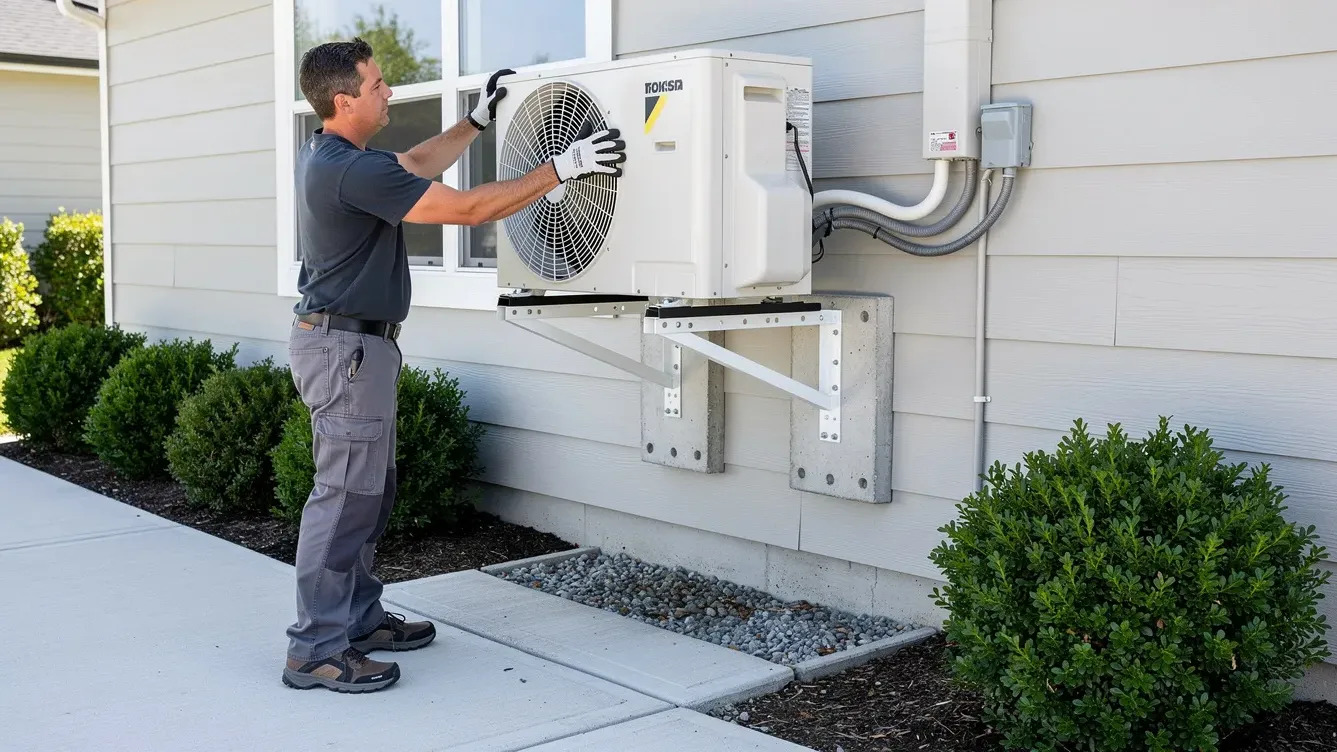
Choosing the right DIY mini split for a 750 sq ft space means balancing BTU capacity, installation complexity, and cost. This guide compares the three most popular 18,000 BTU options on the market in 2026 — Zone Air, MRCOOL, and Pioneer — so you can pick the system that actually fits your home, your skill level, and your budget.
Quick Answer: Best 18,000 BTU DIY Mini Split for 750 Sq Ft in 2026
For a standard 750 sq ft room with average insulation and ceiling height, a right-sized unit is typically 12,000–15,000 BTU. That said, many buyers still choose 18,000 BTU mini split systems for extra headroom, open-concept layouts, larger spaces, or buildings with poor insulation and big glass areas.
The Zone Air 18K DIY mini split is the top pick for most homeowners in 2026. It delivers the highest energy efficiency in the true-DIY 18K class at 23 SEER2, offers one of the easiest installs on the market, and ships with a pre charged line set that eliminates coiled copper and extra connectors. One caveat worth knowing up front: every 18,000 BTU system in this comparison runs on a 208–230V circuit. The 115V plug-in option that makes Zone Air and MRCOOL's smaller systems so easy to wire stops at 12,000 BTU.
Pricing at this size is closer than it is further down the lineup. Zone Air lists its 18K at $2,599.99 direct, and MRCOOL's 18K complete system sells for about $2,509 at Home Depot, so the 10–20% direct-pricing advantage Zone Air holds at 9K and 12K is roughly a wash in this capacity.
MRCOOL's DIY 5th Gen 18K is a strong runner-up with wide retail availability at Home Depot and Lowe's and excellent cold climate performance in its hyper heat models. Pioneer's 18K line offers solid hardware at a much lower box price, but it is not a true DIY system — it requires a vacuum pump, flaring tools, and manifold gauges for installation.
Here is a quick scenario guide:
- Pure DIY, no HVAC tools — Zone Air or MRCOOL DIY. Both use a pre charged line set and need no refrigerant handling.
- Cold climate priority — MRCOOL DIY Hyper Heat 18K, rated to −22 °F. Zone Air's 18K heats to −13 °F and is ENERGY STAR and NEEP listed, but there is no hyper heat variant in the 18K size.
- Lowest upfront cost with a contractor — Pioneer or Senville with a pro install, where equipment prices start lower and labor covers the technical gaps.
One important note for 2026: federal tax credits for heat pump mini splits expired at the end of 2025. However, many state HEAR and utility rebates still apply — most require a professionally installed system to qualify.
18,000 BTU DIY Mini Split Specs Compared: Zone Air vs MRCOOL vs Pioneer
| Spec | Zone Air 18K | MRCOOL DIY 5th Gen 18K | MRCOOL Hyper Heat 18K | Pioneer Diamante Pro 18K |
|---|---|---|---|---|
| True DIY (no vacuum pump) | Yes — pre charged quick connect | Yes — pre charged Quick Connect | Yes — pre charged Quick Connect | No — flare and vacuum |
| SEER2 (18K) | 23.0 | 22.5 | 21.2 | 21.0 |
| HSPF2 (Region IV / V) | 10.0 / 8.8 | 11.5 / 8.5 | 11 / 8.5 | 9.5 / 8.2 |
| Heating rated down to | −13 °F | −13 °F | −22 °F | −4 °F |
| Voltage | 208–230V, 30A double-pole | 208/230V, 18A MCA | 208/230V, 19A MCA | 208/230V, 20A double-pole |
| Coverage | 500–900 sq ft | Up to 800 sq ft | Up to 800 sq ft | 500–750 sq ft |
| Line set | 16 ft in the box; single sealed runs to 75 ft | 25 ft in the box; fixed 16 / 25 / 35 / 50 ft sets | 25 ft in the box; fixed sets | 16 ft copper with flare fittings; charged for runs to 25 ft |
| Indoor sound (quietest → turbo) | 34 → 48 dB(A) | 19 → 54.5 dB(A) | 20.5 → 54.5 dB(A) | Varies by listing |
| Refrigerant | R-454B (pre charged) | R-454B (pre charged) | R-454B (pre charged) | R-454B (condenser charged) |
| Warranty | 5 yr parts / 7 yr compressor, DIY install covered | 5 yr parts / 7 yr compressor, no registration required | 5 yr parts / 7 yr compressor | Up to 5 yr with registration; 1 yr unregistered |
| Price, 18K system (Sept 2026) | $2,599.99 direct (list $3,099.99) | About $2,509 at Home Depot (from $2,909) | Varies by retailer | $1,138 sale (list $1,629) |
Sources: Zone Air's 18K listing, MRCOOL's published specification catalog and DIY Hyper Heat brochure, the Home Depot 18K listing, and Pioneer's Diamante Pro 18K product page, all as published in September 2026.
How Many BTUs Do You Really Need for 750 Sq Ft?
The standard rule of thumb is 20–25 BTU per square foot, which means a 750 sq ft space technically needs 15,000–18,750 BTU. But that range assumes average conditions. Most mini splits range from 9,000 to 24,000 BTU, and a 12,000 BTU unit covers 350 to 550 square feet comfortably. For a well-insulated 750 sq ft room with standard 8-foot ceilings, a 12K or 15K unit often handles the load.
Selecting a mini split system requires consideration of climate conditions and building characteristics. Here is when stepping up to 18K makes sense:
- Vaulted or high ceiling height adds volume the compressor must condition
- Large windows, sunroom exposure, or glass walls with direct sun
- A garage, workshop, or poorly insulated bonus room
- An open-plan layout where one unit must push conditioned air across a large living room and kitchen
- Cold climate zones where heating demand outweighs cooling
Oversizing mini splits causes short-cycling and humidity issues. When a system is too powerful for the space, it cools the air before it can properly dehumidify, leaving you with a clammy room and a compressor that wears out faster. You also waste money on a bigger breaker, heavier wiring, and higher operating cost.
Proper sizing and load calculations are essential for effective mini split installation. Before deciding between 12K and 18K, run your numbers through a Manual J calculator like CoolCalc to get an accurate load estimate, or start with our mini split sizing calculator. For multi-room 750 sq ft layouts, a multi-zone system with two smaller heads can deliver better comfort than one oversized unit.
DIY vs Pro: What Makes a Mini Split a True DIY System?
The difference between a true DIY mini split and a traditional system comes down to one thing: refrigerant handling. True DIY systems arrive with a factory pre charged line set and quick-connect fittings. You mount the equipment, route the line, tighten the connections, and power up. No EPA Section 608 certification required.
Traditional mini split systems — like most Pioneer units — ship with bare copper tubing and flare fittings instead of a sealed quick-connect line. A conventional mini split installation often requires proper pressure testing and evacuation: you cut and flare the copper, connect it, purge with nitrogen, then pull a deep vacuum to at least 500 microns. That demands tools most homeowners do not own and skills most have never practiced.
The choice of mini split may depend on the user's comfort with tools and installation complexity. Most homeowners can handle mounting brackets, drilling holes, and routing a line set without breaking a sweat. The barrier is always refrigerant work. That is exactly why pre charged DIY mini splits exploded in popularity — they remove the single hardest step.
A realistic 2026 DIY hybrid path looks like this: the homeowner does the physical install, then a licensed electrician handles the 230V circuit, breaker, and disconnect for $350–$800. A dedicated electrical line is required for mini split installation regardless of who does it, and at 18,000 BTU that line is a 208–230V circuit on every system here — there is no 115V shortcut in this size. DIY mini split installation saves $1,500–$3,500 in labor costs compared to full professional installation, which runs $1,500 to $5,500 for a single zone system.
One trade-off: state HEAR and utility rebates commonly require a pro install. DIY mini split systems save labor dollars but may forfeit significant incentives.
Zone Air vs MRCOOL vs Pioneer: 18,000 BTU DIY Line Set Technology
Line set design is the biggest practical difference among DIY mini split systems — and the one most buyers overlook until they are on a ladder with copper tubing in their hands.
Zone Air ships a single-run pre charged line set: 16 feet comes in the box, and single sealed runs are available up to 75 feet, in the larger 1/2-inch gas diameter an 18K head requires. You order the run that matches your actual install. If your condenser sits 40 feet from the indoor unit, you get one continuous copper run, one pair of quick-connect fittings, zero coiling. This simplifies planning, reduces leak risk, and looks cleaner on the wall.
MRCOOL's DIY 5th Gen line sets come in fixed lengths — 16, 25, 35, or 50 feet — factory charged and sealed, with 25 feet in the box on the 18K complete system. If your run is 15 feet, you coil 10 feet of excess copper behind the outdoor unit. If your run is 60 feet, you join two sets together, which doubles the number of quick-connect unions and adds potential leak points. It works, but it is a compromise.
Pioneer mini splits generally ship with bare copper requiring on-site flare connections, a vacuum pump, and refrigerant handling. Pioneer systems often require traditional HVAC tools for installation. The Diamante Pro 18K includes a 16 ft copper line set with flare fittings and a condenser factory charged for runs up to 25 feet — but the line still has to be flared, pressure tested, and evacuated on site. They are not sealed quick-connect systems.
Why does joint count matter? Every additional quick-connect fitting is a potential micro-leak over 5–10 years, especially through cold climate freeze-thaw cycles. For 2026 buyers planning long runs, second-story installs, or complex routing, Zone Air's single-run 18K line set provides easier planning, cleaner looks, and fewer failure points.
Efficiency Face-Off: SEER2, HSPF2, and Cold Climate Performance
SEER2 measures seasonal cooling efficiency. HSPF2 measures seasonal heating efficiency. Both directly affect your power bills, and both matter more now than ever as efficiency standards keep climbing.
Zone Air's 18K single zone system leads the DIY market at 23 SEER2, edging out MRCOOL's DIY 5th Gen 18K at 22.5 SEER2 and Pioneer's Diamante Pro 18K at 21 SEER2. The higher 23.5–23.6 SEER2 numbers you see advertised on these brands belong to their 9,000 and 12,000 BTU systems — rated efficiency drops as capacity climbs in every one of these lines.
High efficiency ratings in this size run from roughly 21 to 23 SEER2 across the competitive set, and the very high numbers you see advertised elsewhere belong to smaller heads or multi-zone configurations. Senville's Aura 18K single zone, for example, is rated 21.4 SEER2 — the 25 SEER2 figure in that family comes from its dual-zone kits, not from an 18,000 BTU single zone.
Heating is a closer fight, and it does not go the same way. Zone Air's 18K is rated 10.0 HSPF2 in Region IV and 8.8 in Region V. MRCOOL's 18K is rated 11.5 and 8.5. So MRCOOL holds the heating-season edge on paper in milder regions, while the two are nearly tied where winters are hardest. Pioneer's Diamante Pro 18K trails both at 9.5 and 8.2.
All three current 18K systems ship with R-454B refrigerant, which has a lower global warming potential than older refrigerants like R-410A. Older R-410A stock still sits on some retail shelves as the transition runs its course, and that older inventory is what may limit future rebate eligibility.
For cold climate performance, MRCOOL's Hyper Heat 18K provides reliable heating in extreme cold conditions down to −22 °F, at 21.2 SEER2, and it is available in quick-connect DIY form. Zone Air's 18K heats to −13 °F and carries ENERGY STAR, NEEP, Quebec, and Nova Scotia listings, but its cold climate line does not include a hyper heat 18K. For comparison, Mitsubishi's Hyper-Heat model operates down to −13 °F — making MRCOOL the most aggressive of the three on low-ambient specs. Pioneer's Diamante Pro 18K is rated down to −4 °F in heating.
Ductless systems also avoid duct losses entirely, and the Department of Energy notes that duct losses in a central system can account for more than 30% of energy consumption for space conditioning. Mini splits deliver 2 to 4 times the efficiency of electric resistance heating — a major reason they dominate the home additions and garage conversion market.
For most U.S. homeowners in 2026, heating hours exceed cooling hours. That makes HSPF2 and cold climate rating at least as important as SEER2 when comparing diy mini split options.
Zone Air 18,000 BTU DIY Mini Split (2026) — Our Top Pick
The Zone Air 18K DIY mini split is the recommended choice for most 750–900 sq ft DIY projects in 2026. It combines the highest efficiency in the true-DIY 18K class with the most flexible line set system on the market.
Key specs and selling points
- Single zone 18,000 BTU capacity (cooling and heating), rated for 500–900 sq ft
- 23 SEER2 and 12.5 EER2 — highest among true DIY models in this size
- ENERGY STAR, NEEP, Quebec, and Nova Scotia listed, with heating rated to −13 °F
- Quiet wall mount indoor unit: 34 dB(A) in mute mode, 48 dB(A) on turbo
- Smart home integration features including built-in WiFi and app control
- Remote included in the box
The pre charged line set is the headline advantage. A single-run copper line — 16 feet included, single sealed runs available to 75 feet — means one pair of quick connects at the length you need. No coiling, no joining, no doubled fittings. If your condenser sits in an awkward spot, say 47 feet from the indoor air handler around two corners, you order the run that covers it instead of splicing two shorter sets together.
On electrical, be clear-eyed about what 18,000 BTU requires: a 208–230V dedicated circuit on a 30A double-pole breaker. Zone Air does offer a 115V plug-in option — but only on its 9K and 12K systems. If avoiding an electrician entirely is the priority and your load calculation allows it, that is an argument for stepping down to 12,000 BTU, not for picking a different 18K.
On pricing, Zone Air typically comes in 10–20% cheaper than comparable MRCOOL DIY systems in the smaller sizes: a Zone Air 12K single zone retails at $2,049.99 versus about $2,359 for MRCOOL's equivalent at major retailers. The savings come from selling direct instead of routing through dealer networks. At 18K that gap closes — $2,599.99 direct against roughly $2,509 at Home Depot — so buy this size on the line set, efficiency, and warranty terms rather than on price alone.
Zone Air also averages higher customer ratings than Mr Cool on major review platforms. You can check MRCOOL's Trustpilot page to compare sentiment and complaint patterns yourself. Zone Air's 5-year parts and 7-year compressor warranty is fully DIY friendly — self-installation does not void coverage.
MRCOOL 18,000 BTU DIY Mini Splits (5th Gen) — Pros and Cons
Mr Cool essentially invented the big-box DIY mini split category. It remains the best-known name in the space, and the 5th Gen lineup is a genuinely solid product with a proven track record.
Main strengths for the 18K unit
- True pre charged line set with quick-connect fittings — no vacuum pump or refrigerant handling
- Available at Home Depot, Lowe's, and dozens of online retailers, at about $2,509 for the 18K complete system
- MRCOOL's DIY 5th Gen 18K carries a SEER2 rating of 22.5 — strong, though slightly behind Zone Air's 23
- 11.5 HSPF2 in Region IV, which is better than Zone Air's 10.0 for heating-dominated climates
- Very quiet at the bottom of the fan range: 19 dB(A) in silent mode, rising to 54.5 dB(A) on turbo
- Hyper Heat models rated for heating down to −22 °F, making this a reliable cold climate mini split — and they are offered in quick-connect DIY form
- MRCOOL offers a 5-year parts and 7-year compressor warranty with no registration required
The installation quirks are worth understanding. MRCOOL's fixed-length line sets mean you will likely coil excess copper behind the outdoor unit or, on longer runs, join two sets using extra quick-connect unions. Each additional union is another potential leak point over the system's lifetime. It works for most cases, but it is not as clean or flexible as Zone Air's single-run approach.
On reliability and support, many owners report 3–5 years of trouble-free service. However, mixed user reports on Trustpilot — 3.2 out of 5 across 89 reviews as of September 2026 — highlight some complaints about sourcing replacement parts and navigating warranty claims. If you value direct, responsive support from a smaller company over the anonymity of a big-box supply chain, that is worth factoring in.
MRCOOL remains the best choice for shoppers who want to walk into a store, grab a box, and get started the same weekend. Its market presence and breadth of diy models are unmatched.
Pioneer 18,000 BTU Mini Splits — Are They Really DIY?
Pioneer is often marketed as a diy friendly option, but in 2026, most of its 18K mini splits are still traditional flare-and-vacuum systems. Pioneer sells competitive inverter hardware with solid compressors, but the install process is fundamentally different from a true diy mini split.
A typical Pioneer 18K install requires you to:
- Mount the indoor unit and outdoor unit
- Measure, cut, and flare the copper line set
- Connect with a torque wrench and pressure test with nitrogen
- Pull a deep vacuum to at least 500 microns using a vacuum pump and manifold gauges
- Verify no leaks before opening refrigerant valves
That tool list — flaring kit, micron gauge, manifold gauges, vacuum pump, nitrogen tank — is equipment most first-time homeowners do not own. You either buy or rent it, or you hire someone with an HVAC license. Pioneer models can offer variable-speed inverter operation for better heating and cooling efficiency, so the hardware is competitive: the Diamante Pro 18K is rated 21 SEER2 with 9.5 HSPF2 and low-ambient heating to −4 °F.
Pioneer designs typically include a much lower initial price compared to MRCOOL and Zone Air at the equipment level — roughly $1,138 on sale against a $1,629 list, less than half the price of either DIY system. But once you add pro labor and tool rental, the savings narrow fast. Pioneer models also have specific warranty requirements: the full up-to-5-year parts and compressor coverage is conditional on registering the unit shortly after purchase, and unregistered units fall back to a 1-year basic warranty. Pioneer excludes damage from faulty installation, which makes an unassisted first-time DIY install risky from a warranty perspective.
Best 18,000 BTU DIY Mini Split for Larger Spaces vs 750 Sq Ft
An 18,000 BTU mini split system can cover spaces up to 750 sq ft under typical conditions, but these units really shine in larger spaces. Cooling capacity for an 18,000 BTU system effectively supports around 750 sq ft with average insulation — push beyond that into poor insulation or high ceilings and you will want every one of those BTUs. Manufacturer coverage ratings line up with that: Zone Air lists 500–900 sq ft for its 1.5-ton 18K, MRCOOL lists up to 800 sq ft under ideal conditions, and Pioneer lists 500–750 sq ft.
For a dense, well-insulated 750 sq ft space (think a small apartment with modern windows), a 12K or 15K unit often provides the sweet spot. An 18,000 BTU unit is suitable for open-concept layouts with good insulation where conditioned air must travel across a combined living, dining, and kitchen zone.
Scenarios where 18K is clearly the right call:
- Open-plan house with 900–1,050 sq ft of connected space
- Insulated garage or workshop conversion
- Bonus rooms over a garage with sun-baked ceilings
- Partially finished basements with minimal insulation
- Home additions where running ductwork is impractical
Both Zone Air and MRCOOL offer 18K units with inverter-driven compressors that modulate down during shoulder seasons, so they will not blast a smaller room with excess capacity the way a fixed-speed system would. Adjust BTU needs based on insulation and room features, and use manufacturer sizing charts alongside a Manual J style calculator before locking in your 18K choice. Correct sizing improves comfort and energy efficiency more than simply buying the biggest BTU rating you can afford.
Installation Walkthrough: Pre Charged DIY 18K vs Traditional 18K
The actual installation steps differ significantly between pre charged DIY systems and traditional mini split systems. Most DIY mini splits can be installed in a few hours — but that only applies to true pre charged systems.
Pre charged DIY install (Zone Air, MRCOOL DIY)
- Mount the indoor wall mount unit using the included bracket and template
- Drill a 3–3.5" hole through the wall for the line set and drain
- Route the pre charged line set and condensate drain to the outdoor unit location
- Mount and level the outdoor unit on a pad or wall bracket
- Tighten quick connect fittings with a torque wrench per manufacturer specs
- Open refrigerant valves
- Connect power — a 208–230V dedicated circuit at this capacity, wired to NFPA 70 and local code
- Power up and test both cooling and heating modes
Pre charged line sets eliminate the need for vacuum pumps. No refrigerant gauges, no nitrogen purge, no flaring. This is the central advantage of diy mini split systems.
Traditional install (Pioneer and similar)
All of the mounting steps above, plus cutting and flaring copper, setting up a vacuum pump and manifold gauges, pulling a deep vacuum, verifying zero leaks, and charging or adjusting refrigerant based on line set length. This process demands either experience or a licensed HVAC tech.
A pre charged DIY mini split install can be done by a careful homeowner over a weekend plus an electrician visit for basic electrical work. Traditional installs often require a full day with a licensed technician.
Best practices for all installs: use line set covers for UV protection and aesthetics, secure the line to prevent rubbing and vibration, and run both cooling and heat modes for at least 30 minutes after startup to confirm operation.
Ceiling Cassette and Multi-Zone Options for 18,000 BTU Setups
Not every 18K mini split needs to be a wall mount. Some homeowners prefer a ceiling cassette or concealed ducted indoor unit for cleaner aesthetics — especially in finished spaces where a wall-mounted head feels out of place.
Zone Air supports mixing and matching wall mounts, ceiling cassettes, and concealed ducted heads on compatible multi-zone outdoor units. This flexibility matters for whole-house layouts: you might want a wall mount in the bedroom, a ceiling cassette in the living room, and a concealed duct unit in a hallway. Note that its cassette and ducted heads are offered at 9K and 12K, so an 18,000 BTU cassette setup means splitting the capacity across two zones rather than one big recessed head. MRCOOL's DIY multi-zone line supports wall mounts and its OuttaSight ceiling cassette, with ducted air handlers sold as a separate product line rather than the same mix-and-match catalog.
A multi-zone condenser can support multiple smaller indoor heads in some configurations. Two 9K heads, for instance, distribute air more evenly across a 750–900 sq ft space than one large unit blasting from a single wall — Zone Air's dual-zone 18K (9K + 9K) is exactly that configuration, rated 24 SEER2 for up to 900 sq ft at $3,039.99. Installation costs can exceed $10,000 for multi-zone systems with professional labor, but a DIY multi-zone approach with Zone Air or MRCOOL brings that figure down significantly.
Ceiling cassette installs typically require more carpentry and sometimes pro help for the ceiling cut-in, but they keep walls clean and distribute air more evenly in larger spaces. If you are planning future expansion — adding another room or head later — favor a platform like Zone Air's mix-and-match multi-zone system rather than a fixed single zone setup.
Cost, Warranty, and Rebates for 18,000 BTU DIY Mini Splits in 2026
Total cost of ownership includes equipment, installation, electricity, maintenance, and warranty risk. Here is how the numbers break down in 2026.
Equipment pricing
| Brand | 18K single zone price | Line set type | DIY friendly? |
|---|---|---|---|
| Zone Air | $2,599.99 direct (list $3,099.99) | Pre charged single run, 16 ft included, to 75 ft | Yes |
| MRCOOL 5th Gen | About $2,509 at Home Depot (from $2,909) | Fixed-length pre charged, 25 ft included | Yes |
| Pioneer Diamante Pro | $1,138 sale (list $1,629) | 16 ft copper, flare connections required | No (needs pro tools) |
Mini split units typically cost between $1,000 and $2,500 depending on BTU size, brand, and features. At 18,000 BTU, every system here needs a 208–230V dedicated circuit, so budget $350–$800 for an electrician — the 115V plug-in shortcut only exists at 9K and 12K. Budget another $50–$150 for line set covers, wall brackets, and a conduit kit.
Warranty comparison
- Zone Air: 5-year parts, 7-year compressor. DIY install does not void warranty.
- MRCOOL: 5-year parts, 7-year compressor, no registration required. DIY install allowed.
- Pioneer: Up to 5-year parts and compressor, but only with warranty registration shortly after purchase. Unregistered units drop to a 1-year basic warranty, and damage from faulty installation is excluded.
2026 incentive landscape
Federal tax credits for heat pump systems expired at the end of 2025. State HEAR rebates and utility programs still offer significant money — state rebates can cover up to $8,000 for heat pump installs in some programs. The catch: most require licensed contractors, Energy Star certification, and specific SEER2/HSPF2 thresholds.
Choosing a DIY mini split like Zone Air or MRCOOL trades some rebate potential for large upfront labor savings. In rebate-heavy states, a pro install can actually net a cheaper total cost than pure DIY once incentives are applied. Check your state energy office and local utility rebate portals before committing.
Which 18,000 BTU DIY Mini Split Should You Choose for 2026?
Your decision comes down to five factors: room size and layout, climate, DIY skill level, available electrical service, and local rebates.
Ideal matches
- Zone Air 18K for most DIY homeowners wanting the easiest install, the highest SEER2 in the class (23), a single-run pre charged line set, and direct-to-consumer pricing. ENERGY STAR certification on qualifying models.
- MRCOOL DIY 18K for shoppers who prioritize big-box availability, the better Region IV HSPF2, and proven hyper heat models for extreme cold climate performance.
- Pioneer 18K for buyers planning professional installation who want the cheapest equipment price and can absorb labor cost or capture state rebates.
For a straightforward 750 sq ft room with decent insulation, a 12K–15K mini split often better matches the load. But many homeowners still select 18K for future flexibility, home additions, or slightly larger spaces — and that is a valid choice when paired with an inverter compressor that modulates down.
Before you order, finalize your sizing calculation, check your electrical panel capacity, and review current rebate rules in your state. Then compare Zone Air's 18K DIY mini split specs, line set options, and pricing directly against MRCOOL and Pioneer. The differences in line set technology, efficiency, and total cost are real — and they will show up every month on your energy bill and every year your system runs without a service call.
Note: specifications, pricing, and warranty terms above are manufacturer- and retailer-published as of September 2026 and are subject to change. Verify current details on the product listing before you buy.
Frequently Asked Questions: Best DIY Mini Split 18000 BTU for 750 Sq Ft
Is 18,000 BTU too big for 750 sq ft?
It can be. A standard 750 sq ft room with average insulation and 8-foot ceilings usually calculates out to 12,000 to 15,000 BTU. An 18,000 BTU system is the right call when the space has vaulted ceilings, large sun-facing glass, weak insulation, an open-plan layout, or heavy heating demand. Oversizing causes short-cycling and a clammy room, so run a Manual J load calculation before you choose.
What is the best DIY mini split 18000 BTU for 750 sq ft in 2026?
Zone Air's 18,000 BTU single zone is our pick: 23 SEER2, the highest in the true-DIY 18K field, a single-run pre charged line set with one pair of quick connect fittings, coverage rated to 900 sq ft, and a 7-year compressor warranty that stays valid on a homeowner install. MRCOOL's DIY 5th Gen 18K is the runner-up at 22.5 SEER2 with big-box availability, and MRCOOL's Hyper Heat 18K is the better choice in a genuinely cold climate.
Can I install an 18,000 BTU mini split myself?
With a pre charged system like Zone Air or MRCOOL DIY, yes. You mount both units, drill a 3 to 3.5 inch hole, route the sealed line set, torque the quick connect fittings, and open the valves. No vacuum pump, no manifold gauges, no refrigerant handling and no EPA Section 608 certification. Pioneer's 18K is different: it is a flare-and-vacuum system that expects a licensed technician.
Does an 18,000 BTU mini split run on 115V?
No. Every 18,000 BTU system in this comparison runs on a 208–230V circuit. Zone Air's 18K calls for a 30A double-pole breaker, MRCOOL's 18K lists an 18A minimum circuit ampacity with a 20A maximum fuse, and Pioneer's Diamante Pro 18K uses a 20A double-pole breaker. The 115V plug-in shortcut that makes 9,000 and 12,000 BTU DIY systems so easy to wire does not exist at 18K.
How much does an 18,000 BTU DIY mini split cost in 2026?
Equipment runs about $2,500 to $2,600 for Zone Air or MRCOOL DIY, and about $1,100 to $1,600 for a Pioneer Diamante Pro that still needs a pro. Add $350 to $800 for an electrician to run the 230V circuit, and $50 to $150 for line set covers, brackets, and a conduit kit. A full professional single-zone install runs $1,500 to $5,500, so DIY still saves $1,500 to $3,500 in labor.
Zone Air or MRCOOL: which 18K is more efficient?
It depends on the season. Zone Air's 18K leads on cooling at 23 SEER2 versus MRCOOL's 22.5. MRCOOL leads on heating in milder climates at 11.5 HSPF2 in Region IV versus Zone Air's 10.0, though the two are nearly tied in the colder Region V (8.5 vs 8.8). If heating hours dominate your year, that HSPF2 gap matters more than the half point of SEER2.
Is Pioneer's 18,000 BTU mini split DIY friendly?
Not in the pre charged sense. The Diamante Pro 18K ships a 16 ft copper line set with flare fittings and a condenser charged for runs up to 25 ft, but you still have to flare the copper, pressure test with nitrogen, and pull a deep vacuum before opening the valves. That means a flaring kit, manifold gauges, a vacuum pump, and a micron gauge — or a licensed tech.
Are there still tax credits for an 18,000 BTU heat pump in 2026?
Not federally. The 25C Energy Efficient Home Improvement Credit ended for property placed in service after December 31, 2025. State HEAR programs and utility rebates still run, and some cover up to $8,000 for a heat pump, but most require a licensed contractor, ENERGY STAR certification, and specific SEER2 and HSPF2 thresholds — which is the main trade-off in going DIY.
Calculator
Your run cost depends on your ZIP.
Run our calculator with your ZIP, your existing system, and the 18,000 BTU mini split you're considering. It pulls climate and current electricity-rate data to show annual operating cost, savings, and simple payback.
Run the numbers for your home→