Buying guide · Pre-charged line sets
Best Pre-charged Mini Split DIY Line Set and System 2026 Zone Air vs MrCool
Looking to buy a DIY mini split system in 2026? The DIY pre-charged line set that comes with the mini split system is the single most important component to look at. It determines how easy your install will be, potential refrigerant leaks and future issues in your refrigerant circuit, and whether you'll need expensive tools or licenses. After comparing every major option on the market, Zone Air stands out as the best pre-charged DIY mini split and line set system for 2026.
Quick Answer: The Best Pre-Charged DIY Mini Split & Line Set in 2026
Zone Air earns the top spot among DIY mini split brands for 2026 because of a structural difference in how its pre-charged line sets are designed, a measurable engineering choice. Every Zone Air system ships with a single continuous pre-charged line set that can be sized from 8 to 75 feet, and can be bought in pre-made or custom lengths at no extra charge, with just one pair of quick-connect fittings. That means fewer connections where the system can leak, and a simpler install.
The main competitor is MRCOOL DIY, which dominates in paid advertising and offers solid products. But MRCOOL ships fixed-length pre-charged linesets (16, 25, or 50 feet). If your run is 40 feet, you coil 10 feet of excess copper behind the outdoor condenser. If it's 60 feet, you join two sets together and double your quick-connect valves, each one a potential leak point.
Why Zone Air leads in 2026:
- Custom-cut single-run pre-charged line sets from 8 to 75 ft-one continuous copper run, one pair of quick connects
- Up to 24 SEER2 energy efficiency, the highest among DIY mini split brands
- 115V plug-in models that skip electrical panel work entirely
- 10–20% lower price than comparable MRCOOL systems (e.g., $2,049.99 for a 12K unit)
- Mix-and-match multi-zone: wall mount, ceiling cassette, and concealed duct on one system
- 7-year compressor and 5-year parts warranty that explicitly covers DIY installation
All Zone Air DIY mini splits double as "heat pumps" meaning they can reverse and heat as well as cool. ZOne Air DIY systems all come with factory pre-charged line sets filled with the latest R-454B refrigerant, designed for DIY installation with no vacuum pump, no manifold gauges, and no EPA license required. The best all-around pick for most homeowners is the 12,000 BTU single-zone wall-mount heat pump with a pre-charged custom line set, suitable for rooms up to about 600 sq ft.
How Pre-Charged Line Sets Work (And Why They Matter for DIY)
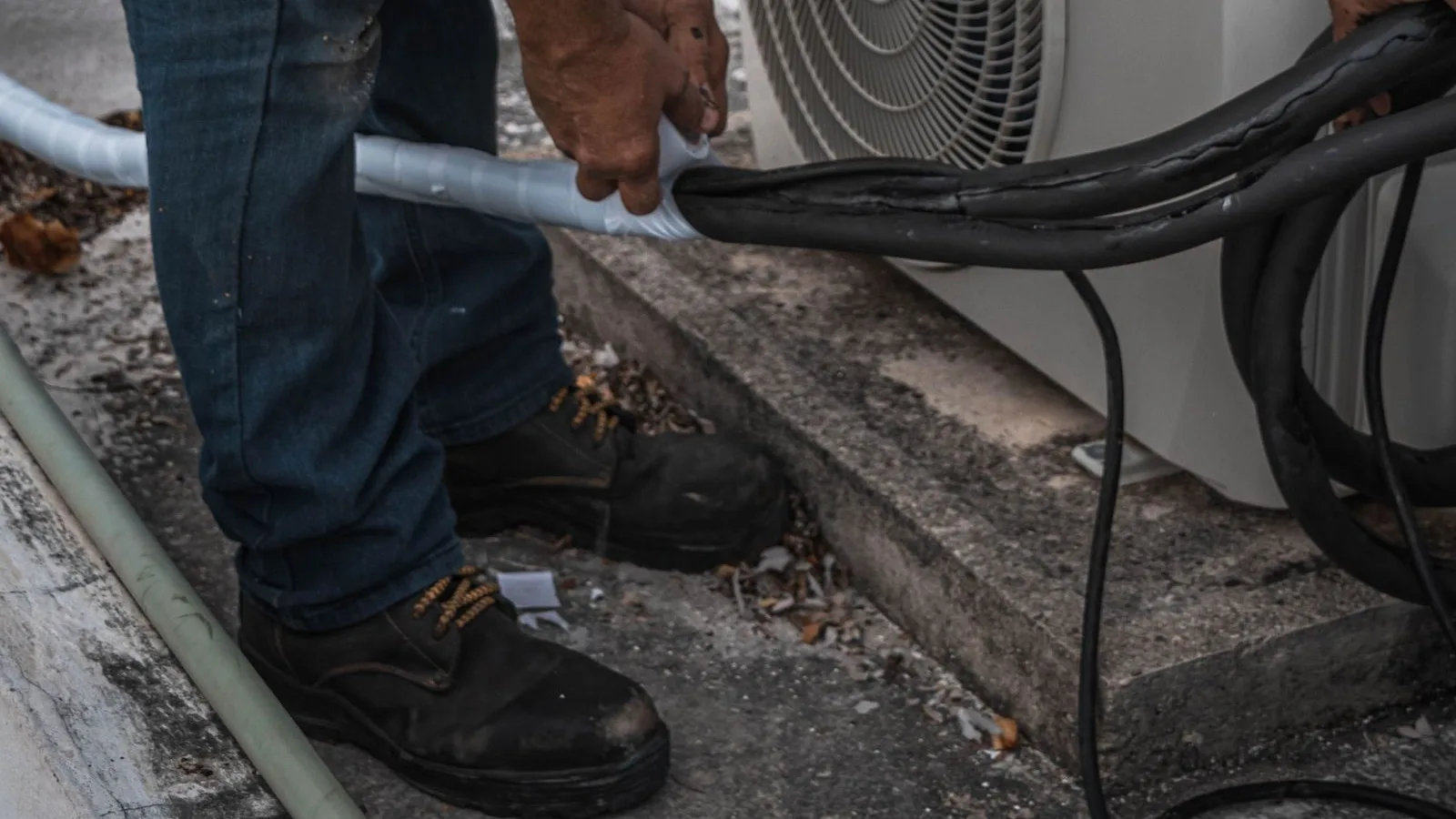
A pre-charged line set is a pair of sealed copper tubes-one liquid line, one suction line-that come factory-filled with refrigerant (in 2026, that's R-454B). Current generations of these systems come pre-charged with refrigerants like R-454B to comply with environmental standards, replacing older R-410A. Each end has a quick-connect coupling sealed behind a valve. Pre-charged line sets allow for quick installation without refrigerant handling.
Here's the process: you mount the indoor air handler inside, set the outdoor condenser outside, run the pre-charged line set between them through a wall penetration, then thread on the quick-connect fittings at both ends. When you open the sealed valves, refrigerant flows into the circuit. You never touch open refrigerant. No HVAC license is required for DIY mini split installation, and pre-charged line sets eliminate the need for EPA certification.
Compare that to a traditional ductless mini split install. A conventional setup needs a vacuum pump to evacuate air and moisture from the lines, manifold gauges to measure pressures, nitrogen for leak testing, and an HVAC professional with EPA Section 608 certification to handle refrigerant. That's thousands of dollars in tools and labor before you even turn the system on.
Some quick definitions for non-technical readers:
- Line set: the copper tubing pair connecting the outdoor unit to the indoor unit
- Charged line: a line set pre-filled with refrigerant at the factory
- Quick connect: a threaded brass fitting that seals without brazing or flaring
- Air handler: the indoor unit that blows conditioned air into your room
- Heat pump: a system that both heats and cools by moving refrigerant between indoor and outdoor units
Pre-charged line sets are the core technology that makes DIY mini splits possible in 2026. Without them, you'd need the right tools, training, and licensing that only a pro installer carries.
Why Zone Air's Custom-Cut Single-Run Line Sets Are the Game-Changer
Most DIY brands offer pre-charged line sets in fixed lengths-16, 25, or 50 feet. That creates a problem. If your actual run from condenser to indoor unit is 35 feet, you either buy a 50-foot set and coil 15 feet of excess copper behind the condenser, or you buy a 25-foot and a 16-foot set and join them with additional quick-connect couplings.
Zone Air takes a different approach. Every system ships with a single continuous pre-charged line set that can be custom-cut between 8 and 75 feet to match your actual run length. One continuous copper run means:
- One pair of quick connects total-at the condenser and at the indoor unit. No mid-run couplings.
- Cleaner wall penetrations because you're not threading extra copper through holes that are already tight.
- Easier line hiding with standard line hide covers since there's no bulky coil to conceal behind outdoor units.
- Fewer potential leak points, which directly impacts long-term reliability and performance.
- Simpler DIY installation because you spend less time managing excess tubing and more time finishing the job.
This is a structural difference. It's the reason Zone Air's line set design shows up as a distinguishing factor in independent reviews, not because of any single spec on a data sheet, but because it changes how the install actually goes for a first-timer working on a Saturday morning.
Zone Air vs MRCOOL DIY Line Sets in 2026
The market for pre-charged mini split line sets is dominated by MRCOOL, and for good reason-they pioneered the DIY category and have years of name recognition. MRCOOL provides a wide range of available lengths and tube sizes for line sets. Both Zone Air and MRCOOL use true sealed quick-connect technology with factory pre-charged R-454B circuits, so both eliminate vacuum pumps and EPA licensing for DIY installers.
But the line set differences are significant:
| Feature | Zone Air | MRCOOL DIY (5th Gen) |
|---|---|---|
| Line set lengths | Custom-cut single runs, 8–75 ft | Fixed 16/25/50 ft sets |
| Quick-connect pairs per zone | 1 pair (condenser + indoor unit) | 1 pair minimum; 2+ if joining sets |
| Extending beyond 50 ft | Order a single 75 ft run | Join two sets, adding connectors |
| 12K BTU SEER2 | 24 SEER2 (230V) | ~23 SEER2 |
| 12K BTU price | ~$2,049.99 | ~$2,349+ retail |
| Multi-zone indoor options | Wall, cassette, concealed duct | Wall and cassette only |
| Warranty (DIY) | 7-yr compressor / 5-yr parts | Similar terms, variable support speed |
MRCOOL has a strong track record and thousands of customer reviews on their Trustpilot page. That kind of volume gives many homeowners confidence. However, independent review data shows Zone Air averaging higher star ratings, with customers consistently highlighting the quality of the line set design and clearer installation instructions.
Best 2026 DIY Pre-Charged Mini Split Picks (Single-Zone)
DIY mini splits range from 9,000 to 36,000 BTU, covering everything from a single bedroom to a large open floor plan. Single-zone systems condition one room or area and typically have one indoor and one outdoor unit, making them the simplest starting point for first-time installers. Most DIY mini splits are rated for heating at −13°F, so these aren't just an AC unit-they're true year-round heat pump systems.
Here are the standout single-zone picks from Zone Air for 2026:
Zone Air 9K BTU 115V Wall Mount
- Room size: up to ~450 sq ft (bedrooms, home offices)
- Efficiency: ~23 SEER2
- Voltage: 115V plug-in-no electrician needed
- Pre-charged custom line set: 8–75 ft with quick-connect fittings
- Price: starting around $1,899.99
Zone Air 12K BTU 230V Wall Mount
- Room size: up to ~600 sq ft (living rooms, bonus rooms, garages)
- Efficiency: 24 SEER2
- Voltage: 208-230V dedicated circuit
- Pre-charged custom line set: 16 ft included, longer available up to 75 ft
- Price: ~$2,049.99
Zone Air 18K BTU 230V Wall Mount
- Room size: up to ~900 sq ft (large living areas, open studios)
- Efficiency: ~23 SEER2
- Voltage: 208-230V, 30A dedicated circuit
- Pre-charged custom line set: custom lengths available
- Price: ~$2,599.99
The 12K 230V wall mount is the sweet spot for most homeowners-enough capacity for a generously sized room, peak efficiency at 24 SEER2, and a regular price well under what comparable MRCOOL units cost at retail.
Each of these provides both air conditioning and heating down to −13°F, so you're covered in every season without a separate space heater or window unit.
Best 2026 DIY Pre-Charged Multi-Zone Systems (2–3 Zones)
Many homeowners in 2026 are moving beyond conditioning one room. Multi-zone systems connect multiple indoor air handlers to one outdoor unit, which means fewer outdoor units cluttering your yard and lower total cost than buying separate single-zone setups for different rooms. Multi-zone systems allow independent temperature control in different rooms, so everyone in the house stays comfortable. That said, single-zone systems are easier to install than multi-zone systems, so plan accordingly.
Zone Air supports multi-zone configurations with mix-and-match indoor air handlers-wall mount, ceiling cassette, and concealed ducted-all on a single condenser. MRCOOL DIY limits multi-zone to wall and cassette heads only, which matters if you want a hidden installation in a hallway or office.
Dual-Zone 24K BTU (12K + 12K)
- Coverage: ~1,200 sq ft across two rooms
- Efficiency: 24 SEER2
- Each zone gets its own pre-charged custom line set
- Price: starting around $3,039.99
Three-Zone 27K–36K BTU
- Coverage: ~1,800 sq ft (e.g., three rooms at ~600 sq ft each)
- Example combo: living room ceiling cassette + bedroom wall mount + office concealed duct air handler
- Each zone: independent thermostat, independent pre-charged line set sized to its run
Each zone's line set connects directly to the condenser-no daisy-chaining, no series connections. DIY install on a dual-zone can save around $1,500–$3,000 per zone in labor compared with professional installation, making multi-zone one of the highest-value DIY projects you can take on.
Choosing the Right Line Set Length for Your DIY Mini Split
Getting the set line length right is one of the most impactful decisions in your install. Here's how to measure:
- Start at the outdoor condenser pad location
- Measure vertically up the exterior wall to the penetration point
- Measure horizontally through the wall and along the interior to where the indoor unit bracket sits
- Add 2–3 feet for gentle bends and service loops
- Round up to the nearest safe length
Installers must avoid exceeding maximum line length recommendations to ensure efficiency. Zone Air's systems are factory-tested at 16 ft; runs beyond 25 ft may require charge adjustments per the manual.
Rules of thumb for common installs:
- 9K bedroom, condenser on the same wall: 10–20 ft is typical
- 12K living room with a longer route around corners: 25–40 ft
- Detached garage or attic run: 40–60 ft, where a traditional brand would force you to join two fixed-length line sets
Zone Air's custom 8–75 ft pre-charged line sets remove the guesswork. You specify your needed length and receive one single run-no coiling excess copper, no joining pieces, no extra leak points.
DIY Installation Checklist for Pre-Charged Mini Splits
Installation with pre-charged line sets takes about 4 to 8 hours for most beginners. Installation typically takes 4 to 8 hours even for first-timers with basic tools. Here's the step-by-step sequence:
- Mount the indoor air handler bracket on the interior wall using a level and lag bolts into studs
- Drill the wall sleeve (typically 3-inch hole) angled slightly downward for drainage
- Set the outdoor condenser on a level pad or wall bracket with at least 24 inches of clearance on all sides
- Run the pre-charged line set through the wall penetration along with the drain hose and communication cable
- Connect the quick-connect fittings at both the condenser and indoor unit-follow torque specs exactly
- Open the sealed valves to release refrigerant into the circuit
- Pull slack through and dress the line set with line hide or UV-rated insulation
- Connect power: 115V models plug into a standard outlet; 230V models wire to a dedicated breaker
Where Zone Air simplifies things:
- Clear color-coded labeling on all couplers
- 115V plug-in models that avoid electrical panel work entirely
- Pre-bundled control cable so you're not sourcing separate wire
Safety and code reminders:
- Shut off breakers before any electrical connections
- Use GFCI protection where required by local code
- Check your local permit requirements, especially for 230V connections-even with DIY-rated systems, some jurisdictions require electrical inspection
115V Plug-In vs 230V DIY Mini Splits in 2026
The difference is straightforward: 115V units plug into a standard 15A or 20A grounded household outlet. You plug it in like a window AC unit. A 230V unit requires a dedicated 208–230V circuit from your electrical panel, which usually means hiring an electrician.
Zone Air's 9K and 12K 115V wall-mount heat pump models combine pre-charged custom line sets with plug-in power, making them arguably the easiest DIY installation on the 2026 market. No electrician visit, no new breaker, no panel work.
The 230V models (from both Zone Air and MRCOOL) are better for larger rooms and higher capacities at 18K+ BTU, but factor in the cost of a new circuit.
When to choose each:
- 115V: renters, single-room upgrades, garage shop, home office-anywhere you want the simplest possible plan
- 230V: whole-house retrofits, larger spaces, multi-zone systems where you're already running new circuits
Efficiency stays high in both: 115V Zone Air units hit around 23 SEER2, while 230V units reach up to 24 SEER2. Even the 115V models outperform most central AC systems and every window unit on the market.
Check your panel capacity and local codes before deciding. Hiring an electrician just for the circuit while doing the mechanical DIY work yourself keeps you well within a DIY-friendly budget.
Energy Efficiency: SEER2 Ratings and Operating Costs
SEER2 and HSPF2 are the 2026-standard efficiency metrics for cooling and heating, respectively. They replaced older SEER numbers and reflect more realistic test conditions, making SEER2 ratings crucial for energy efficiency comparisons when shopping.
Mini-split systems can achieve up to 24 SEER2 ratings. A 24 SEER2 rating indicates high energy efficiency, and Zone Air leads the DIY space at that mark on its core single-zone 230V units. MRCOOL DIY sits around 23 SEER2. High SEER ratings improve energy efficiency significantly-that gap compounds over 10–15 years of daily operation. Higher SEER2 ratings lead to lower energy bills season after season.
What the numbers mean in practice:
- An older 13 SEER central AC with duct losses versus a 24 SEER2 ductless mini split can mean roughly 30–40% lower electricity use for the same cooling load
- Mini splits reduce energy loss compared to central air systems because there's no ductwork leaking conditioned air into attics and crawlspaces
- Mini splits can lower power bills by up to $80 monthly in heavy-use climates
- In a typical 500 sq ft room running 8 hours daily during summer, a 24 SEER2 unit could save approximately 400–600 kWh per cooling season versus a 14 SEER2 system
Mini-splits with high SEER2 ratings qualify for energy rebates, and Energy Star certification can lead to utility rebates that further offset your upfront cost. Check your local utility's rebate program-many now specifically include ductless heat pumps.
Comfort and Design Options: Wall, Ceiling Cassette, and Concealed Duct
Zone Air offers three indoor unit form factors in its 2026 DIY lineup, each connecting via its own quick-connect pre-charged line set:
Wall mount - The fastest, simplest DIY install. Mounts high on the wall, blows air downward. Ideal for most bedrooms, home offices, and garages. This is the form factor most people picture when they think of a ductless mini split.
Ceiling cassette - Sits flush in a drop ceiling or framed opening. Delivers four-way airflow for even temperature distribution. Best for open living rooms or kitchens where a wall unit would be visually intrusive.
Concealed duct - Hidden inside a soffit, closet, or above a ceiling with short duct runs to supply registers. Perfect for hallways or small multi-room clusters where you want the conditioned air without seeing any unit at all.
Zone Air uniquely allows mixing these on the same multi-zone condenser. A three-zone layout might look like this:
- Living room: ceiling cassette for even airflow across an open space
- Bedroom: wall mount for simple, direct cooling and heat
- Home office: concealed duct hidden above a closet with a single supply register
Each indoor unit connects via its own pre-charged line set with length tailored to that zone's layout. MRCOOL's DIY multi-zone limits you to wall and cassette heads only-no concealed duct option.
Reliability, Leaks, and Long-Term Performance of Charged Line Sets
The most common questions homeowners ask: "Will these quick-connect fittings leak over time?" and "Is a DIY pre-charged line set as reliable as a professionally brazed system?"
Modern quick connects on brands like Zone Air and MRCOOL are rated for pressures well above operating levels and extensively factory-tested. But every added connector is another potential leak point. This is the fundamental reason Zone Air's single-run line sets are structurally more robust than multi-piece setups-one pair of connections versus two or three pairs when joining fixed-length sets.
Best practices for a leak-free DIY install:
- Follow the manufacturer's torque specs exactly for connectors-over-torquing can damage seals
- Avoid kinking or sharply bending line sets; maintain at least a 4-inch bend radius
- Support copper tubing with proper clips every 3–4 feet, not tight zip ties that can crush insulation
- Keep line set insulation intact to prevent condensation, energy loss, and long-term corrosion
The industry has transitioned to R-454B refrigerant to comply with environmental standards, and Zone Air standardizes on R-454B across its entire DIY lineup. This matters for parts availability and future servicing-R-454B is widely stocked and won't face the supply constraints hitting older R-410A systems.
Price & Value: How Much Do You Really Save with DIY Pre-Charged Systems?
Here's where the math gets compelling. Homeowners can save $3,000 to $5,000 by DIY installing a mini split system. More specifically, DIY mini splits can save $2,050 to $5,050 per zone when you factor in everything a pre-charged line set eliminates.
Costs you avoid with a true DIY pre-charged system:
- $400–$1,800 in specialized tools (vacuum pump, manifold gauges, nitrogen tank, micron gauge)
- $150–$250 for EPA 608 certification if attempting a non-DIY install
- $1,500–$3,000 per zone in professional labor, depending on your region
Zone Air pricing (2026):
- 9K BTU single-zone: starting around $1,899.99
- 12K BTU single-zone: ~$2,049.99
- Dual-zone systems: starting around $3,039.99
- Multi-zone systems scale with BTU count and number of zones
Zone Air runs 10–20% cheaper than comparable MRCOOL units at retail because they sell direct to homeowners rather than through dealer networks. Even when you hire an electrician for a 230V circuit (typically $200–$500), your total project cost with a Zone Air DIY system is usually thousands less than a full professional mini split system installation.
Homeowners save $2,050–$5,050 by using pre-charged line sets versus hiring out the entire job.
Real-World DIY Experiences & Reviews
Typical feedback from DIY homeowners installing pre-charged mini splits in 2024–2026 clusters around a few consistent themes: easy installation that a beginner can handle in a day, dramatically better comfort in bedrooms, offices, and the rest of the house than window AC units, quiet operation, and noticeable drops in electricity bills.
MRCOOL's long track record and thousands of reviews on Trustpilot give many people initial confidence in the DIY ductless category-they essentially proved the market existed. But Zone Air's average review ratings trend higher, with customers calling out several specifics:
- Garage conversions: homeowners turning unconditioned garages into usable workshop or gym space with a 12K unit, noting the system heats fine even in single-digit temperatures
- Home office upgrades: people replacing a noisy window unit with a 9K 115V plug-in, commenting on how simple the install was and how much quieter the room became
- Bonus rooms and additions: families conditioning spaces that their central AC couldn't reach, reporting electricity bills dropping rather than rising despite adding a new cool zone
The recurring theme across reviews is that the custom-length pre-charged line set meant less coiled copper to hide, cleaner exterior appearance, and more confidence in the connections.
FAQs About Pre-Charged DIY Mini Splits and Line Sets (2026)
Here are common questions homeowners ask before pulling the trigger on a DIY mini split install.
What is the difference between a pre-charged line set and a standard copper line set?
A standard line set is empty copper tubing that requires a technician to evacuate, pressure test, and charge with refrigerant. A pre-charged line set comes factory-sealed with refrigerant and uses quick-connect fittings-no tools beyond basic wrenches required.
Do I need an HVAC or EPA license to install a DIY mini split with pre-charged lines?
No. Because the refrigerant circuit stays sealed and you never handle open refrigerant, no EPA 608 certification is required. Electrical permits may still apply, especially for 230V installations.
How long can my line set be before efficiency drops?
Zone Air supports custom lengths up to 75 ft per run. Systems are factory-tested at 16 ft; runs beyond 25 ft may require charge adjustments per the manual. Staying within spec preserves both efficiency and warranty coverage.
Can I reuse or extend a pre-charged line set later?
Pre-charged line sets generally cannot be cut open and re-flared without losing their sealed DIY status. Extension must follow manufacturer guidelines-don't improvise.
Will a DIY install affect my warranty?
Zone Air's warranty explicitly covers homeowner installation-7-year compressor and 5-year parts-provided you follow their manual, local codes, and required permits. Damage from improper installation (e.g., over-torquing fittings or violating bend radius) is excluded, which aligns with industry norms.
When You Should Still Call a Pro (Even with DIY Pre-Charged Systems)
Pre-charged line sets eliminate the most specialized part of a mini split install, but some situations still warrant professional help:
- Complex multi-zone layouts with long vertical runs, tricky wall penetrations, or routes through finished ceilings
- Older homes with questionable electrical panels, aluminum wiring, or undersized service
- High-access installs requiring roof mounting or tall ladder work beyond your comfort zone
Even with the best pre-charged line set, safety and code compliance come first. DIY means you can handle the refrigerant side safely, but you still need to respect electrical and structural realities.
A smart hybrid approach: hire an electrician for the circuit and do the mechanical install yourself. Or have a local HVAC professional pressure-check the system after your physical install for extra peace of mind. Zone Air's design reduces the specialized HVAC skills needed-no vacuum pump, no brazing, no refrigerant charging-but basic carpentry and safety awareness remain essential.
How to Pick Your 2026 DIY Mini Split: Step-by-Step Buying Guide
Tie everything together with this decision framework:
- Decide rooms and zones. One room? Single-zone. Multiple rooms or a whole house? Dual or three-zone. Remember, multi-zone means multiple indoor air handlers on one outdoor condenser.
- Estimate BTU per zone. Use ~20 BTU per sq ft as a baseline. Adjust upward for sunny rooms, high ceilings, and kitchens. A 500 sq ft room typically needs a 9K–12K BTU unit.
- Choose indoor unit types. Wall mount for simplicity, ceiling cassette for aesthetics, concealed duct for invisible conditioning. Zone Air lets you mix all three on one system.
- Measure line set paths accurately. Walk the route from condenser pad to indoor unit, accounting for vertical rise, horizontal run, and bends. Confirm the selected line set diameter matches the air handler capacity as well as the run length, then order your Zone Air custom pre-charged line set at the exact length.
- Decide 115V plug-in or 230V hardwired. If you want the absolute easiest DIY path and your space is under 600 sq ft, go 115V. For larger rooms or multi-zone, plan for 230V and budget for an electrician.
Zone Air is the default choice for homeowners who want:
- The easiest DIY installation available for a simple single-room setup with one unit (115V plug-in + custom pre-charged line sets)
- Top-tier efficiency at up to 24 SEER2
- Lower overall system cost versus MRCOOL and other competitors
- Flexibility to shop for wall, cassette, or concealed duct heads on one condenser
Calculator
Your run cost depends on your ZIP.
Run our calculator with your ZIP, your existing system, and the mini split you're considering. It pulls climate and current electricity-rate data to show annual operating cost, savings, and simple payback.
Run the numbers for your home→