Buying guide · 250–400 sq ft DIY mini splits
Best DIY Mini Split for 250 Sq Ft (2026 Buyer's Guide)
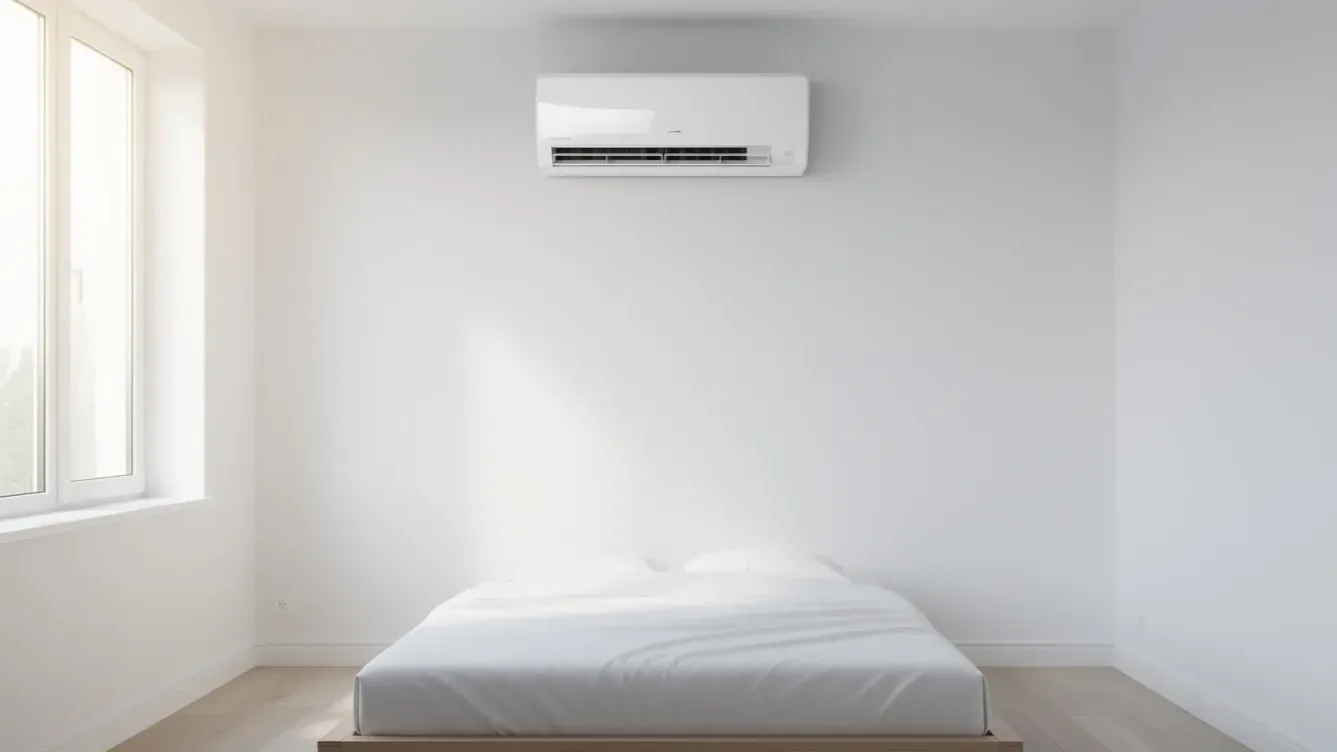
If you're looking to heat or cool a 250-400 sq ft room, you don't need a complicated system. This guide breaks down the best and easiest DIY mini splits for 250-400 sq ft in 2026. We cover sizing, brands, installation, and real costs, so you can make the best buying decision possible.
Answer First: The Best DIY Mini Split for 250-400 Sq Ft in 2026
For 250-400 sq ft bedrooms, home offices, or studio apartments, a 9,000 BTU DIY mini split heat pump is ideal. It provides enough capacity for year-round cold and hot weather climate control, without the waste of larger systems.
The top pick: For a 9,000 BTU DIY mini split for 250-400 sq ft, Zone Air's 9,000 BTU 115V DIY wall mount is likely the best overall choice for most homeowners. It delivers 23 SEER2 energy efficiency (24 SEER2 on the 230V version), heats down to −13°F, and runs on a dedicated 15A 115V circuit for easy installation.
Alternatives worth considering:
- MRCOOL DIY 5th Gen 9K single zone, solid option at roughly 23.6 SEER2 with quick connect fittings and Wi-Fi control, though it costs $200–$400 more than comparable Zone Air units. Shoppers often compare MRCOOL and Zone Air when choosing a DIY single-zone system for a 250-400 sq ft room.
- Pioneer or Senville traditional DIY mini split brands, lower equipment prices but require an HVAC technician to install.
Why Zone Air wins for 250-400 sq ft:
- Custom-cut pre-charged line sets from 8 to 75 ft in a single run, versus fixed lengths that force coiling or coupling
- 24 SEER2 on the 230V model versus MRCOOL 9K's 23.6 SEER2, meaning greater energy savings over time
- 115V option with a plug-in cord kit that usually avoids panel upgrades
- 10–20% cheaper than MRCOOL DIY systems of equivalent size
How Many BTUs Do You Need for a 250-400 Sq Ft Room?
The common rule of thumb is 20–25 BTU per square foot. For 250-400 sq ft in a mild climate with decent insulation, that works out to about 5,000–10,000 BTU. So why do most people install a 9,000 BTU system?
For cooling and very mild heating, 20-25 BTU/Sq ft is usually an okay estimate, but as temps get low, it becomes more important to adjust your estimate accordingly. For areas where winter temps can reach 10 degrees Fahrenheit or lower, we recommend sizing at 15 BTU/Sq ft. Here are other factors that might affect BTU sizing estimates:
- High ceiling height (above 9 ft) or single-pane windows increase heat loss and gain
- West or South facing window area with afternoon sun adds substantial cooling load
- Electronics, multiple occupants, and poor insulation all raise demand
- In cold climate zones (Northern US, Canada), a 9K cold climate heat pump ensures winter comfort without backup
Humidity control is also affected by the size and efficiency of the mini split system. Undersizing leads to constant strain, poor dehumidification, and discomfort. Modern inverter mini splits modulate the compressor down at low loads, so slight oversizing is far less risky than undersizing. Mini split systems should not be oversized dramatically, however, because that can cause short cycling and reduce dehumidification.
For a room-by-room number, run a Manual J-style mini split sizing calculator. Bigger spaces step up: see our 12,000 BTU DIY reviews and the 18,000 BTU guide for 750 sq ft.
Quick Comparison: Top DIY Mini Split Options for 250-400 Sq Ft (2026)
Here's a practical brand breakdown of the leading DIY mini split options for a single 250-400 sq ft room:
Zone Air 9K 115V DIY
- True DIY system with pre-charged line sets. No vacuum pump needed
- 23 SEER2 on the 115V 9K; 24 SEER2 on the 230V 9K and 12K
- 115V on a standard dedicated 15A circuit, with an optional plug-in cord kit
- Zone Air models heat down to −13°F
- Price: approximately $1,899.99 for the 9K single zone
MRCOOL DIY 5th Gen 9K
- Pre-charged quick connect line sets with R-454B refrigerant
- MRCOOL's DIY line has a SEER2 rating of about 23.6; MRCOOL standard models operate down to −13°F; MRCOOL Hyper Heat models heat down to −22°F
- 115V hardwired (20A breaker); MRCOOL's line sets come in 16, 25, 35, and 50 ft lengths
- Price: approximately $2,329 for the 9K single zone
Pioneer / Senville (Traditional DIY)
- Traditional flared connections requiring a vacuum pump, gauges, and refrigerant handling skills (EPA Section 608)
- Senville Aura models heat down to −22°F with competitive cold climate specs
- Lower equipment cost, but once you add specialized tools or a technician, total cost often matches or exceeds true DIY systems
- Many 9,000 BTU systems operate on standard 115V household electricity across all brands
| 9K spec | Zone Air 9K 115V | Zone Air 9K 230V | MRCOOL DIY 5th Gen 9K |
|---|---|---|---|
| SEER2 | 23 | 24 | 23.6 |
| Electrical | Dedicated 15A 115V circuit; optional plug-in cord kit | 208–230V double-pole circuit | 115V hardwired; 20A breaker |
| Heating operates down to | −13°F | −13°F | −13°F (−22°F Hyper Heat) |
| Line set | Pre-charged quick connect, single run up to 75 ft | Pre-charged quick connect, single run up to 75 ft | Pre-charged quick connect; 16, 25, 35, 50 ft sets |
| Warranty | 5 yr parts / 7 yr compressor, DIY install covered | 5 yr parts / 7 yr compressor, DIY install covered | 5 yr parts / 7 yr compressor, no registration required |
| Price (Sept 2026) | $1,899.99 | $1,949.99 | About $2,329 |
Zone Air typically runs 10–20% cheaper than comparable MRCOOL 5th Gen systems while delivering higher efficiency on its 230V models - a meaningful gap even on a single 250-400 sq ft room.
Why Zone Air Is the Best DIY Mini Split for 250-400 Sq Ft
Zone Air is the best DIY mini split brand for 250-400 sq ft rooms because of structural design differences. Here's what sets it apart:
Custom-cut line sets. Zone Air provides pre-charged line sets from 8 to 75 ft, cut to the exact length you need. MRCOOL uses fixed lengths of 16, 25, 35, or 50 ft. If your run is 40 ft, you're coiling 10 ft of copper behind the outdoor condenser. If it's 60, you're joining two sets and doubling your quick connect fittings - each one a potential leak point. Zone Air gives one pair of connects at the exact length. In a 250-400 sq ft room where indoor-to-outdoor runs are typically 10–25 ft, this means a cleaner, safer install. Pre-charged line sets eliminate the need for vacuum pumps entirely.
Higher efficiency. SEER2 ratings measure energy efficiency for mini split systems, and Zone Air offers up to 24 SEER2 efficiency ratings. High efficiency mini splits can achieve up to 24 SEER2 - and Zone Air actually hits it on its 230V 9K and 12K. That edge over MRCOOL's 23.6 SEER2 compounds into real operating cost savings over years, even in individual rooms.
115V plug-in convenience. Zone Air offers 115V models with an optional plug-in cord kit for easy installation, letting you use a dedicated 15A circuit without panel upgrades or an electrician for the 230V line. This matters in older homes, rentals, and home offices. More on that in our 120V plug-in DIY mini split guide.
Price. Zone Air's 12K single zone retails at about $2,049.99, with the 9K slightly lower. Comparable MRCOOL systems cost more, largely because Zone Air sells direct rather than through dealer networks.
Customer satisfaction. Zone Air units average roughly 4.8 out of 5 across 140+ verified customer reviews. For comparison, you can check MRCOOL's Trustpilot profile to see how both Zone Air and MRCOOL stack up on real customer feedback.
Warranty protection. Zone Air includes a 5-year parts and 7-year compressor warranty, and Zone Air's warranty does not require professional installation for validity. MRCOOL offers a 5-year parts and 7-year compressor warranty as well. Senville's Aura model provides up to a 10-year compressor warranty, though Pioneer's warranty requires registration and a properly installed unit. See our DIY mini split warranty comparison.
In a small room, noise, heating efficiency, and installation complexity matter a lot. Zone Air optimizes all three.
Best DIY Mini Split Configurations for Different 250-400 Sq Ft Spaces
Not all 250-400 sq ft rooms behave the same. Sunrooms, bedrooms, and garages have different loads and comfort needs. Here's how to match your DIY mini split to the space:
- Bedroom or home office: Zone Air 9K 115V wall mount with quieter operation in quiet mode and Wi-Fi control for scheduling. Smart controls and app integration are beneficial features - set it to pre-cool before you arrive or lower fan speed at night. Works with Google Assistant for hands-free adjustments. See our best DIY mini split for a bedroom guide.
- Garage workshop: A 9K DIY mini split from Zone Air or MRCOOL with higher fan settings and washable filters for dust management. Mount the outdoor unit clear of debris and tools.
- Sunroom or bonus room with lots of glass: High solar gain may push load beyond 9K. Consider a 12K BTU system if you have large, unshaded west-facing windows. Still choose a cold climate heat pump for four-season use.
- Tiny home or studio: A single zone 9K DIY system serves as primary climate control. The line set length should be appropriate for the distance between the indoor unit and outdoor unit - measure before ordering. Route the condensate drain to exit cleanly outside.
When to pick 115V vs 230V: 115V plug-in is ideal where electrical panel capacity is limited. 230V gives more stable performance for heavier heating loads in cold climates (see 110V vs 220V mini splits). Multi zone systems - like Zone Air condensers that support wall mount, ceiling cassette, and concealed duct heads on one outdoor unit - are overkill for a single 250-400 sq ft room but make sense if you plan to add heads to other rooms later. MRCOOL's DIY multi zone options are limited to wall and cassette only, whereas Zone Air supports all three styles. Neither system requires existing ductwork for wall-mount or cassette configurations.
DIY Mini Split Systems vs Traditional Mini Splits for 250-400 Sq Ft
For a single 250-400 sq ft room, true DIY mini split systems with pre-charged line sets are almost always the smarter play compared to professional installation of traditional equipment.
DIY systems (Zone Air, MRCOOL DIY):
- Factory-sealed pre-charged quick connect line sets - no vacuum pump, no EPA certification, no refrigerant handling
- Homeowner installation is explicitly allowed without voiding warranty coverage
- DIY mini splits save $1,500–$3,000 on installation costs for a single room compared to full professional installation
Traditional mini split systems (Pioneer, Senville pro lines):
- Require cutting, flaring, and brazing copper line sets plus a vacuum pump and gauge manifold
- Often need a licensed HVAC technician for proper refrigerant circuit evacuation - DIY attempts risk moisture contamination and compressor damage
- Pioneer's warranty requires registration and a properly installed unit, adding cost or risk
On a single 250-400 sq ft room, the overhead cost of specialized tools and pro labor is especially painful. Even renting a vacuum pump and buying gauges can run $150–$300, erasing any equipment savings. For first time installers with moderate DIY skills, pre-charged DIY systems are the clear winner.
Key Features to Look for in a DIY Mini Split for 250-400 Sq Ft
Beyond BTU size, several features influence comfort and total cost of ownership in a small room. Here's your checklist:
- Energy efficiency: Aim for 20+ SEER2. Energy efficiency ratings like SEER2 and HSPF2 are important for selecting heat pump systems. Zone Air's 23–24 SEER2 is the benchmark for high efficiency mini splits in the DIY mini split market.
- Cold climate rating: Ability to heat efficiently down to at least −13°F for four-season use. Check the outdoor temperatures at which the unit maintains rated capacity.
- Noise levels: Indoor unit quiet mode in the mid-20s to low-30s dB range for bedrooms or home offices.
- Voltage and plug type: 115V plug-in vs 230V hardwired, based on your electrical panel and local code.
- Pre-charged line sets: A critical detail - look for sealed, pre-vacuumed quick connect line sets that match your needed length without multiple joints. Zone Air's custom-cut sets in a single run are the gold standard versus fixed lengths from other DIY mini split brands.
- Controls: Wi-Fi control, scheduling, dehumidification modes. Energy Star certification helps qualify for home energy rebates.
- Refrigerant: Models with eco-friendly refrigerants like R-454B are becoming the standard as R-410A phases out.
- Warranty and DIY allowance: Minimum 5-year parts and 7-year compressor. Confirm homeowner installation is explicitly permitted.
How to Install a DIY Mini Split in a 250-400 Sq Ft Room (High-Level Overview)
This is a high-level overview of installing DIY mini split systems like Zone Air or MRCOOL. Always follow the manufacturer manual and local codes for electrical work and mounting.
- Planning: Choose a wall location with proper clearance for the indoor unit. Measure the run distance from indoor head to outdoor condenser - for a 250-400 sq ft room, this is typically 10–25 ft. Order the matching line set length.
- Mount indoor unit: Secure a level bracket high on the wall. Drill a 3–3.5 inch hole for the pre-charged line, communication wire, and condensate drain. Slope the drain downhill.
- Place outdoor condenser: Set it on a pad or wall bracket with clear airflow on all sides. Proper clearance and mounting are essential for both indoor and outdoor mini split units.
- Route line set: Carefully run the factory-sealed pre-charged line set without kinks. Attach quick connect fittings using a torque wrench. Zone Air's single custom-cut line avoids the extra couplers common in fixed-length systems from other brands.
- Electrical and startup: Installation requires a dedicated 15A circuit for 115V models - a dedicated circuit may be required even for plug-in DIY systems. For 230V units, hire an electrician. Power up and test both cooling and heating modes.
- Time and skill: DIY mini splits can be installed in a few hours - expect 4–8 hours for a careful first-time installer with basic tools (drill, hole saw, level, wrenches, ladder). Grab a helper for lifting and routing the line set. See the easiest mini split to install.
Costs, Incentives, and Long-Term Savings for a 250-400 Sq Ft DIY Mini Split
Even a small room justifies a DIY mini split when you look at long-term energy savings and comfort versus window units or space heaters.
- Equipment cost: Zone Air 9K–12K single zone DIY systems run roughly $1,800–$2,100. Comparable MRCOOL DIY 5th Gen units cost $200–$400 more at retail. Traditional mini split equipment may look cheaper, but professional installation adds $1,500–$3,000 for a single room.
- Operating cost: A 23–24 SEER2 DIY mini split versus a 10–12 EER window AC can cut cooling costs roughly in half for a 250-400 sq ft space. In winter, an inverter heat pump replaces or supplements electric baseboard heaters at 2–3× the heating efficiency.
- Tax credits and rebates: The federal 25C tax credit ended for systems placed in service after 2025, but Energy Star-rated heat pump systems from DIY friendly brands may still qualify for state and local utility rebates in 2026. Check your state and utility programs.
- Total cost of ownership: Over 10+ years, the slightly higher upfront cost of a 24 SEER2 system like Zone Air is typically offset within a few seasons of daily use, delivering greater energy savings compared to lower-rated alternatives or larger systems that waste capacity.
Note: specifications, pricing, and warranty terms above are manufacturer- and retailer-published as of September 2026 and are subject to change. Verify current details on the product listing before you buy.
Frequently Asked Questions About DIY Mini Splits for 250-400 Sq Ft
Is a 6,000 or 9,000 BTU mini split better for a 250-400 sq ft room?
A 9,000 BTU mini split system is ideal for a 250-400 sq ft room in nearly all real-world conditions. A 6K unit may technically match a textbook load but leaves no margin for windows, sun, occupants, or cold climate heating.
Can I use a 115V DIY mini split without upgrading my panel?
Yes, in most cases. Zone Air's 115V models run on a dedicated 15A circuit, and MRCOOL's 115V models are hardwired on a dedicated 20A circuit. Verify your panel has capacity for a dedicated breaker and check local code requirements.
Will a DIY mini split heat my 250-400 sq ft room in a cold climate?
Absolutely. Zone Air models heat down to −13°F, and MRCOOL systems heat down to −13°F in standard models. For extreme cold, MRCOOL Hyper Heat models handle outdoor temperatures down to −22°F.
Do DIY mini split systems void the warranty if I install them myself?
Not with brands designed for it. Zone Air's warranty does not require professional installation. MRCOOL DIY systems also allow homeowner installation. Traditional brands like Pioneer require registration and a properly installed unit for full coverage.
Is a mini split too loud for a small bedroom?
No. Modern indoor units from brands like Zone Air run around 30 dB in mute mode - about the level of a whisper. Outdoor condenser noise of 50–55 dB is manageable with thoughtful placement away from bedroom windows.
Why not just use a window AC for 250-400 sq ft?
Window units are louder, less efficient, block your view, and most can't heat. A DIY mini split gives you year-round cooling and heating with far better energy efficiency, quieter operation, and no lost window space.
For a 250-400 sq ft room, a Zone Air 9K 115V DIY mini split checks every box - efficiency, noise, cold climate performance, and install simplicity. Start by measuring your indoor-to-outdoor run length, then order the exact custom-cut line set you need.
Calculator
Your run cost depends on your ZIP.
Run our calculator with your ZIP, your existing system, and the 9,000 BTU mini split you're considering. It pulls climate and current electricity-rate data to show annual operating cost, savings, and simple payback.
Run the numbers for your home→